





Mahabodhi Stupa,
Monlam Pavillion,
31 December 2025
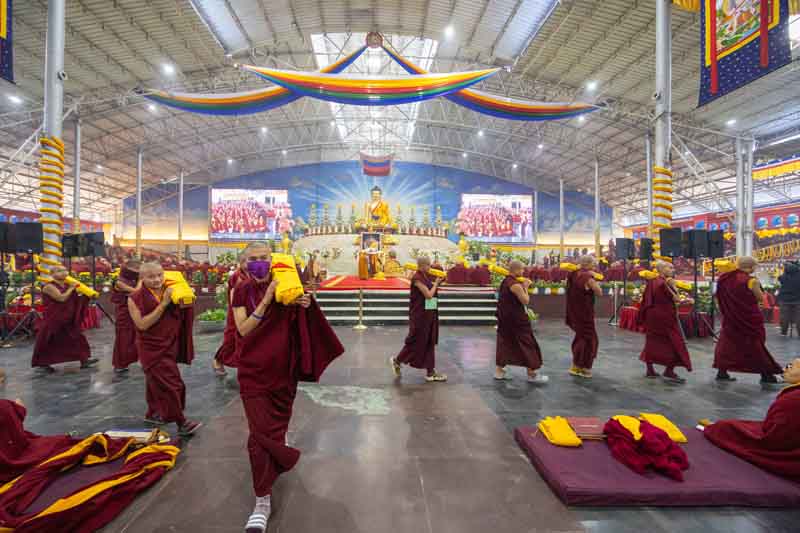
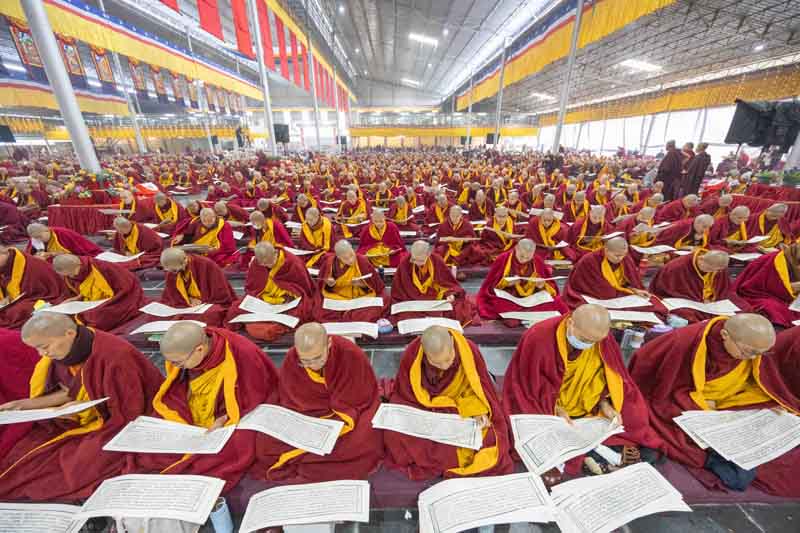
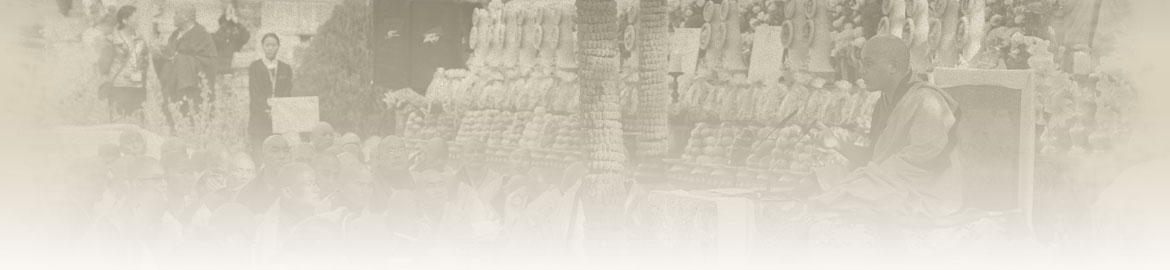
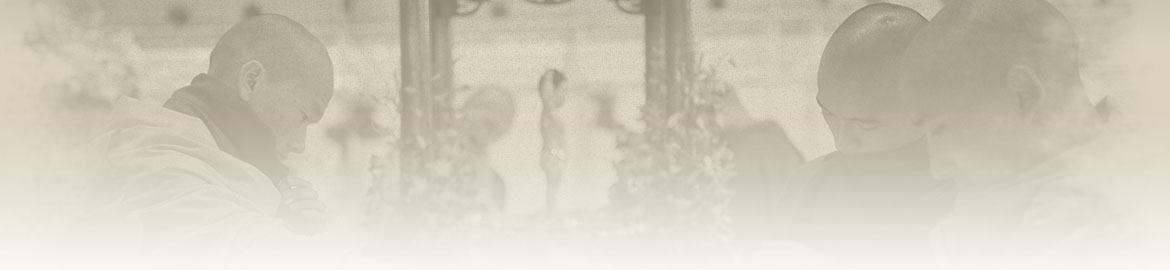
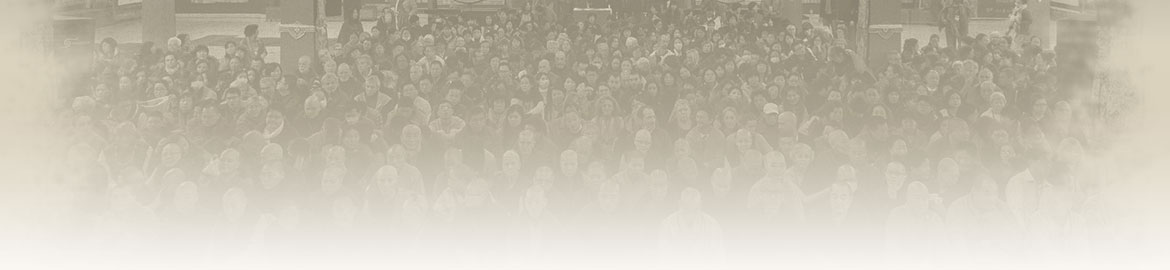
Today, December 31, 2025, was the fifth day of the 40th Kagyu Mönlam Chenmo, and, as is the custom, included the Kangyur Procession at the Mahabodhi Stupa and the Kangyur Reading in the Monlam Pavillion.
The day began at 5:30 am when Kyabgön Zurmang Gharwang Rinpoche bestowed the Mahayana sojong vows and led the assembly in the first session of Monlam prayers, the Twenty Branch Monlam. The Kagyu Monlam prayerbook was compiled by the 17th Gyalwang Karmapa and a team of translators. The basis for the prayerbook is a text called the Twenty Branch Monlam which was composed by the 7th Karmapa, Chödrak Gyatso. It was he who established the Kagyu tradition of great prayer gatherings in the Garchen, the Great Encampment. The tradition ended with the destruction of the Garchen by Gushri Khan during the time of the 10th Karmapa, but it was revived in India by Kalu Rinpoche and Bokar Rinpoche. The 17th Gyalwang Karmapa has greatly expanded this text and has introduced initial prayers in their original Sanskrit form to preserve the link with the origins of Buddhism. The prayerbook has been translated into more than eleven languages.
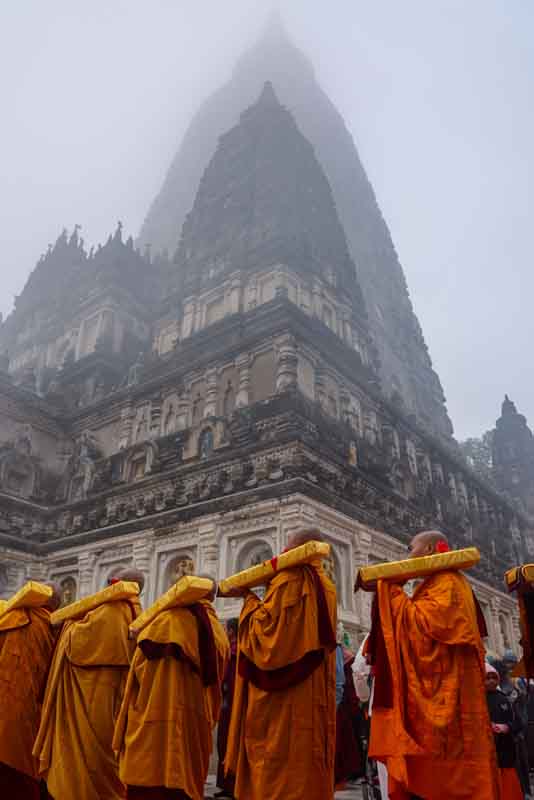
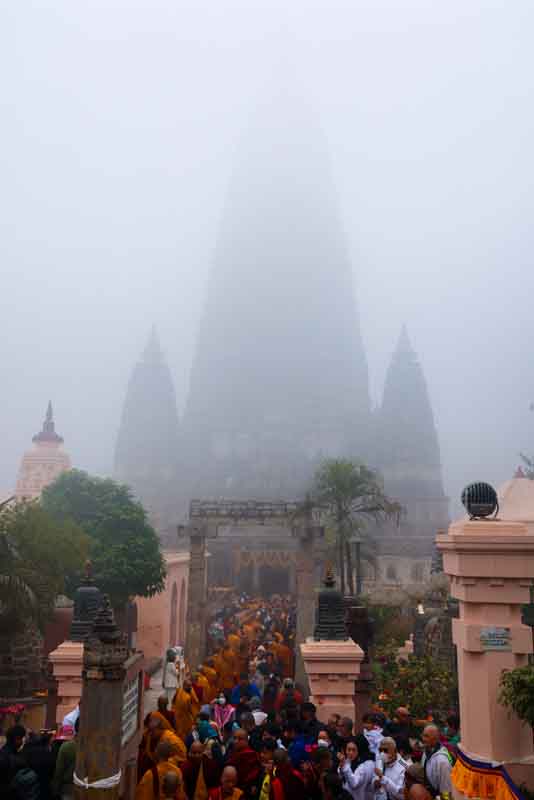
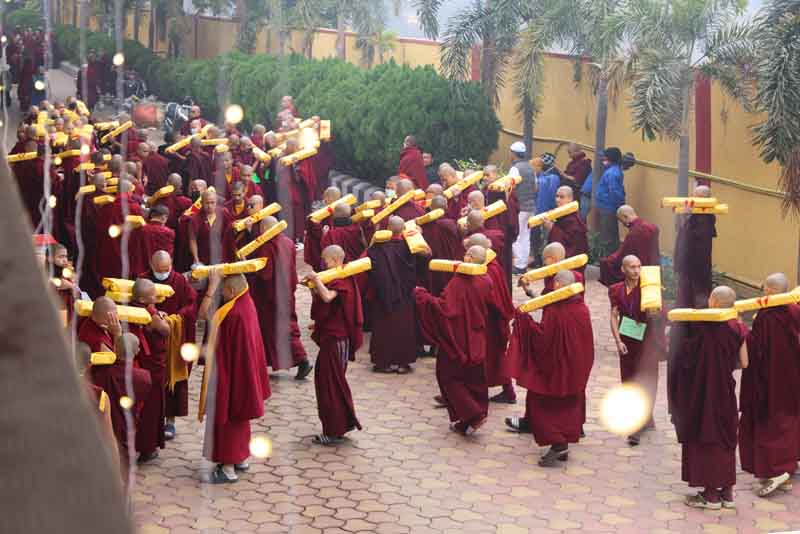
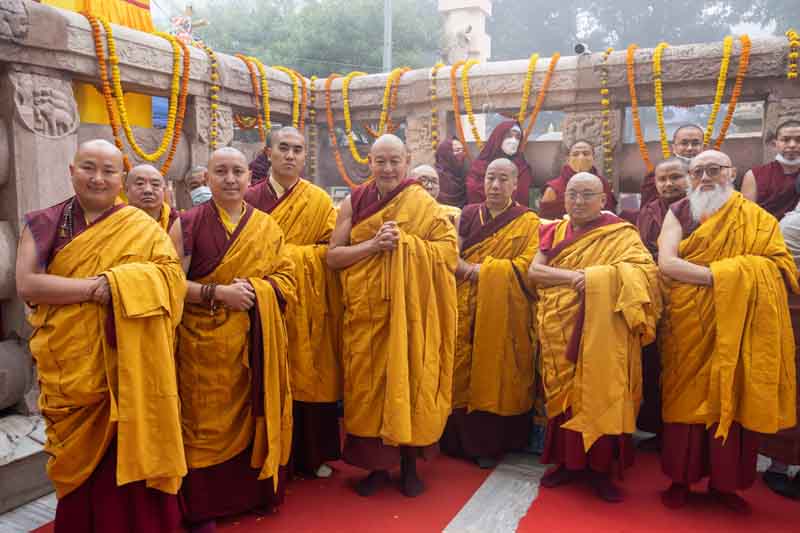
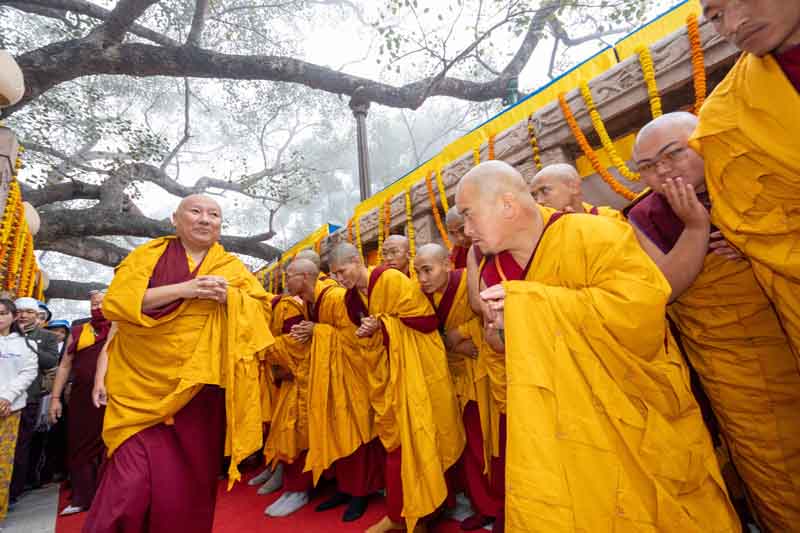
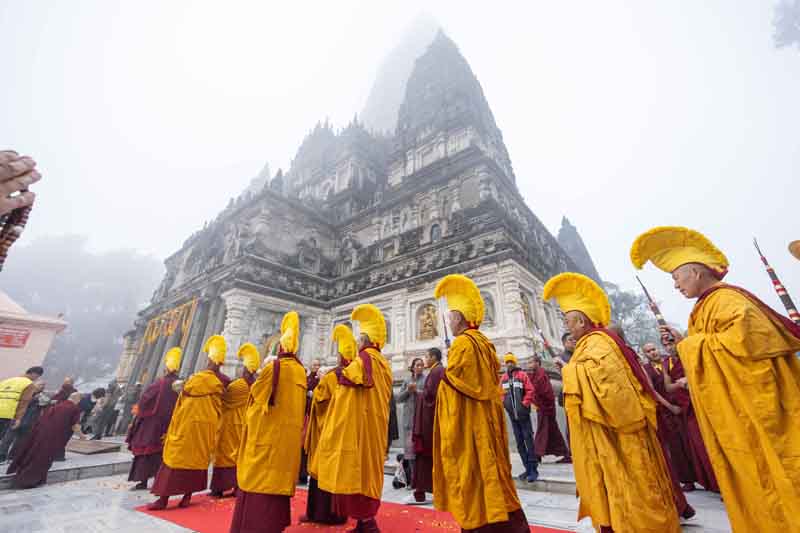
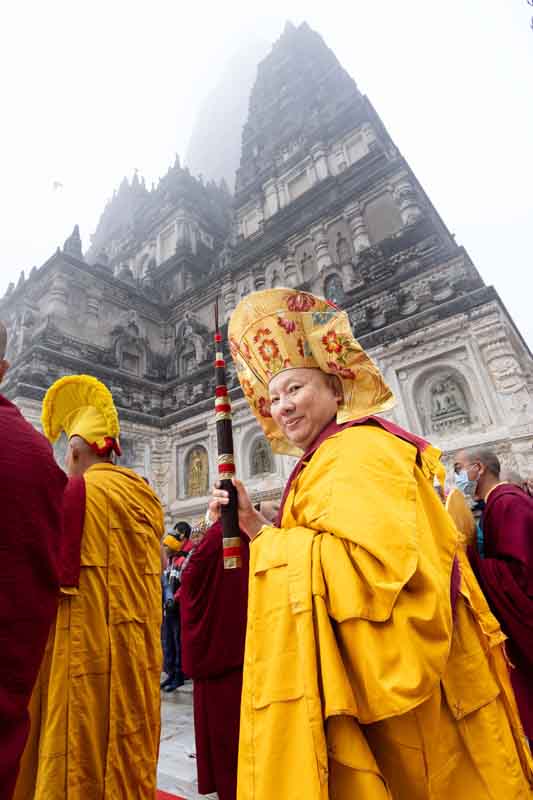
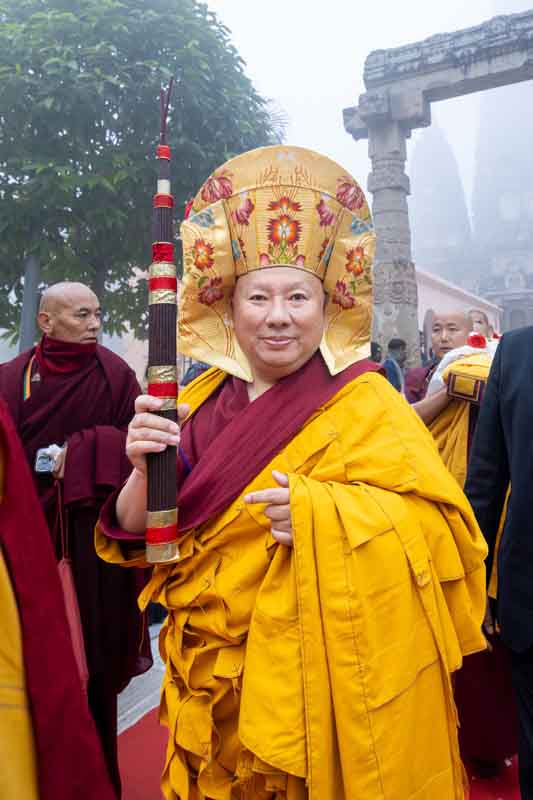
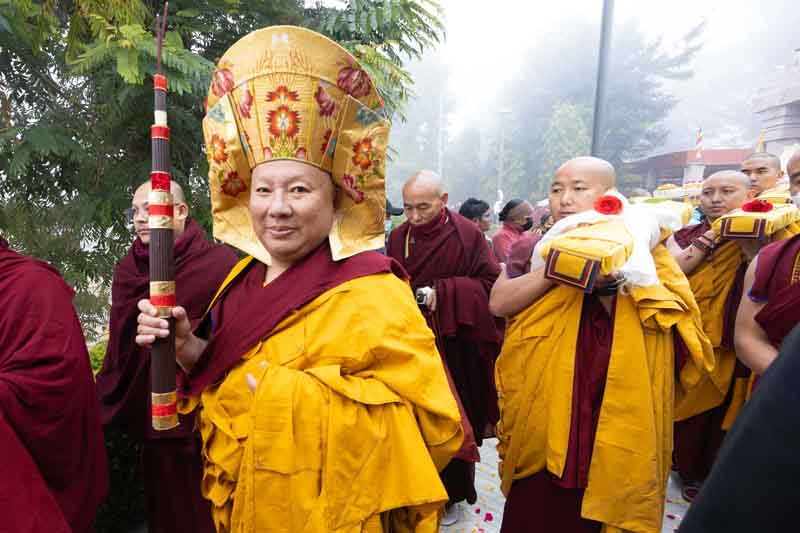
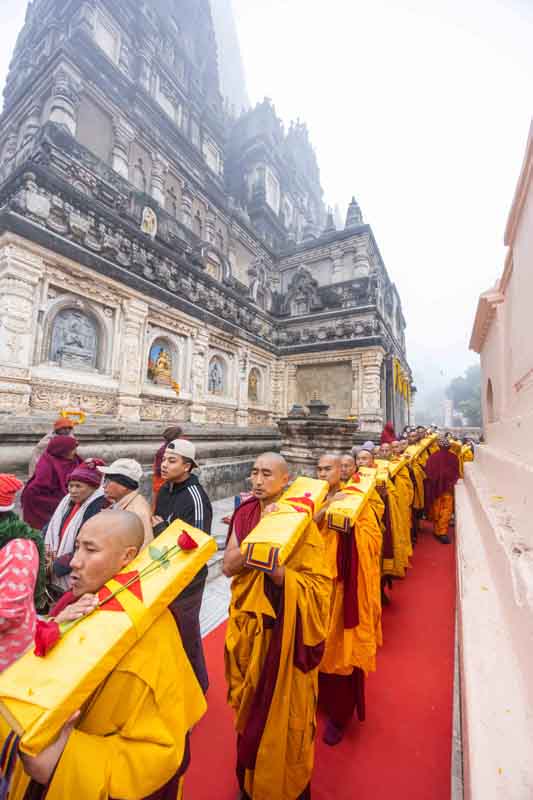
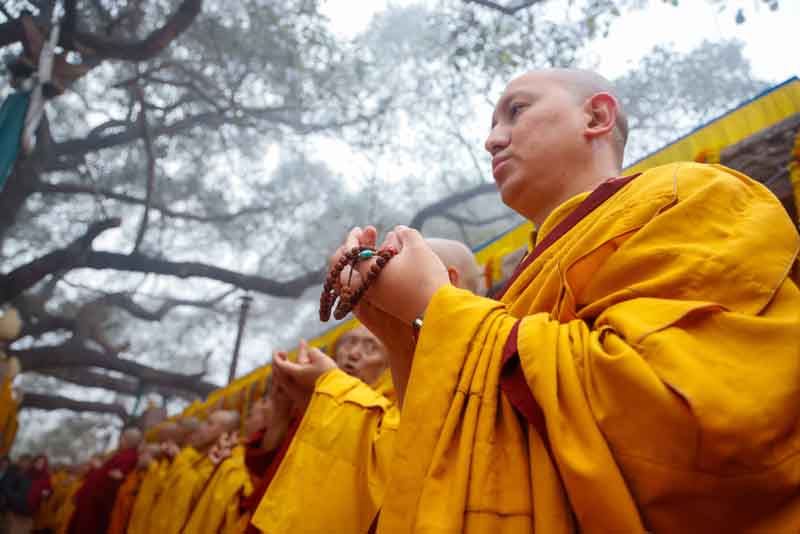
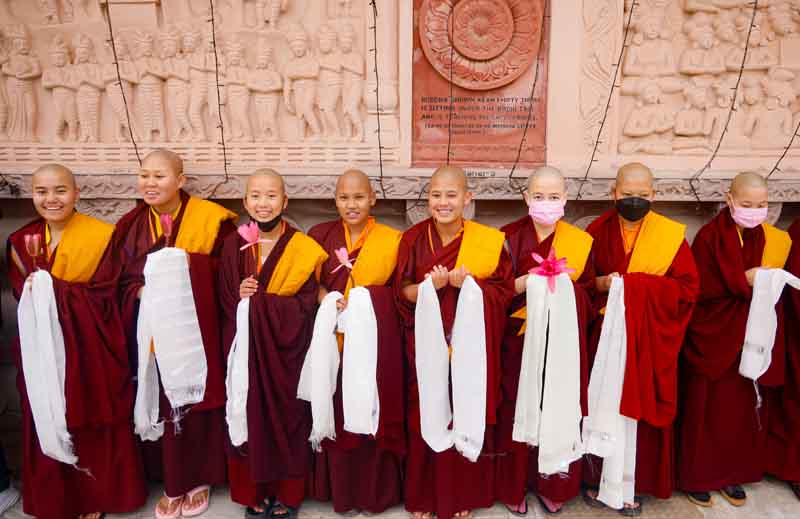
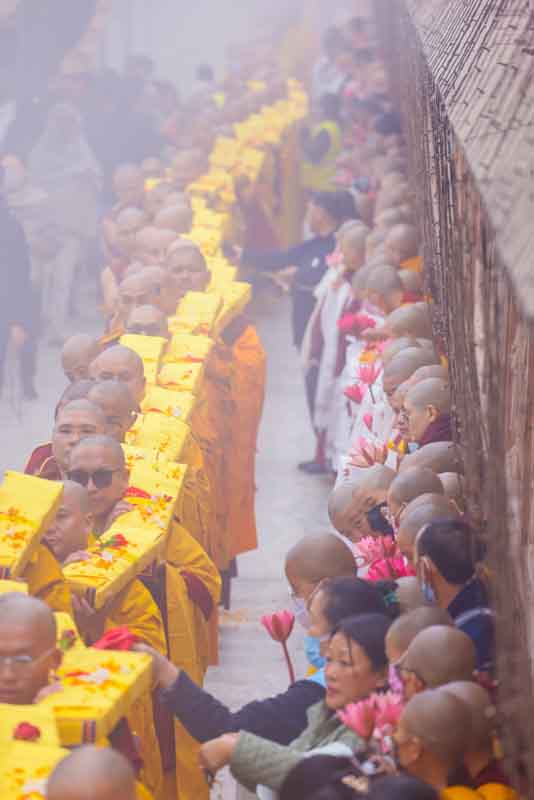
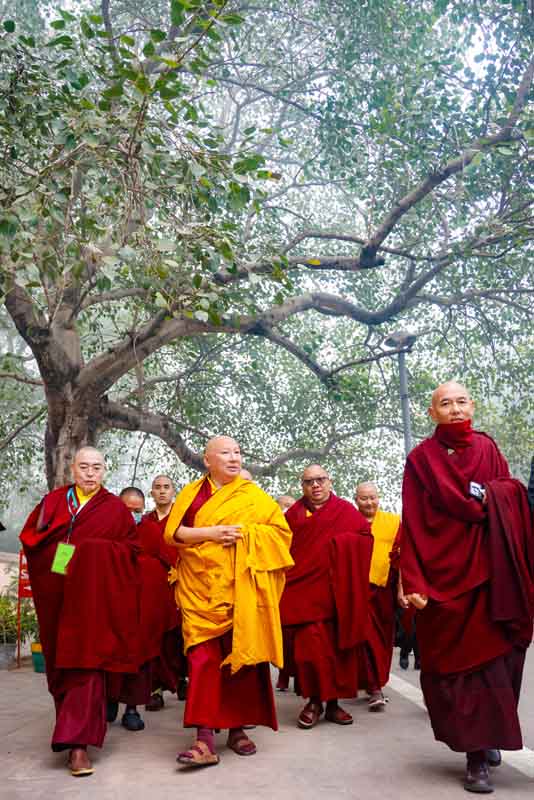
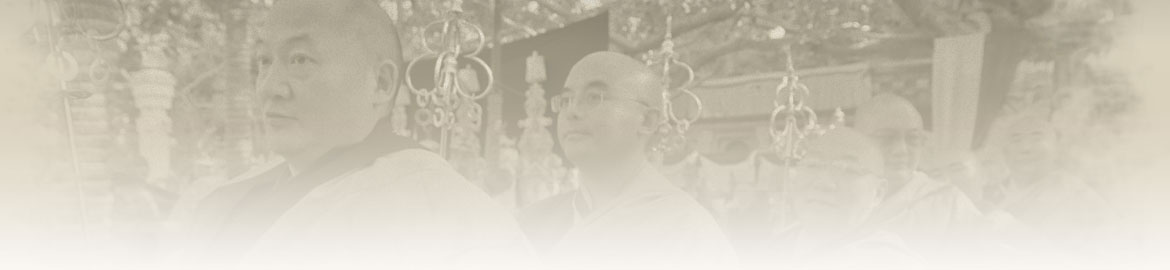
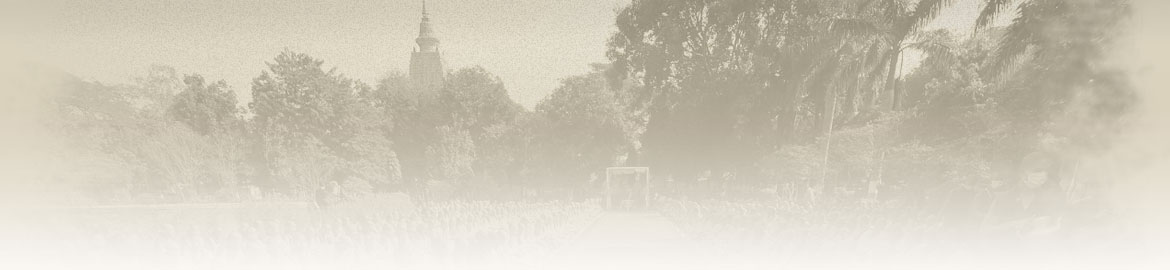
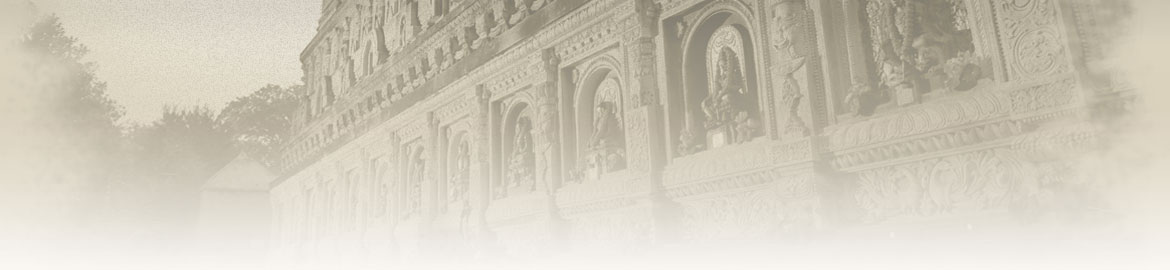
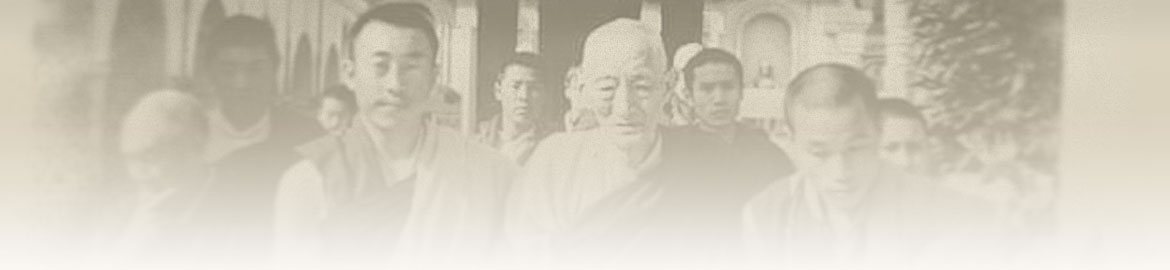
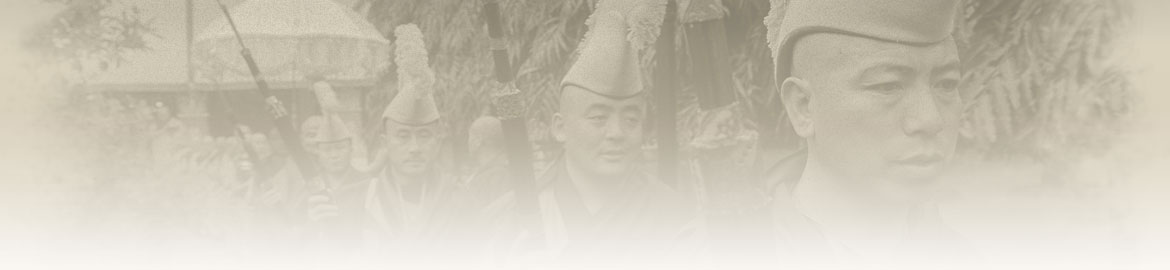
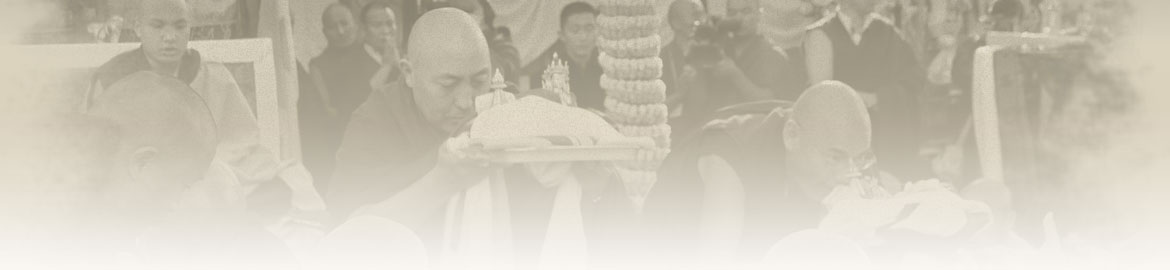
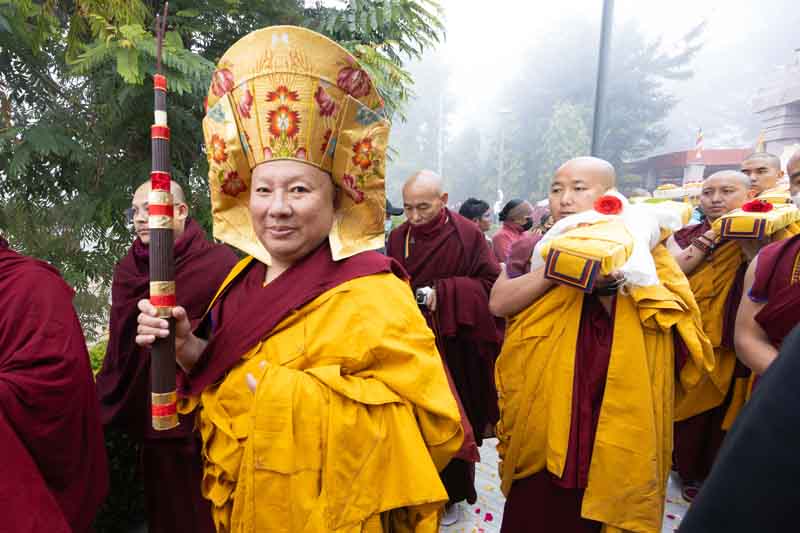
The second part of the programme was from 7.00 – 8.30 am. Zurmang Gharwang Rinpoche, along with several hundred fully ordained monks and dozens of nuns, proceeded to the Mahabodhi Stupa to hold the solemn Kangyur procession.
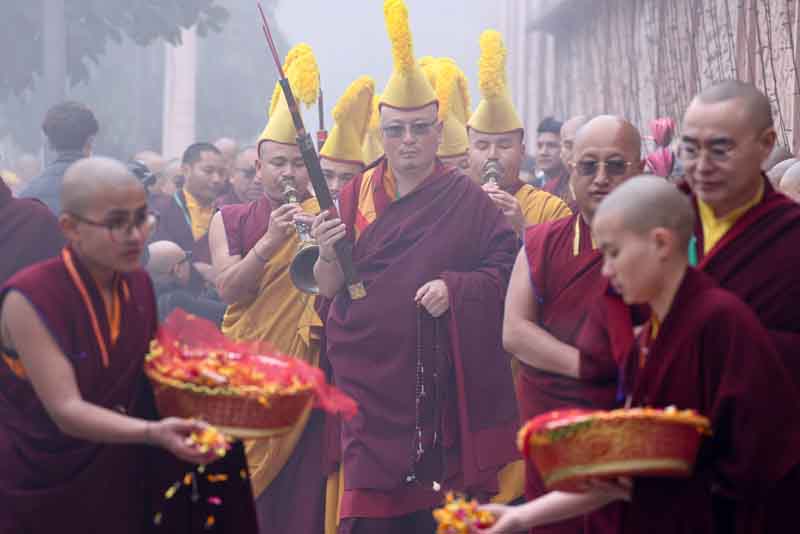
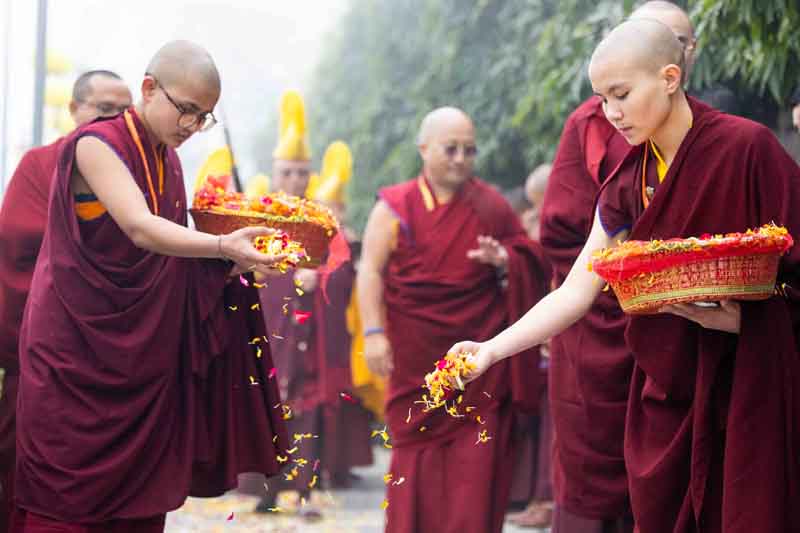
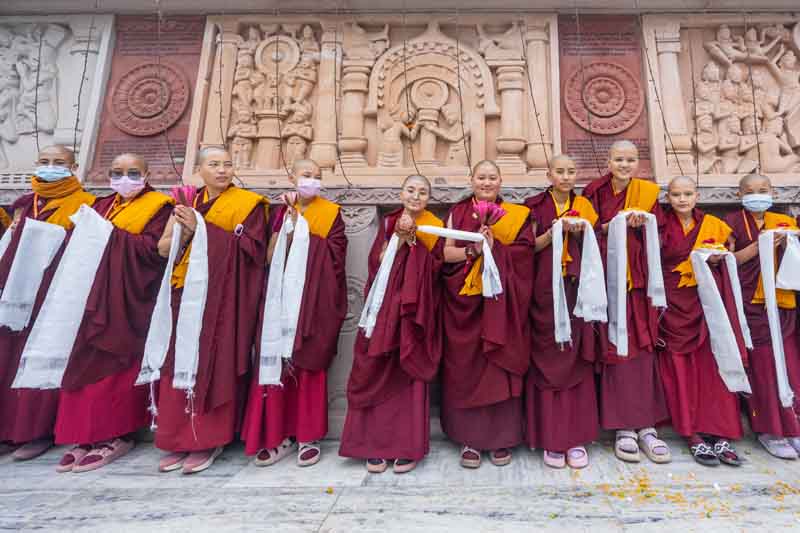
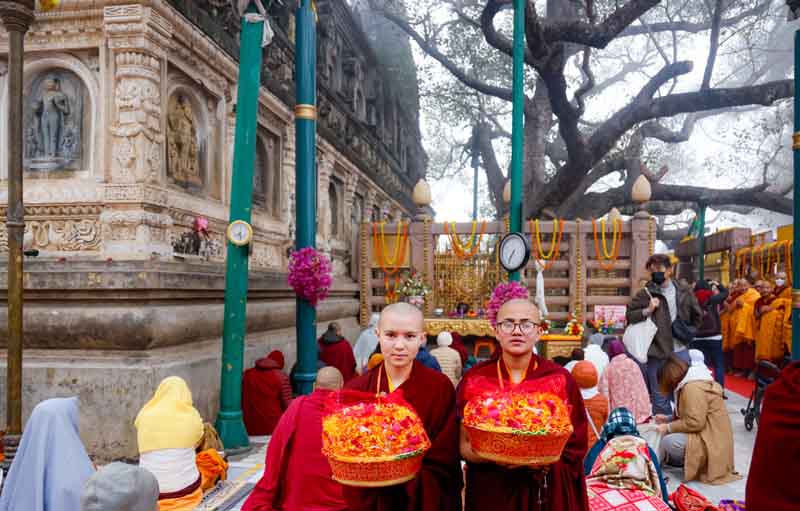
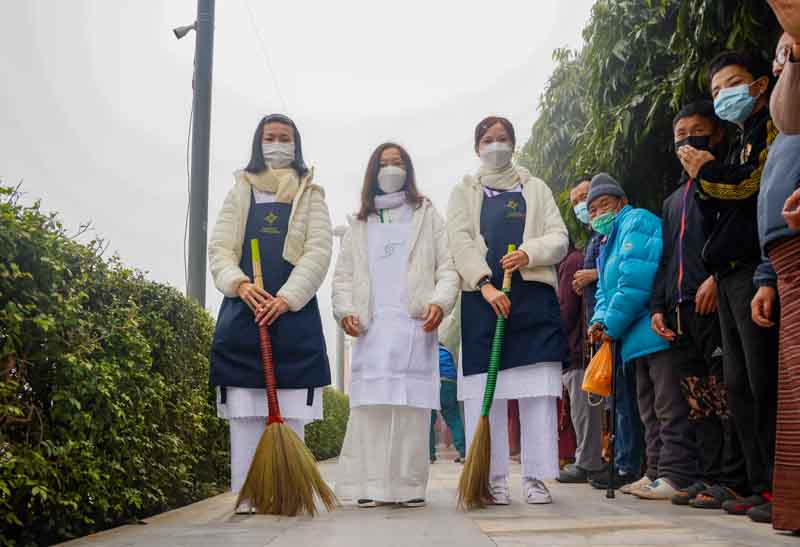
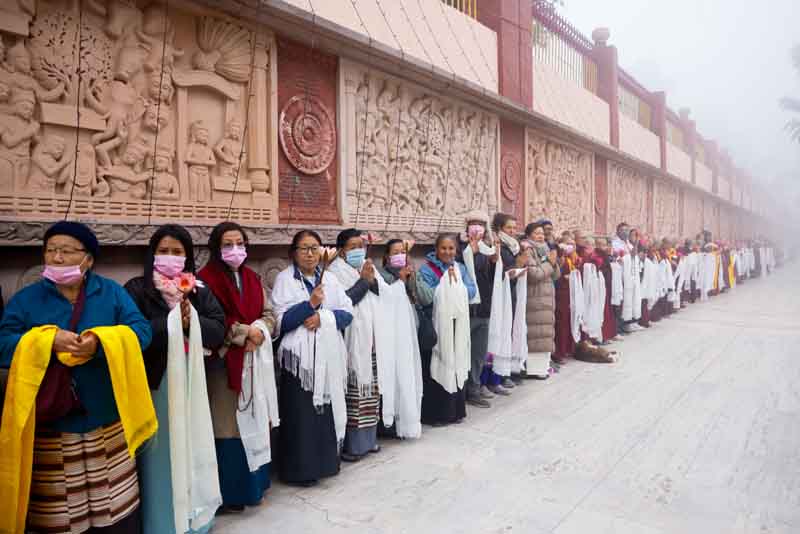
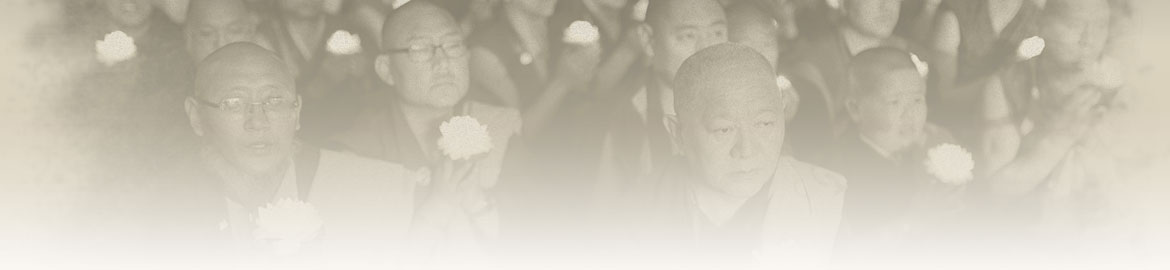
The circumambulation paths of the great stupa were lined with both ordained and lay devotees, proffering lotuses, flowers, baskets of flower petals, katas and incense, to show their respect and devotion.
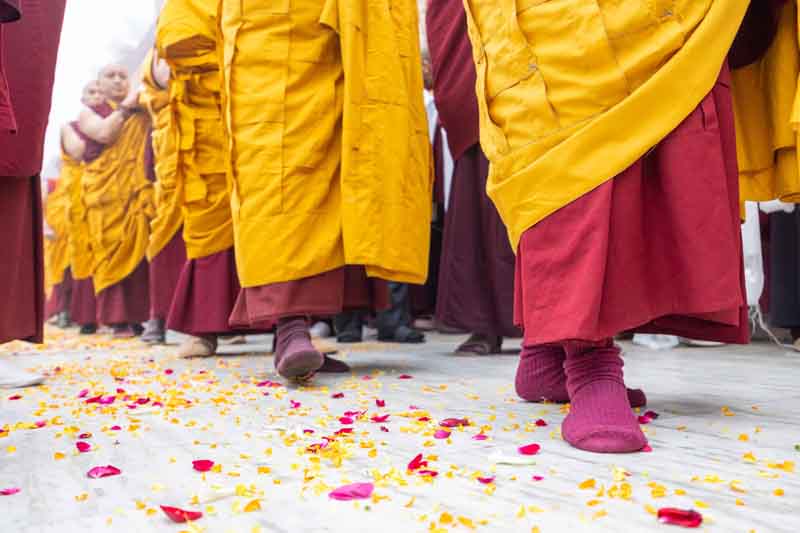
Nuns scattered flower petals onto the path ahead of the procession. Then came a monk bearing an incense holder. Behind him came monks playing gyaling and blowing conches. This follows the instructions in the Aspiration of Excellent Conduct which states: "With supreme flowers, supreme garlands, cymbals, anointing oils, supreme parasols, supreme lamps, and supreme incense, I shall make offerings to those Victorious Ones.”
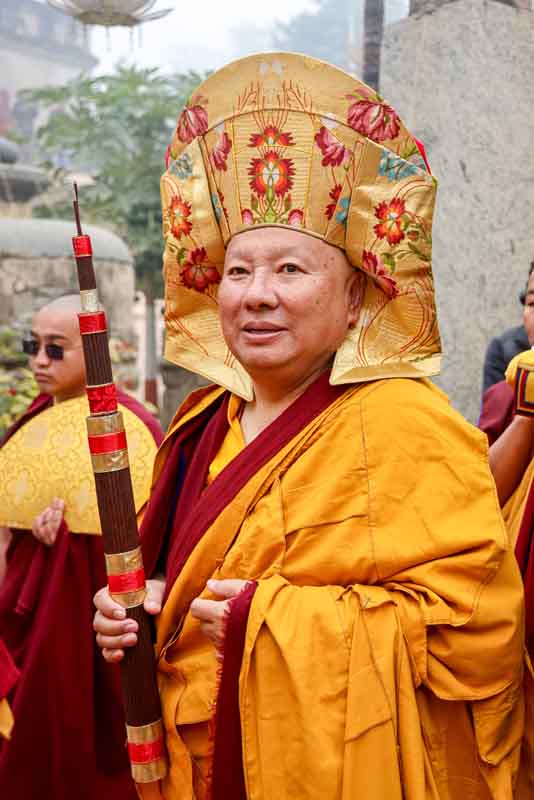
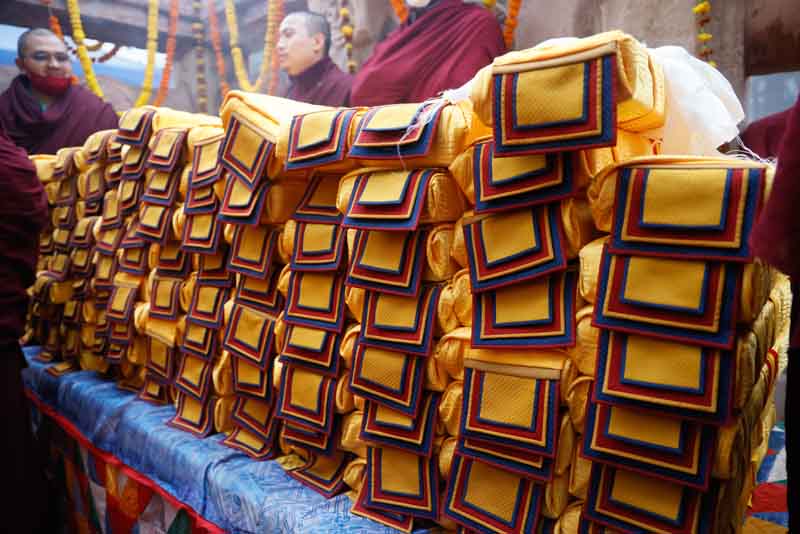
Zurmang Gharwang Rinpoche, the chief khenpos, and the Kagyu Mönlam disciplinarians led the procession of monks, each bearing a volume of the Kangyur on their left shoulder.
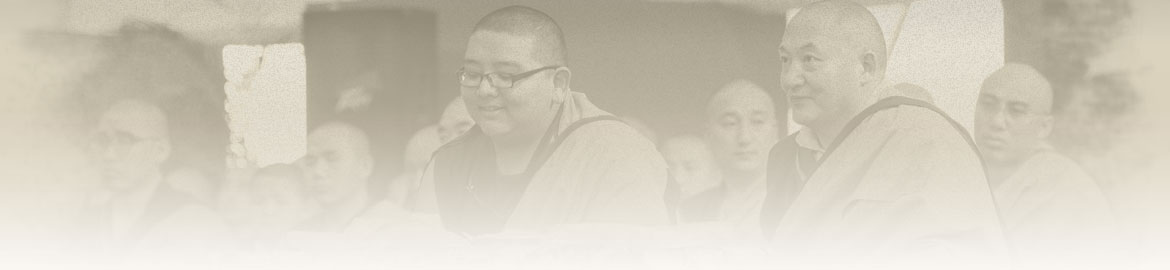
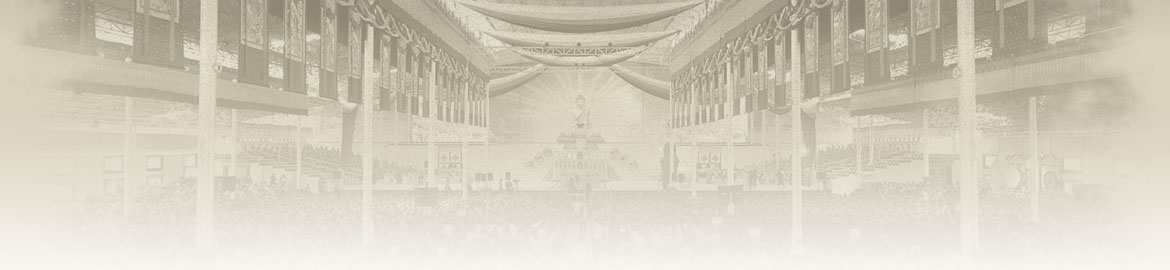
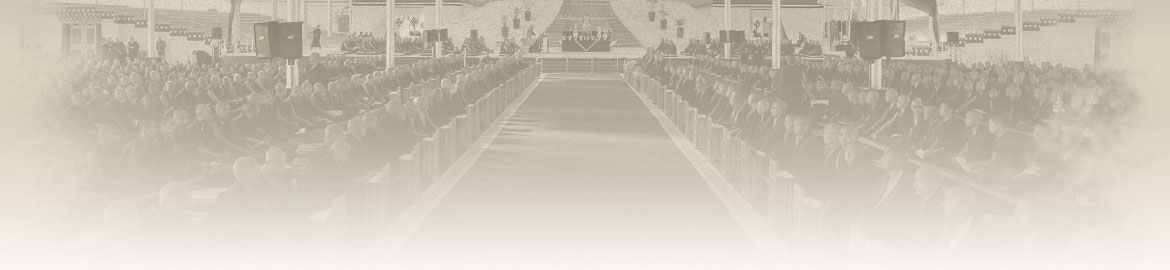
At 9.00 am the third part of the morning programme began in the Monlam Pavillion. After the recitation of praises, offerings, and the Treasury of Precious Qualities from the Essence of Glory, the assembly recited the dhāraṇī called "The Practice of the Limitless Door":
By hearing the Dharma teachings and rejoicing,
By writing, holding, and reciting them,
The merit accumulated, as vast as rivers,
Cannot be fathomed by all sentient beings.
In all lifetimes one will see the Victorious Ones,
And from them receive immeasurable faith.
One will also understand the profound sūtras' meaning,
And swiftly attain complete enlightenment.
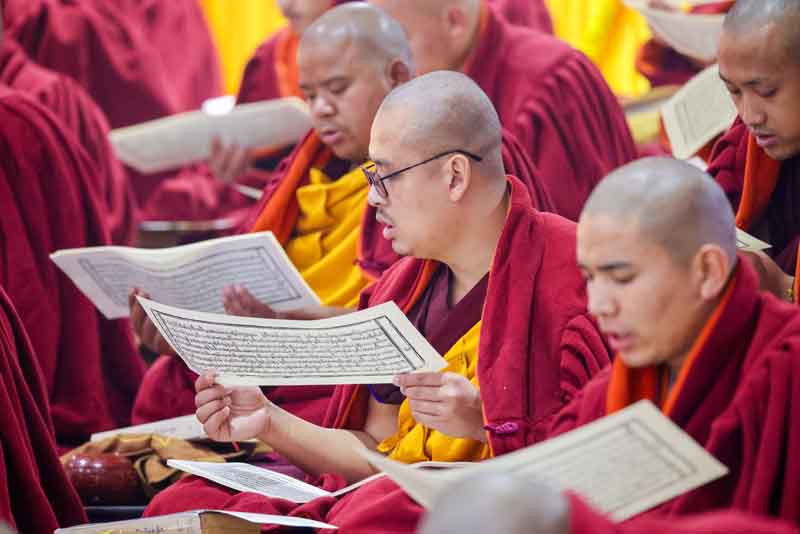
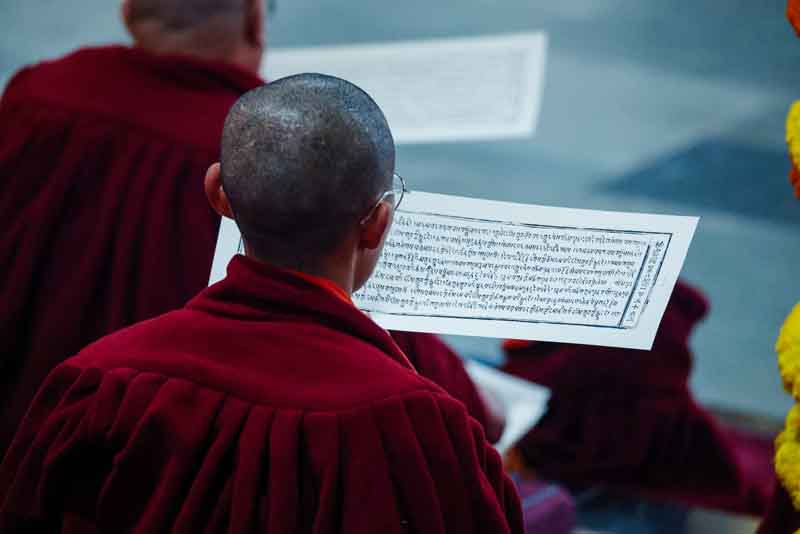
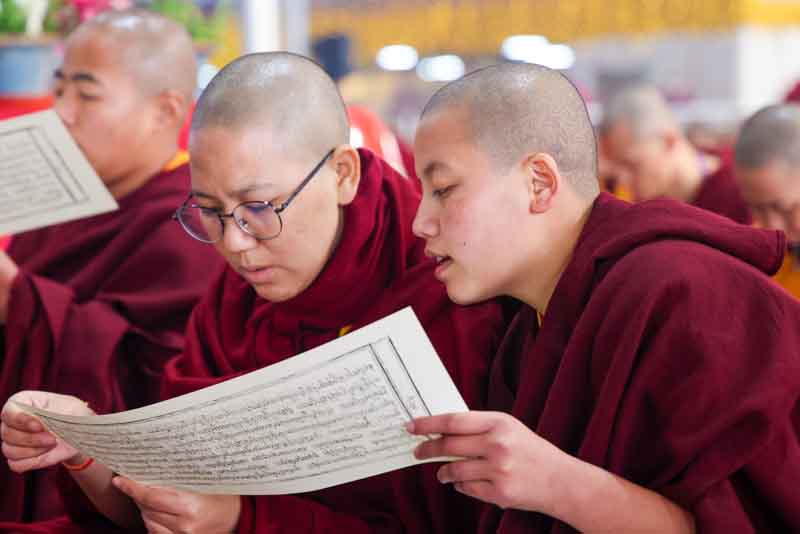
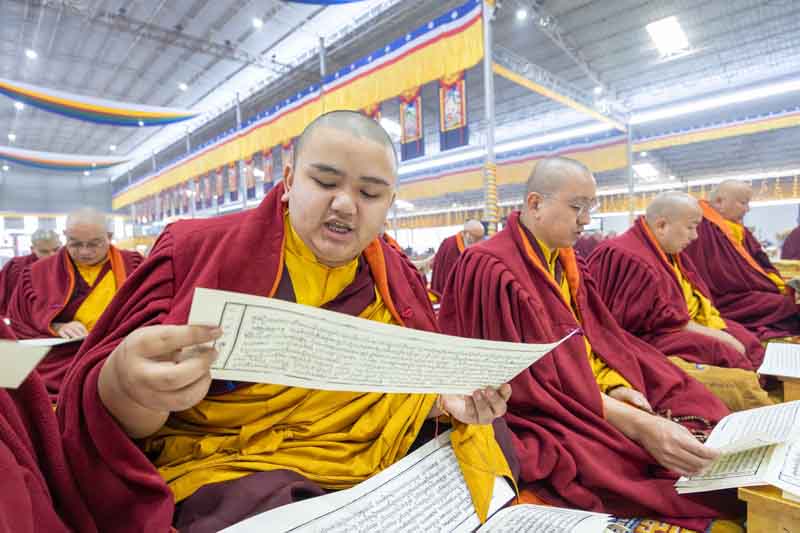
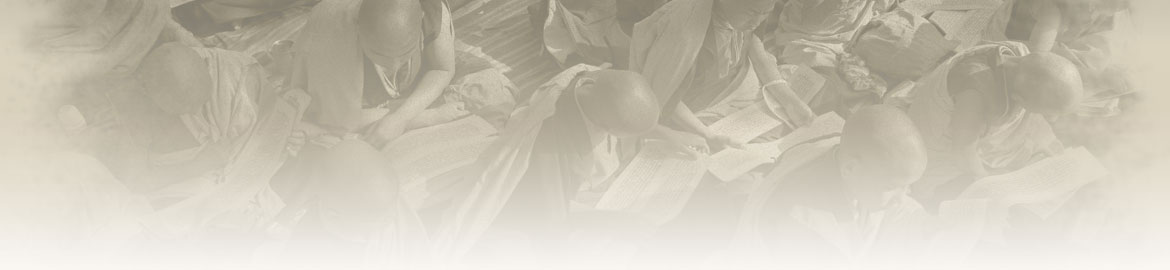
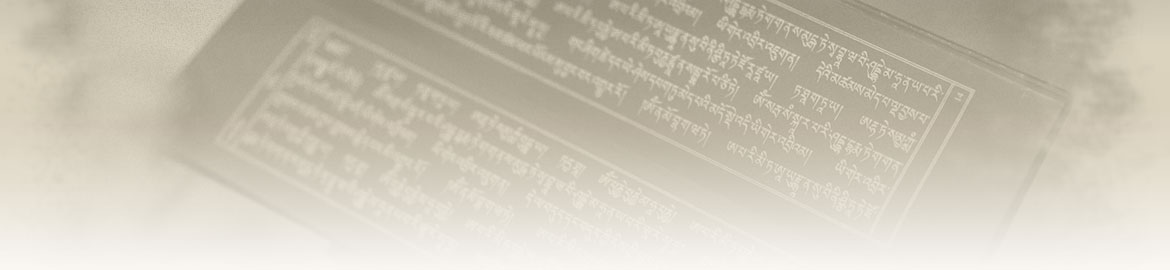
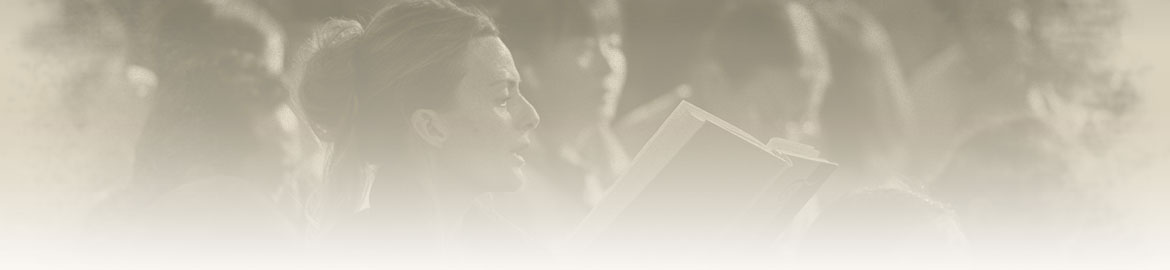
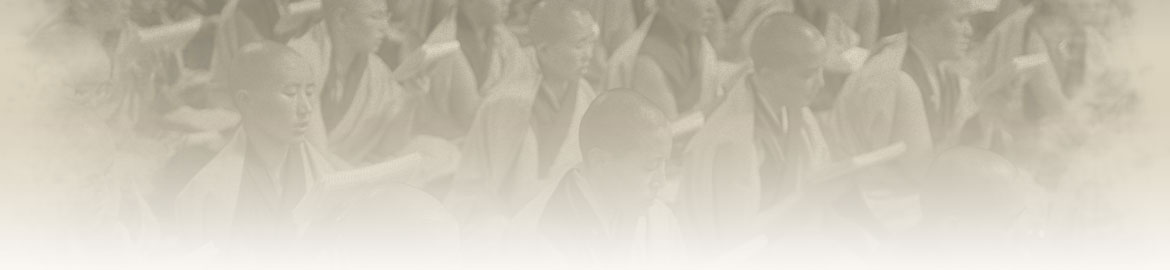
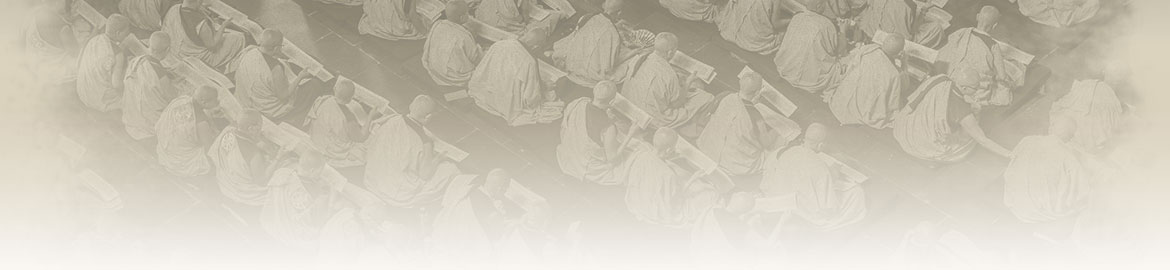
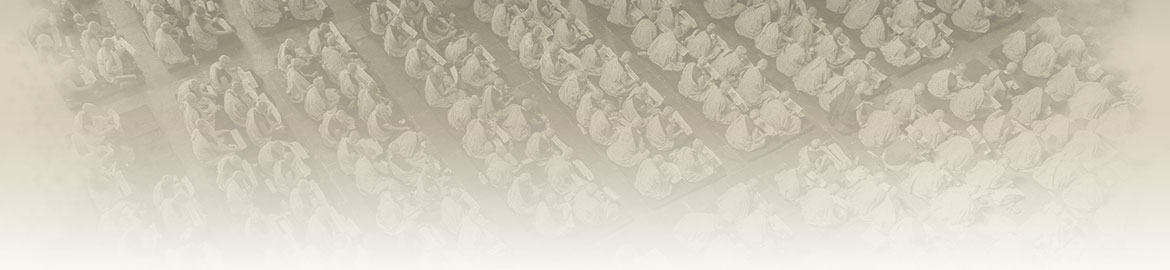
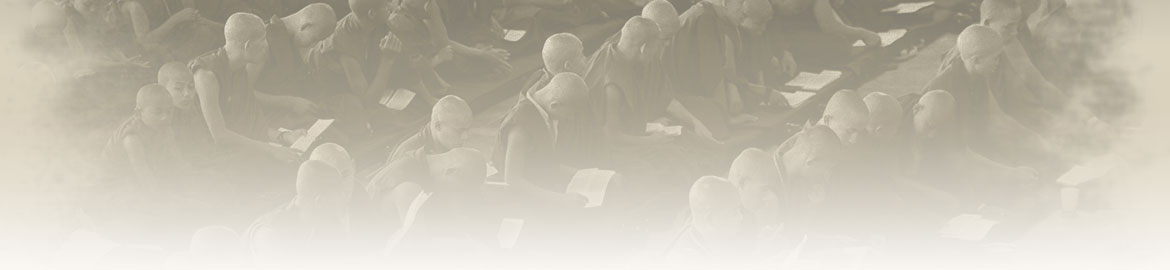
Pages of the Kangyur were distributed by young monks to anyone, lay or monastic, who could read Tibetan, and having been read aloud, were carefully collected and reassembled into the volumes of the Kangyur.
Thus, was accomplished a reading of the Kangyur in its entirety.