




















KM-banner1.jpg
KM-banner9.jpg
KM-banner10.jpg
KM-banner11.jpg
KM-banner12.jpg
KM-banner13.jpg
KM-banner14.jpg
KM-banner15.jpg
KM-banner16.jpg
KM-banner25.jpg
KM-banner24.jpg
KM-banner23.jpg
KM-banner22.jpg
KM-banner21.jpg
KM-banner20.jpg
KM-banner2.jpg
KM-banner19.jpg
KM-banner18.jpg
KM-banner17.jpg
KM-banner26.jpg
KM-banner27.jpg
KM-banner28.jpg
KM-banner29.jpg
KM-banner3.jpg
KM-banner30.jpg
KM-banner31.jpg
KM-banner4.jpg
KM-banner5.jpg
KM-banner6.jpg
KM-banner8.jpg
KM-banner7.jpg
Shadow
The Red Crown Ceremony and Long-Life Empowerment

The Red Crown Ceremony and Long-Life Empowerment

Kagyu Pavillion,

3 January 2026

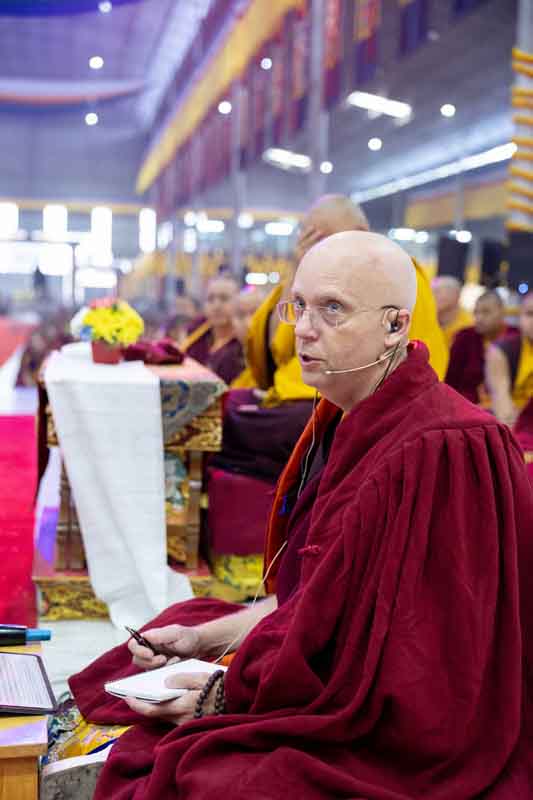
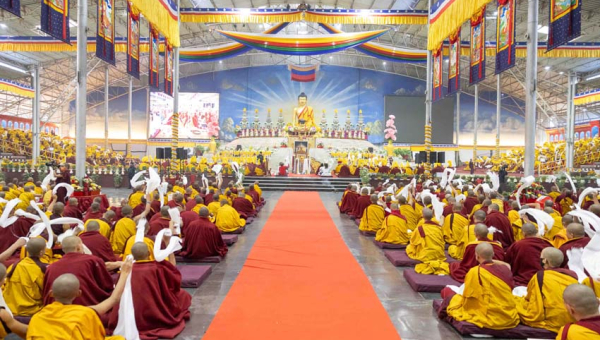
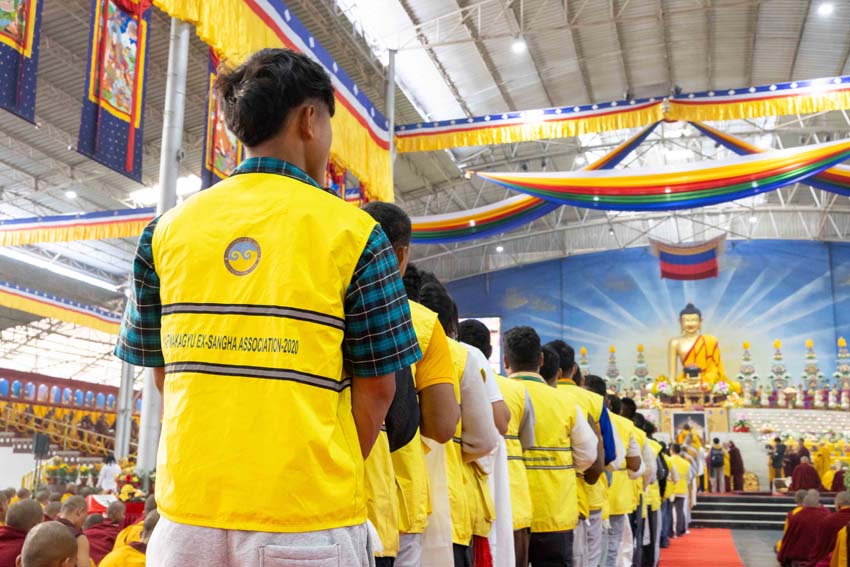
The morning began at 9.00am with an introduction given from the stage in Tibetan by Khenpo Kalsang Nyima and in English by Khenpo David Karma Choepel as an introduction to the history of the ceremony and instructions on the attitudes to be held during the ceremony. (You can read this in a separate report.)

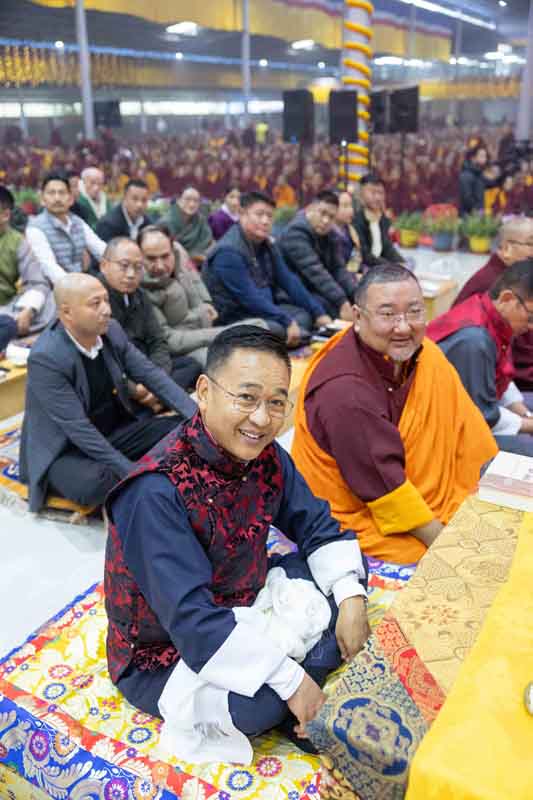
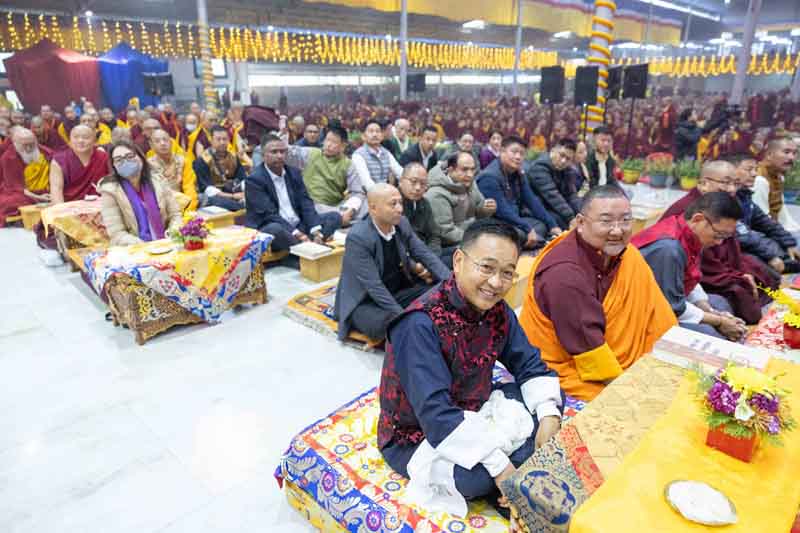
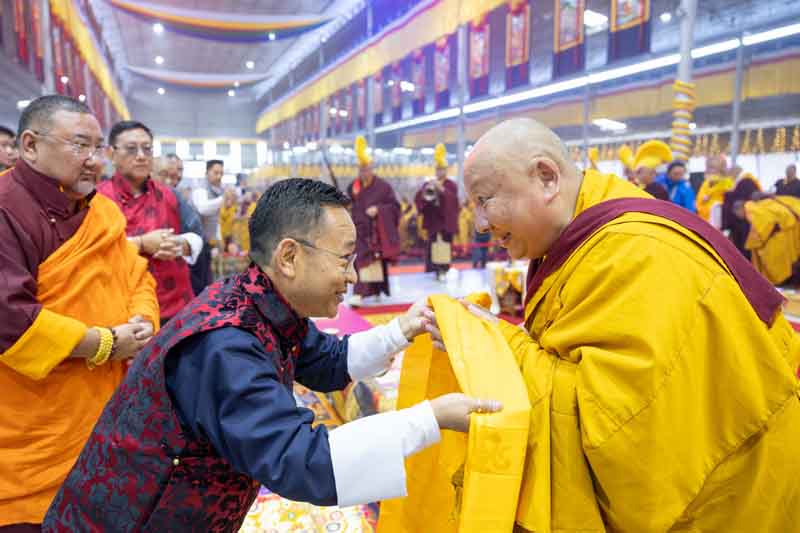
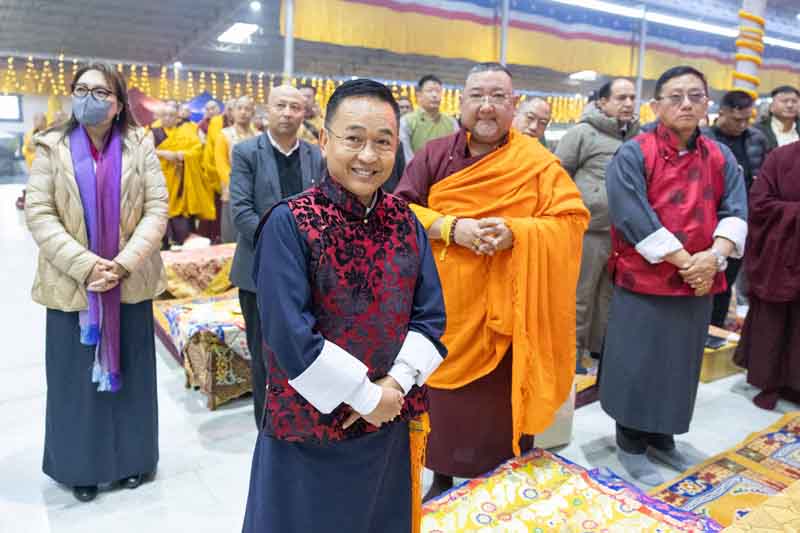
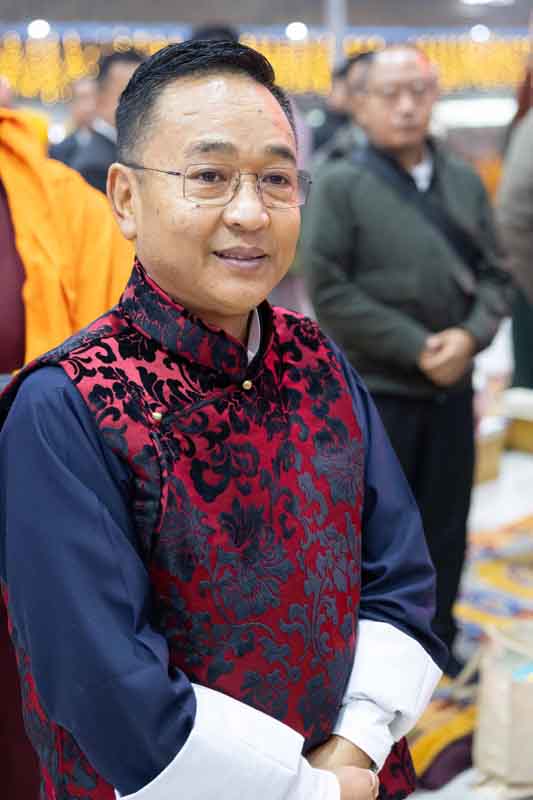
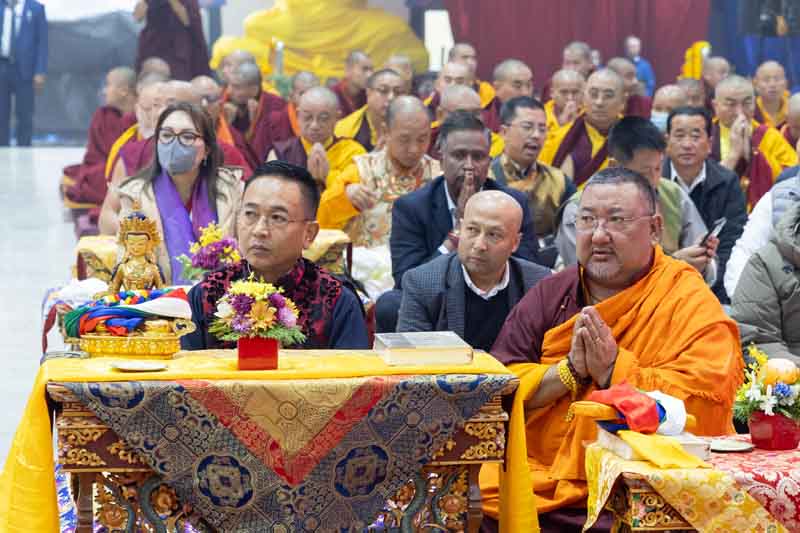
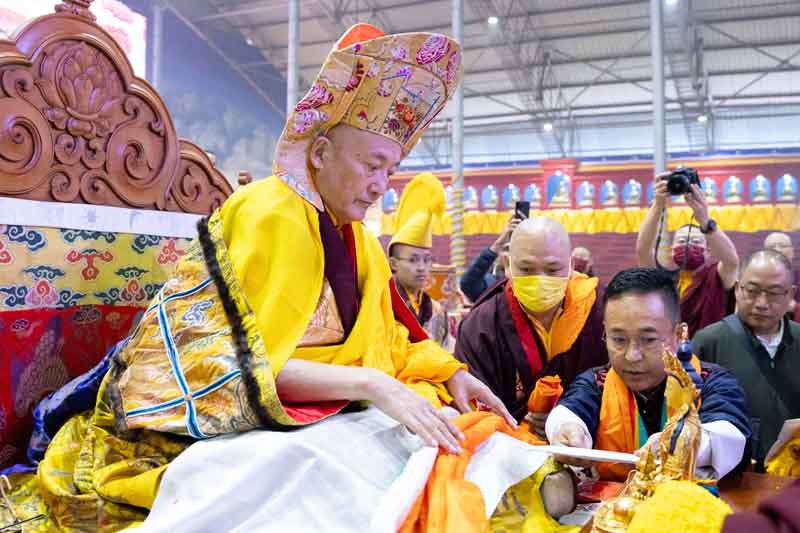
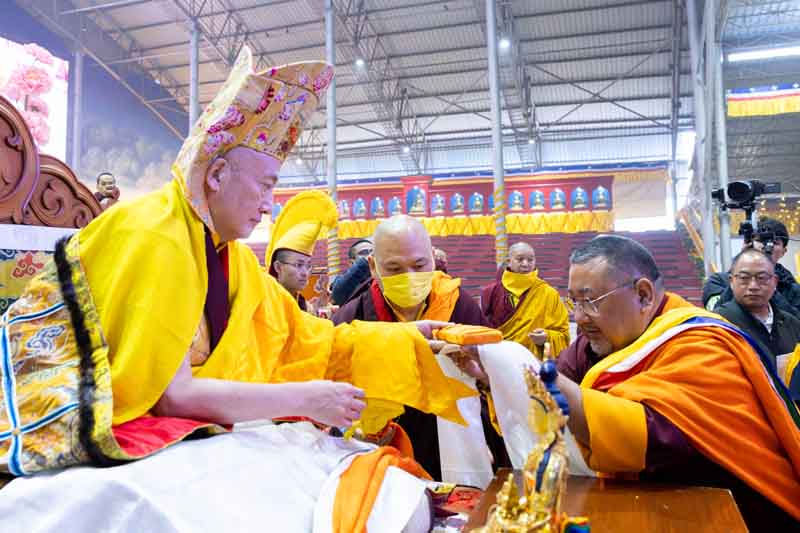
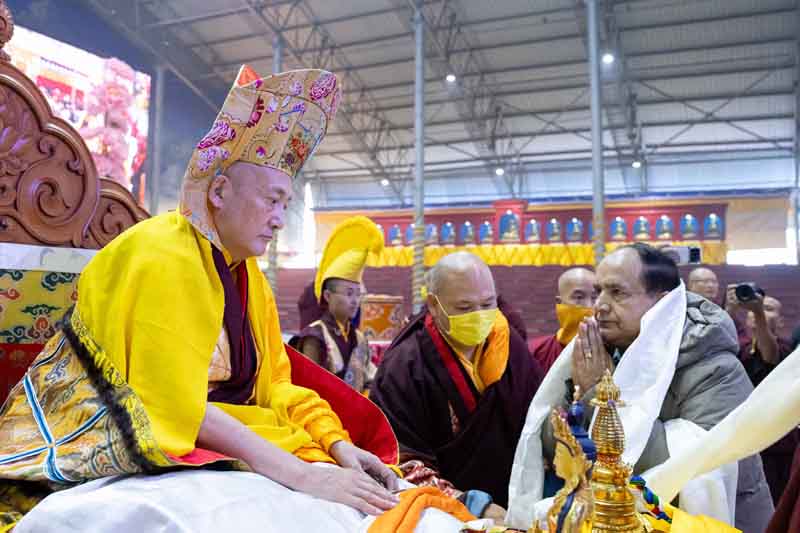
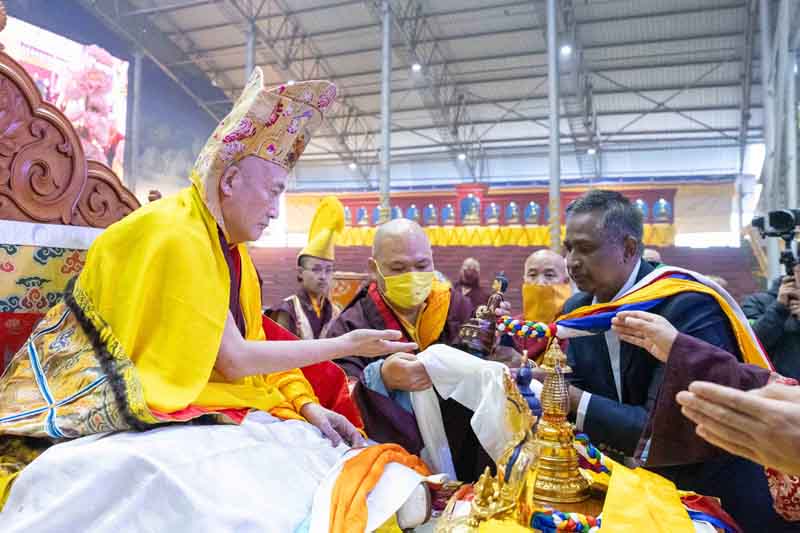
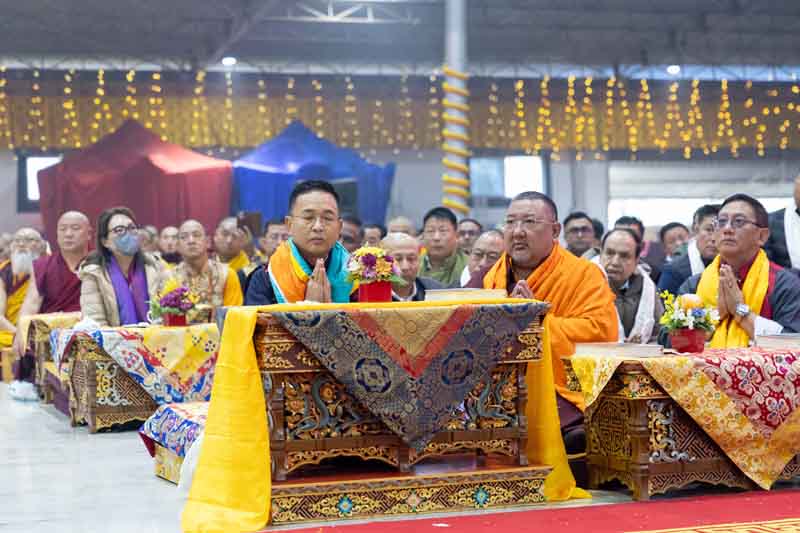
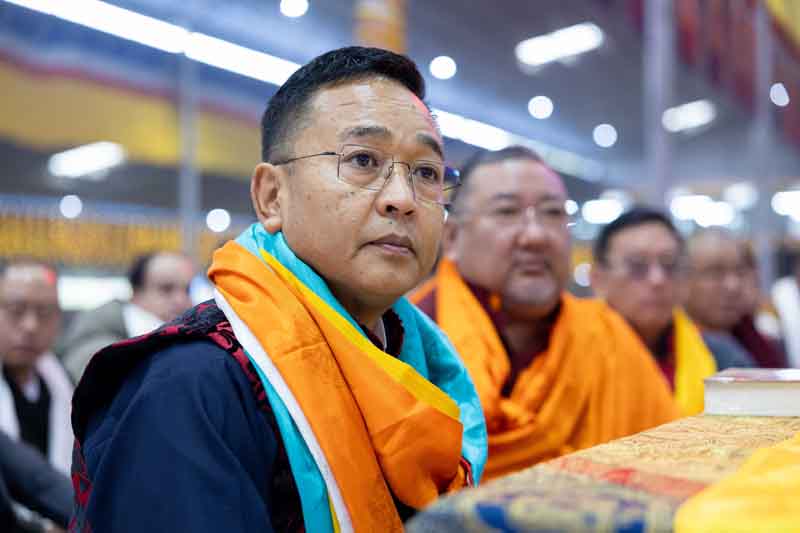
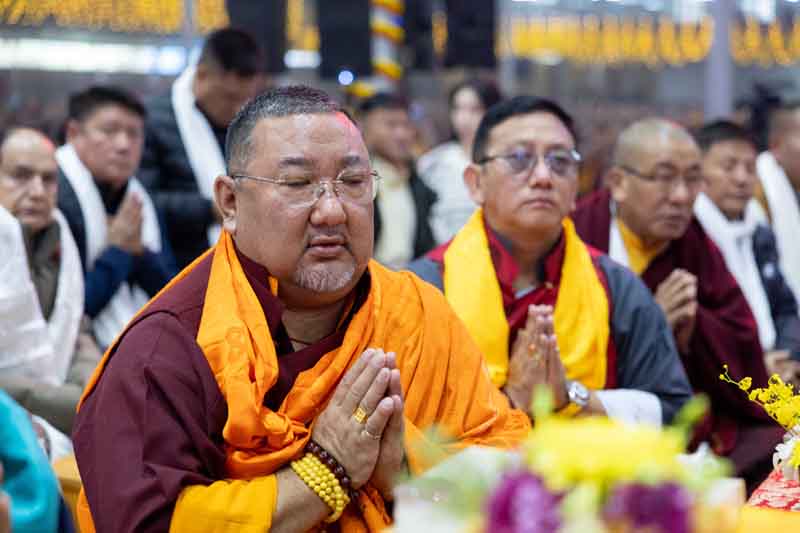
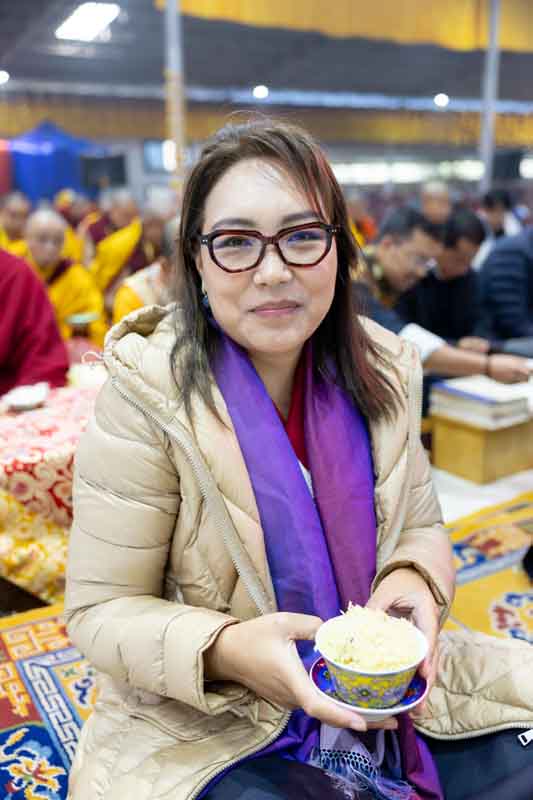
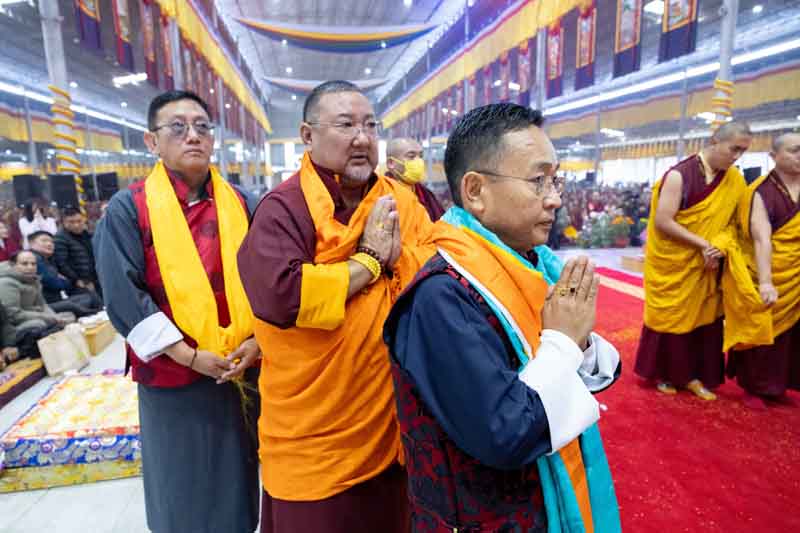
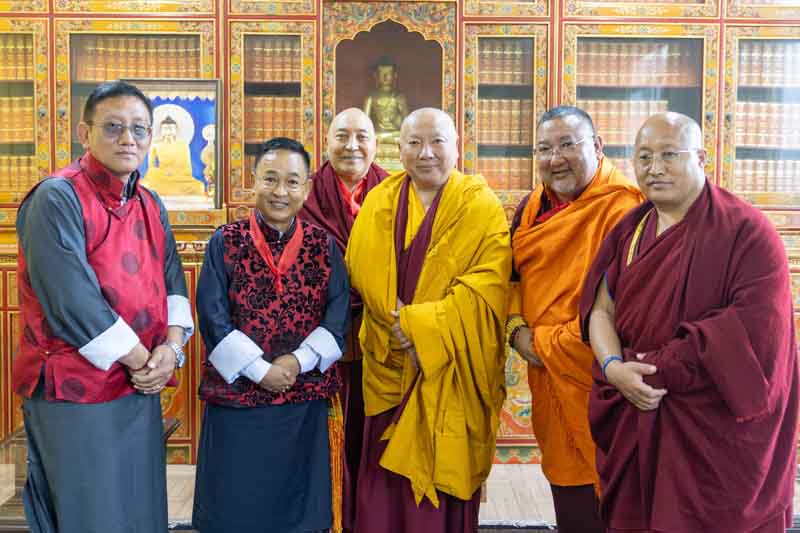
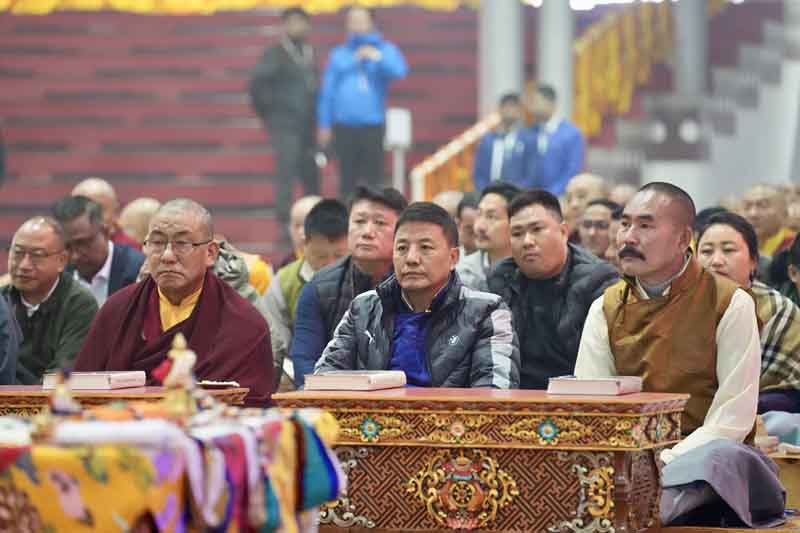
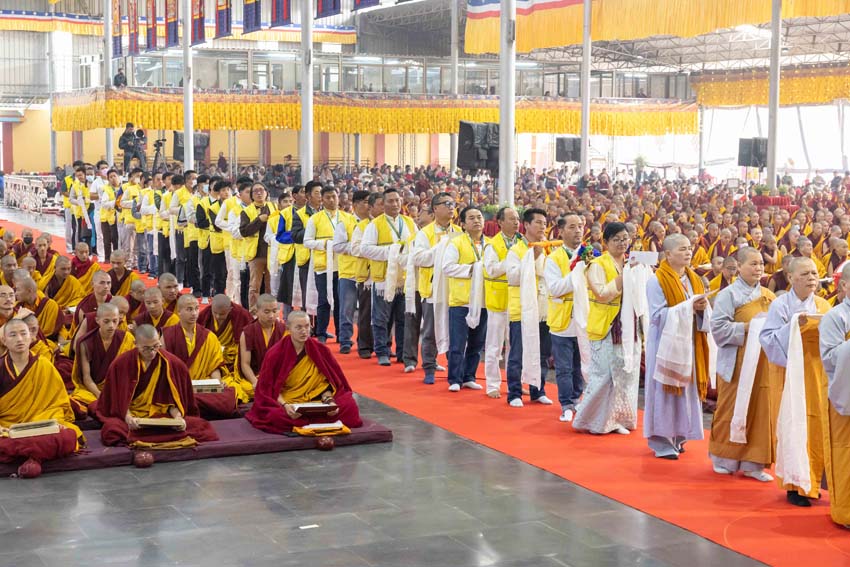
The chief guest at the ceremony was Chief Minister of Sikkim, Prem Singh Tamang, who was accompanied by Sonam Lama, Minister of Ecclesiastical Affairs of Sikkim, Sonam Venchungpa, Member of the Sikkim Legislative Assembly and other Sikkimese officials. Jetsunma Ngodrup Palzom, sister of His Holiness the Gyalwang Karmapa, was also present.

On this occasion, Khenpo Kalsang Nyima expressed gratitude on behalf of the entire Kagyu Monlam Chenmo assembly to both the Chief Minister of Sikkim Prem Singh Tamang and the Minister of Ecclesiastical Affairs Sonam Lama for their pure motivation in the past, present, and future in serving the monasteries, and especially for their immeasurable support and ongoing assistance in helping His Holiness the Gyalwang Karmapa, return to India and especially be allowed to go to Sikkim.

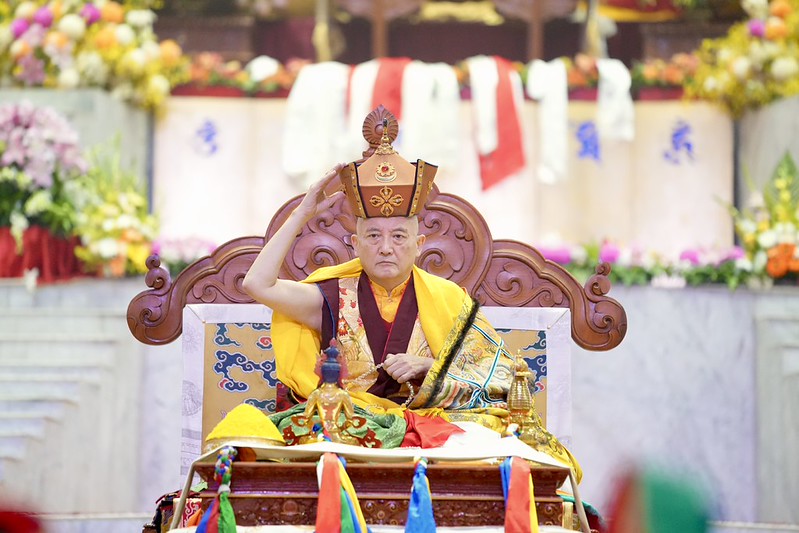
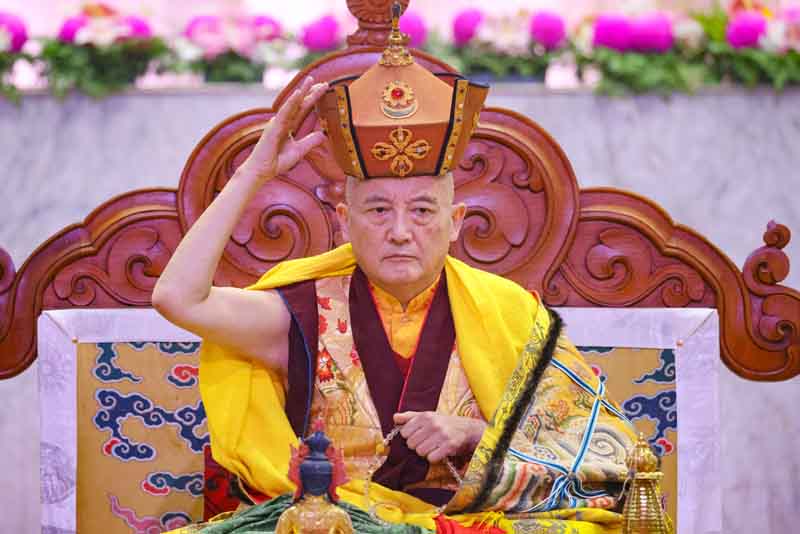
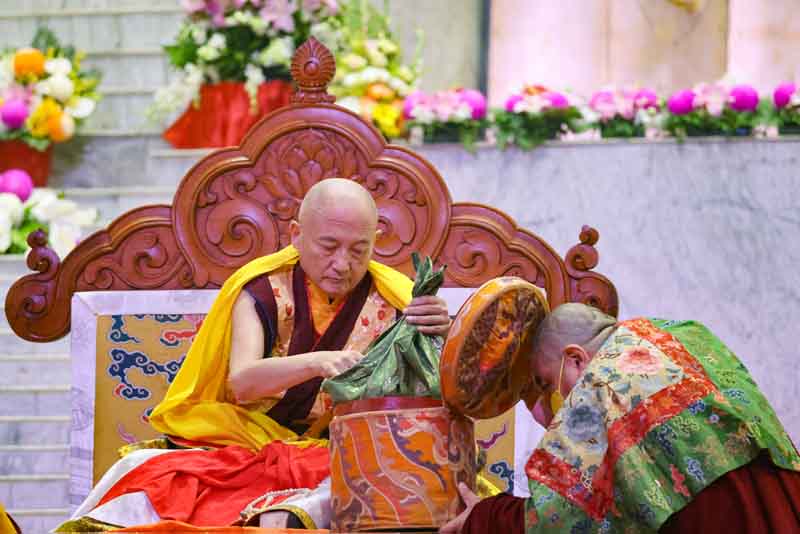
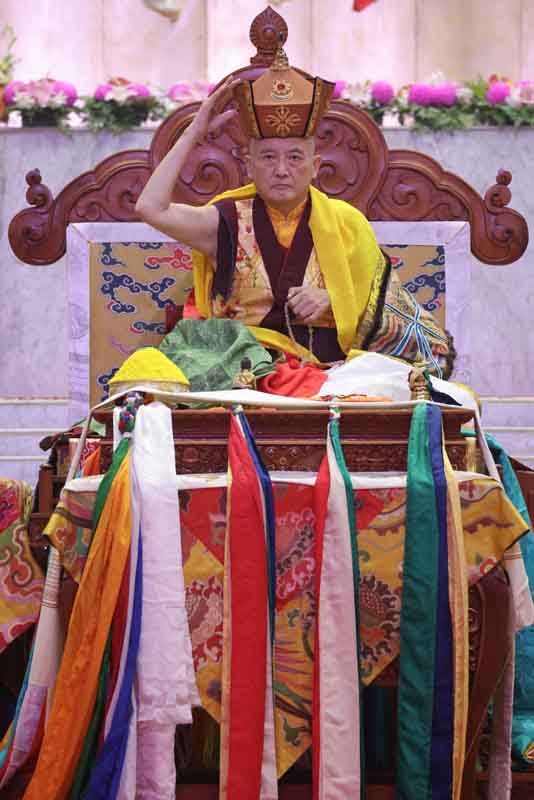
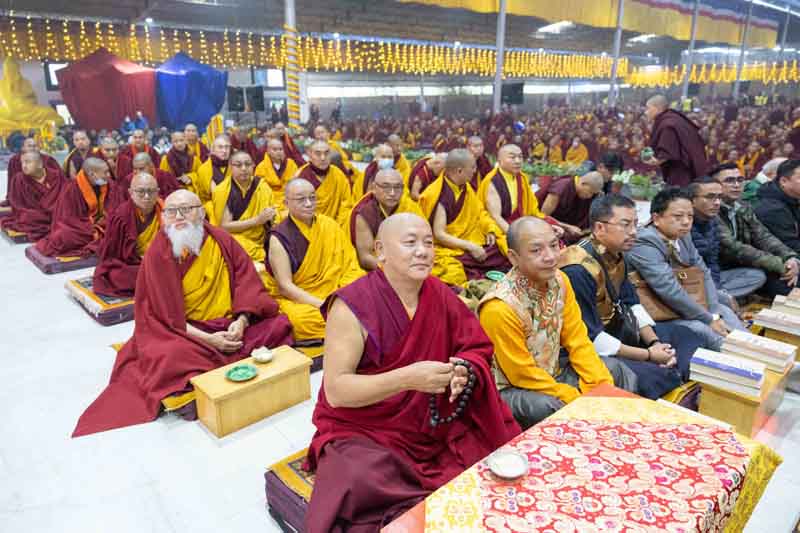
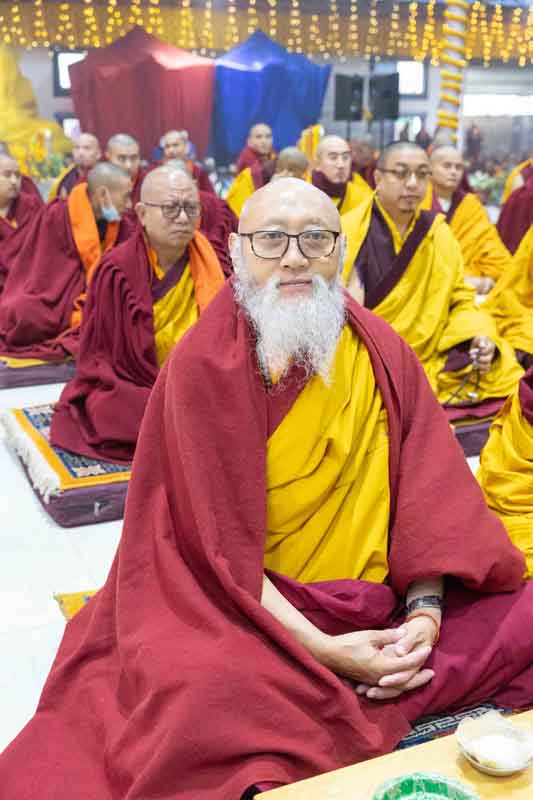
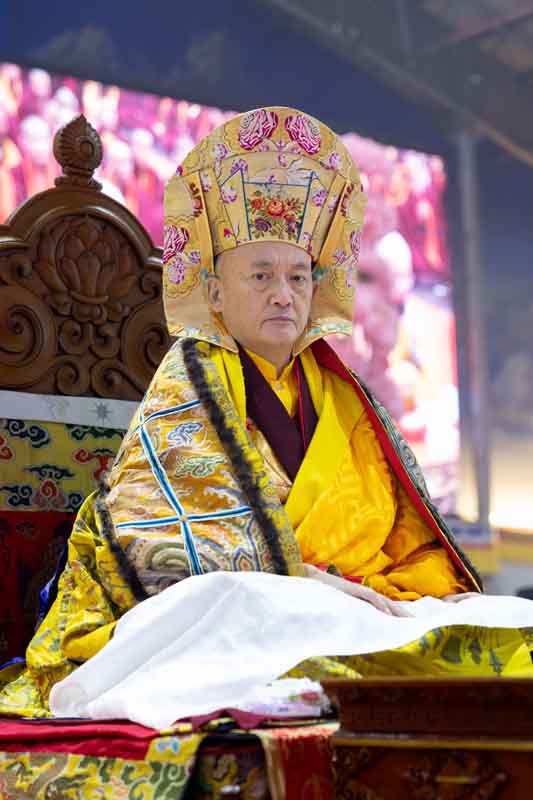
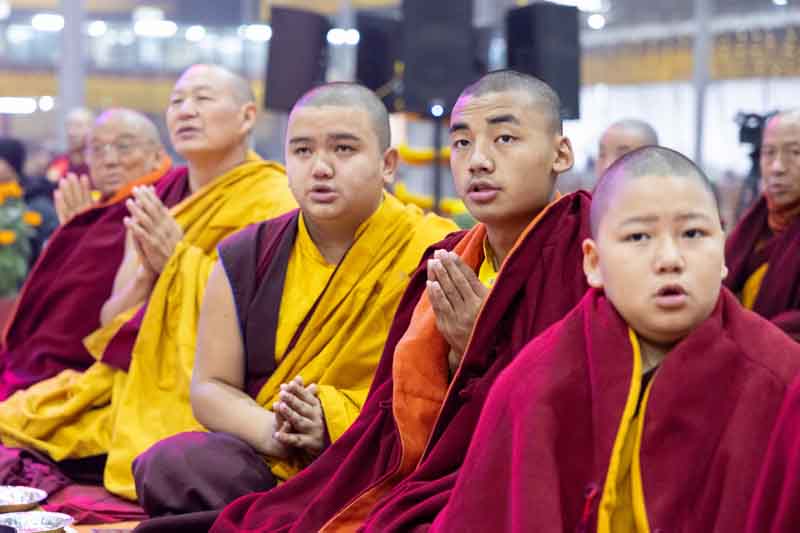
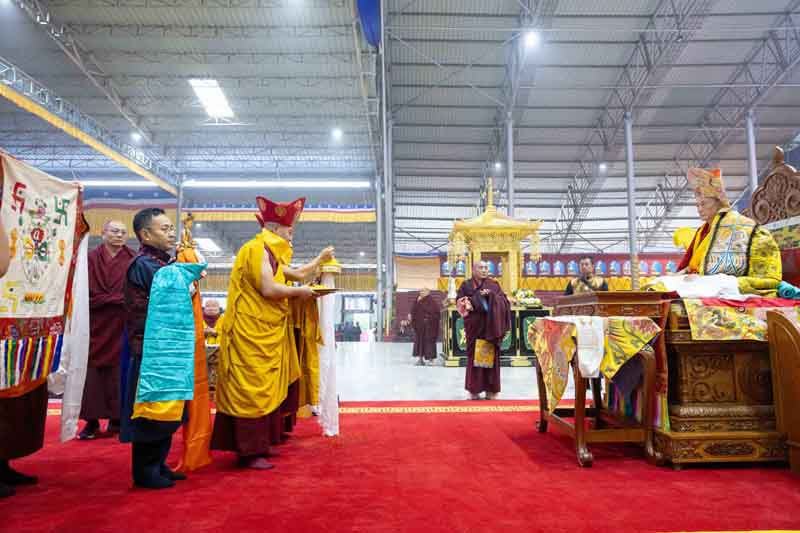
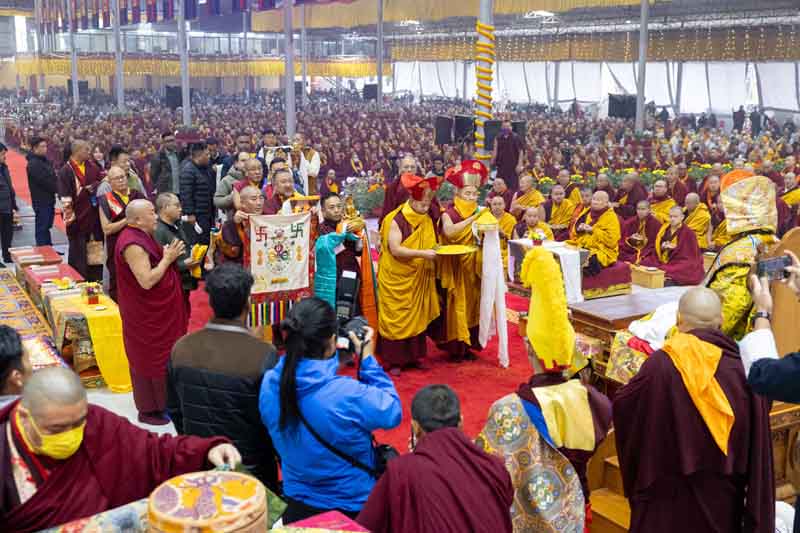
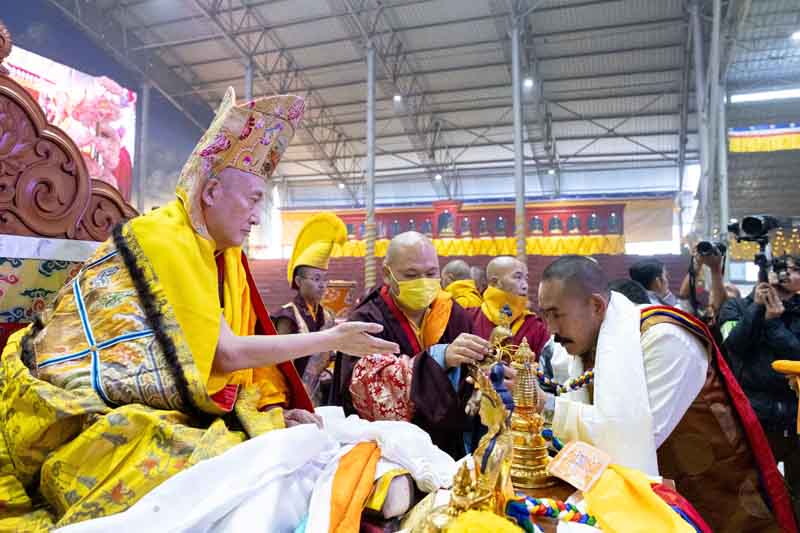
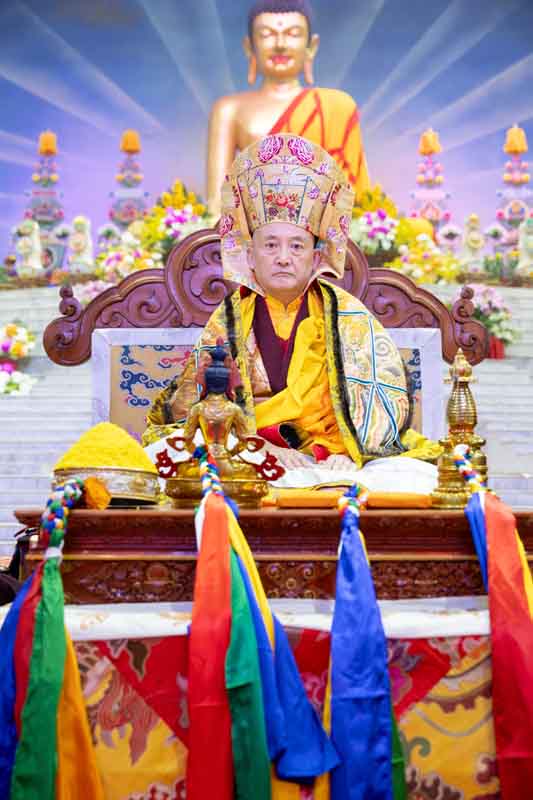
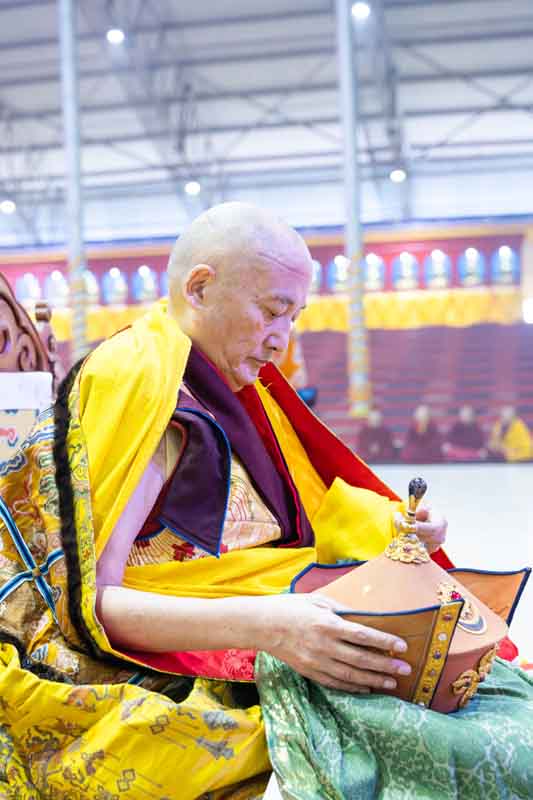
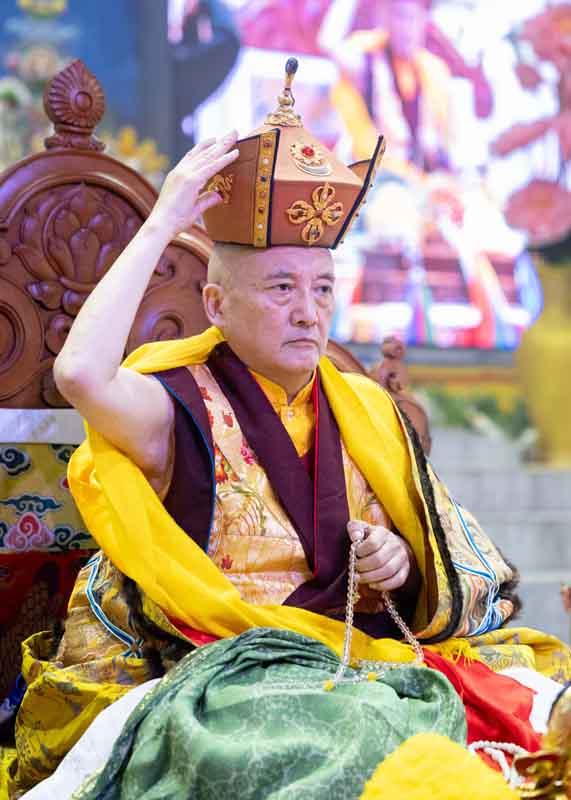
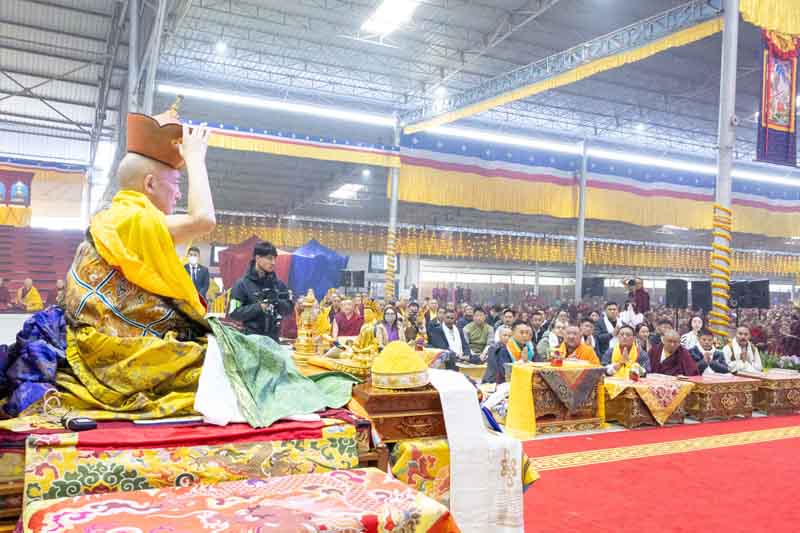
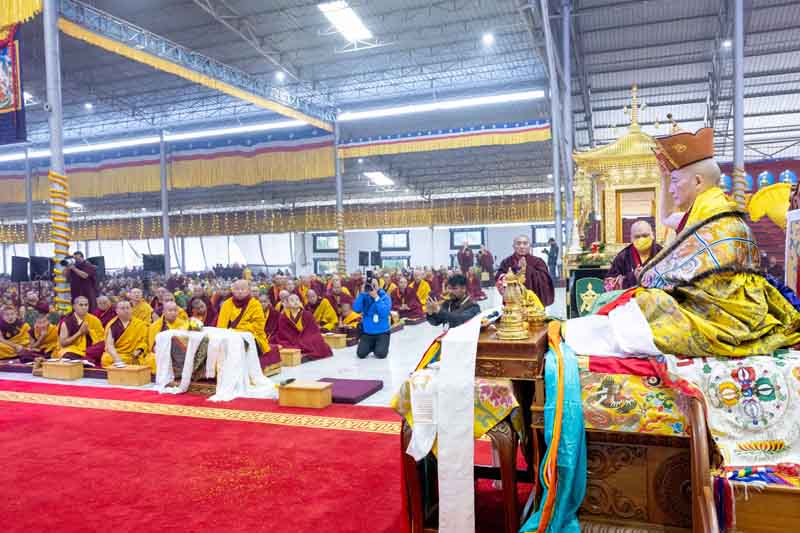
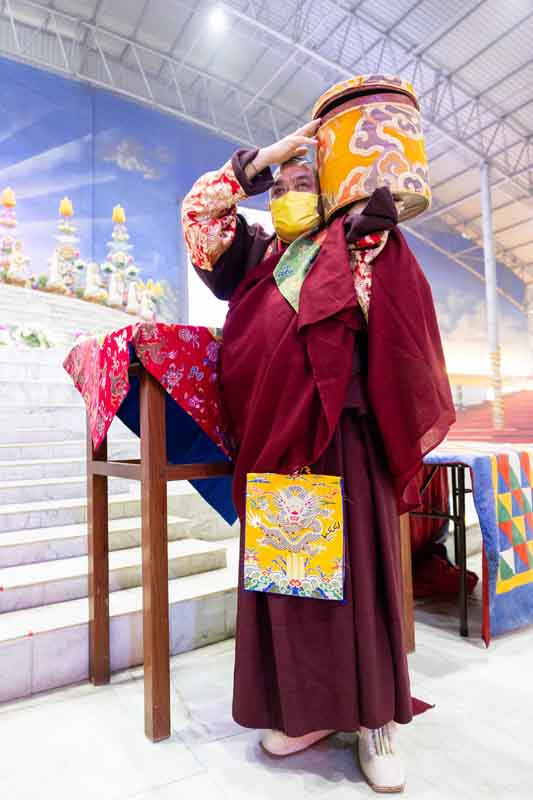
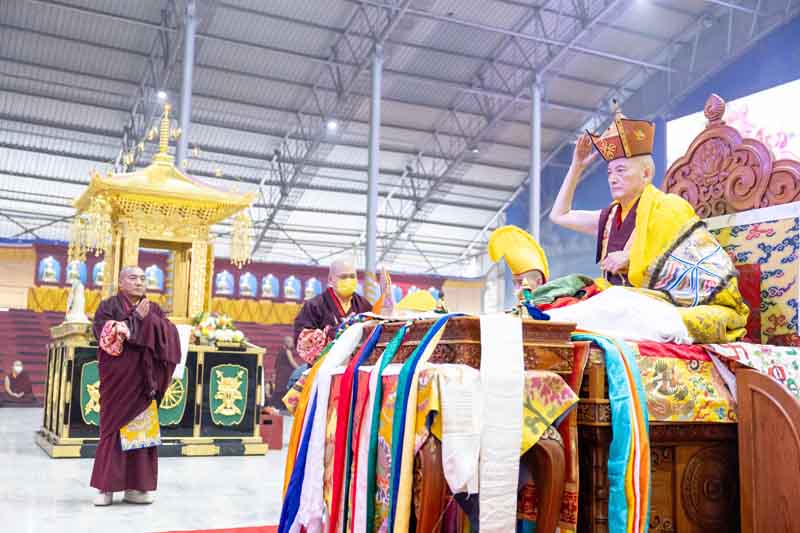
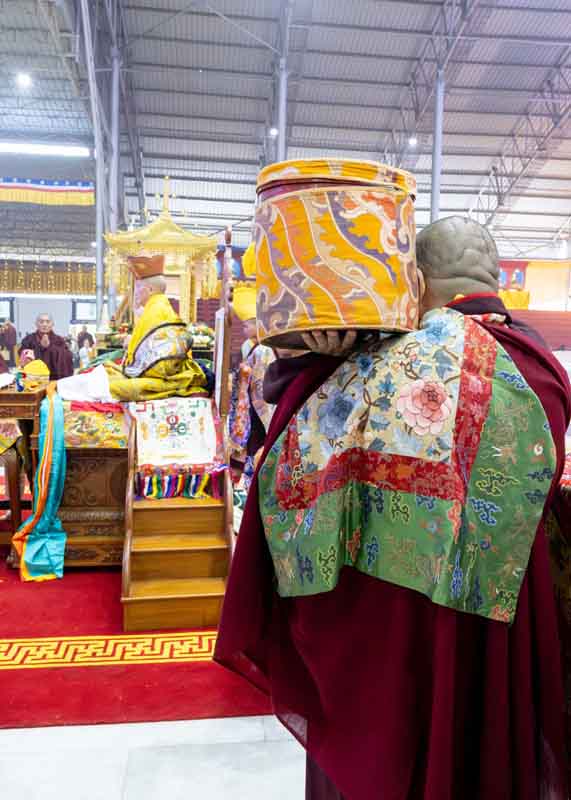
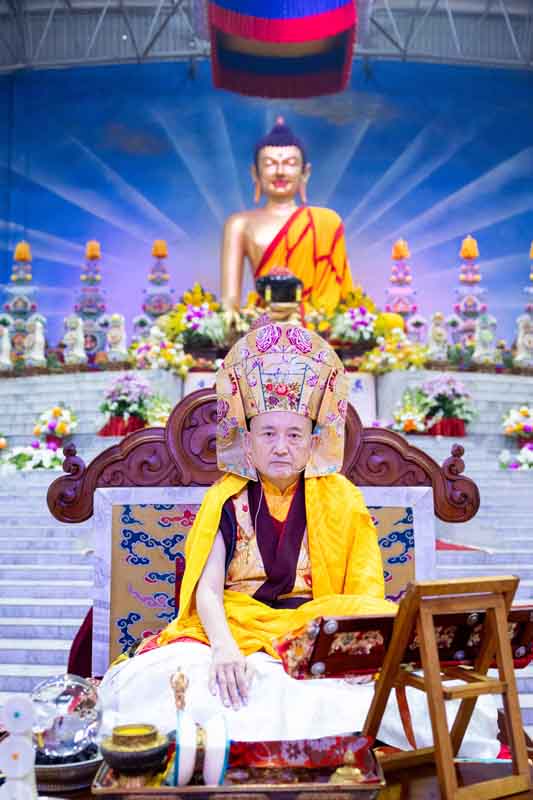
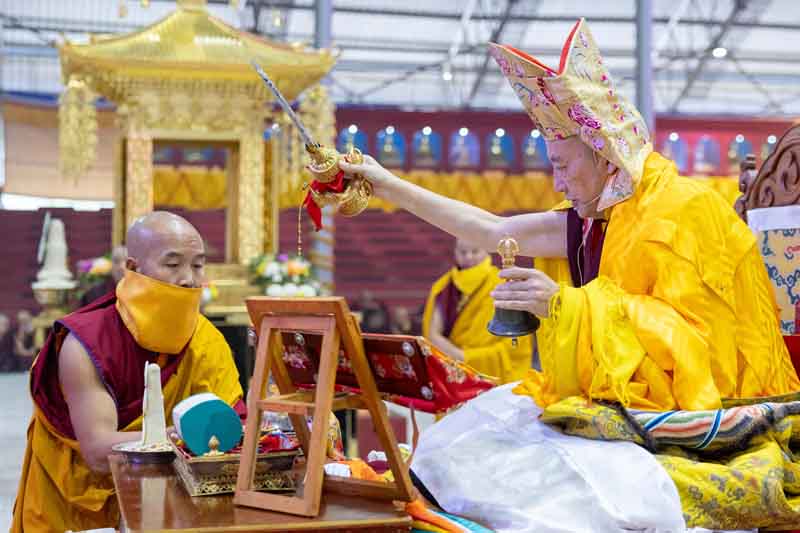
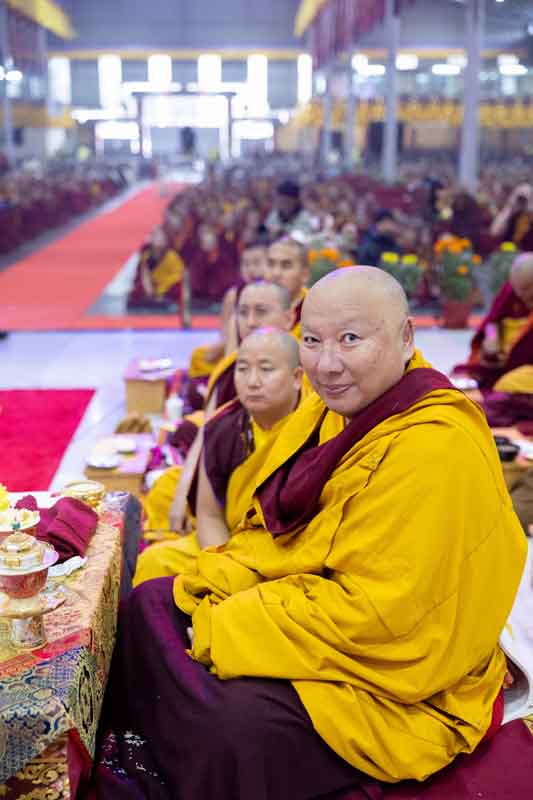
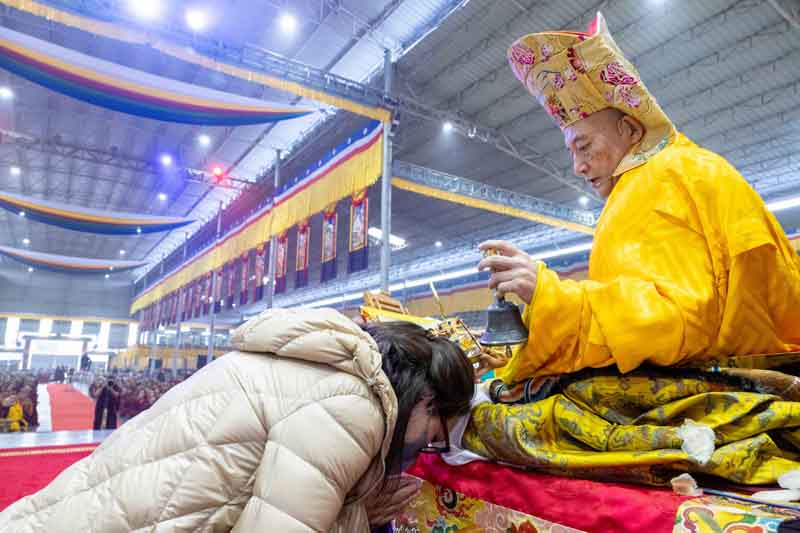
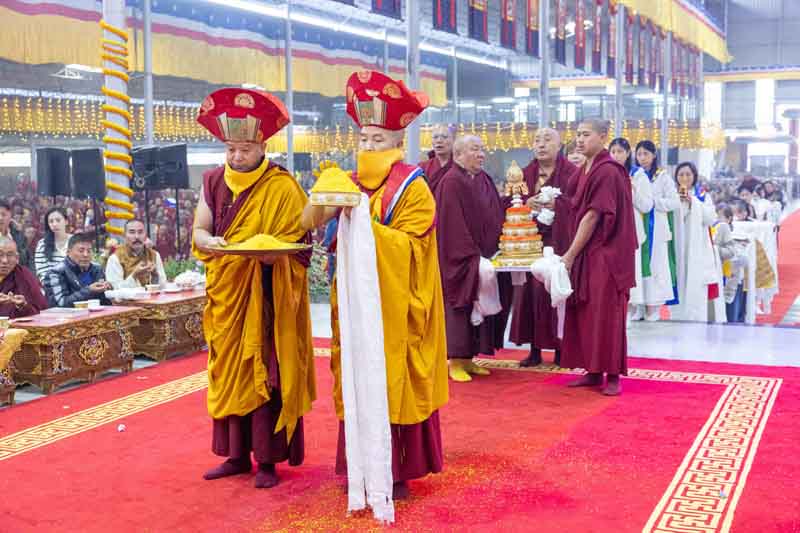
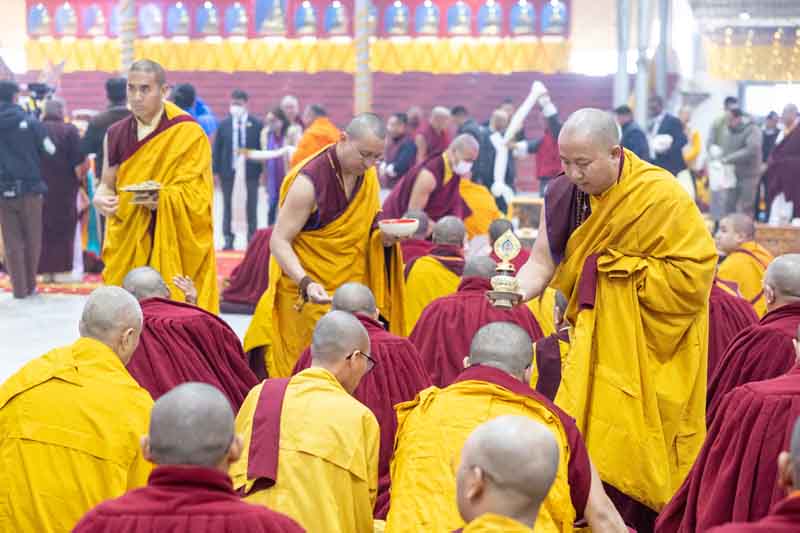
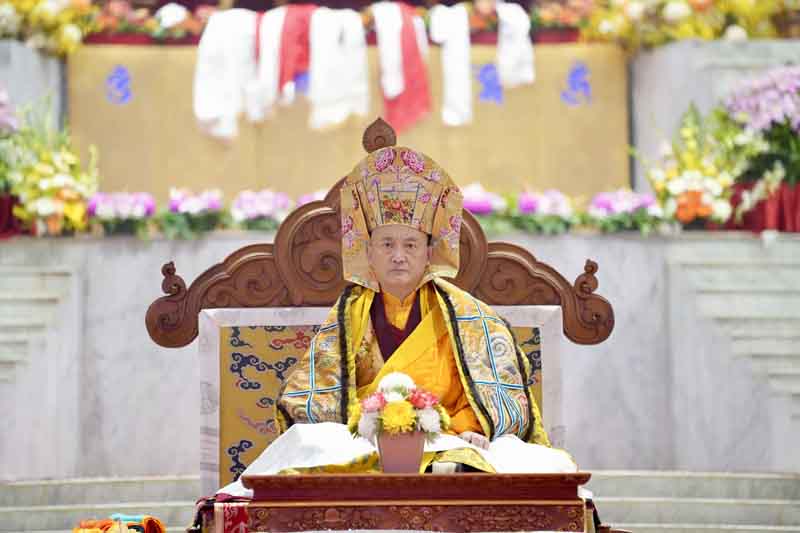
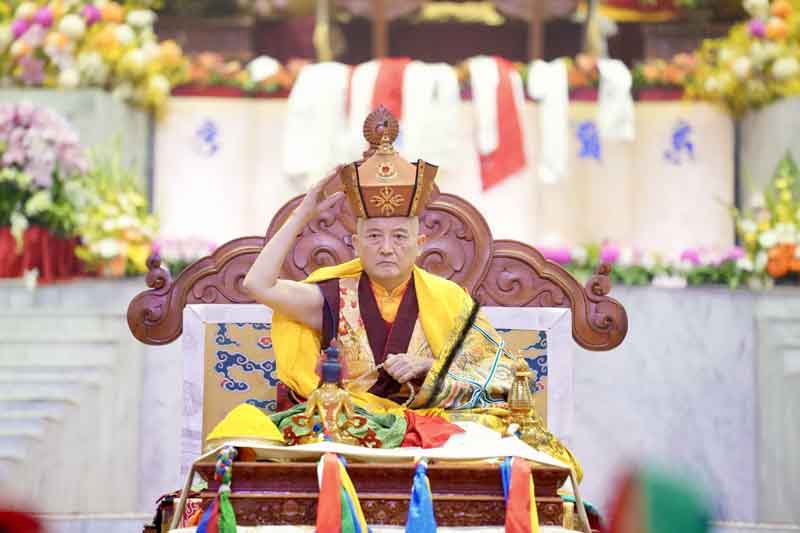
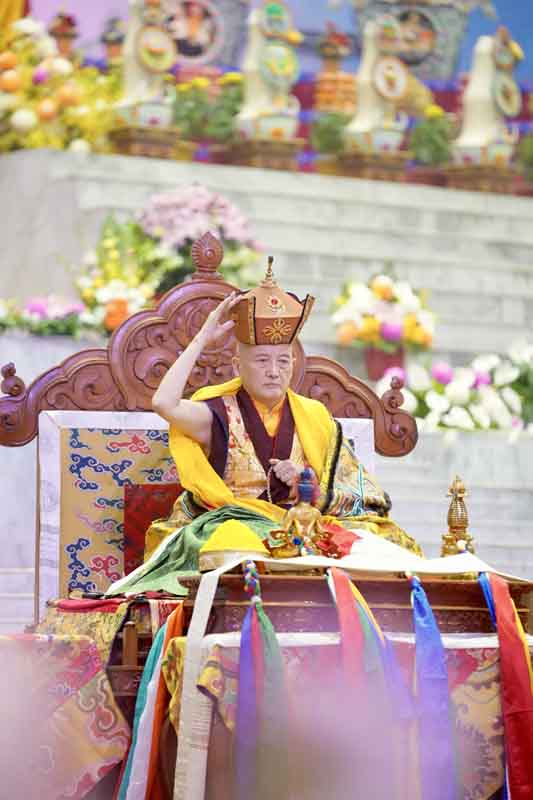
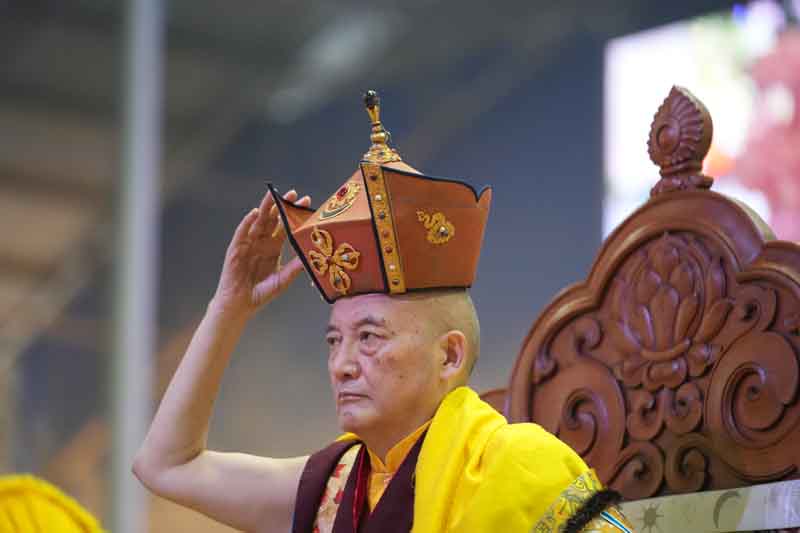
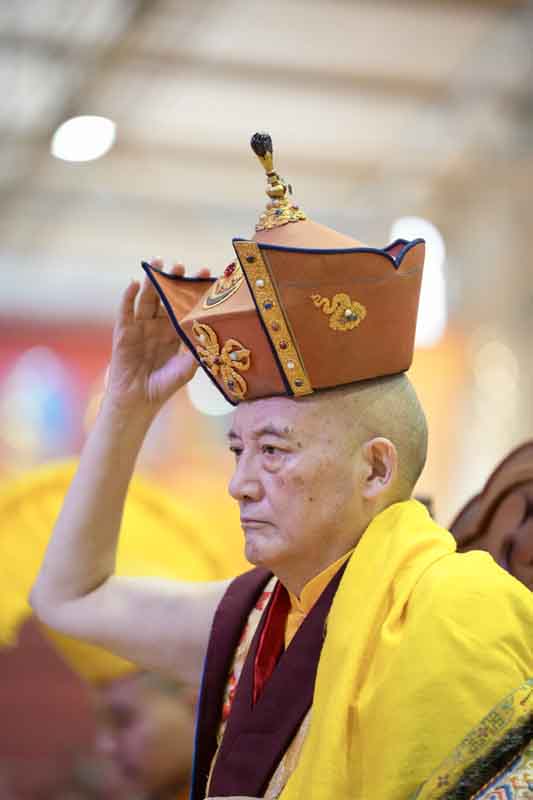
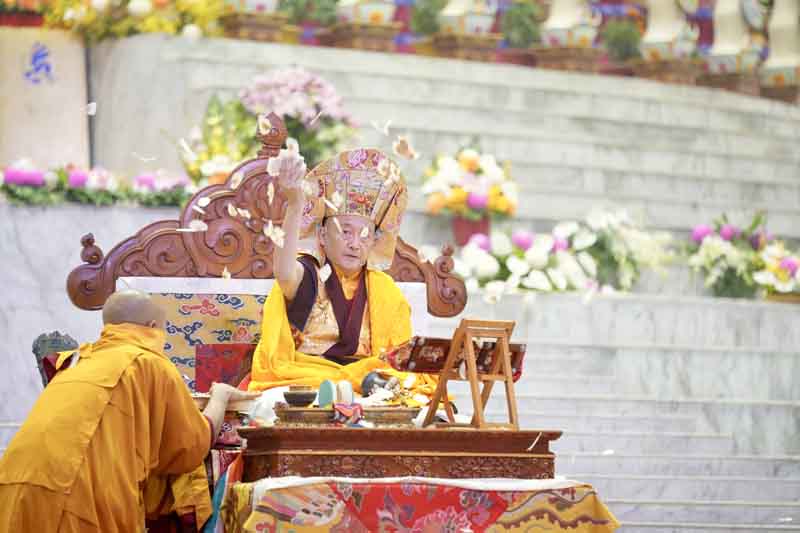
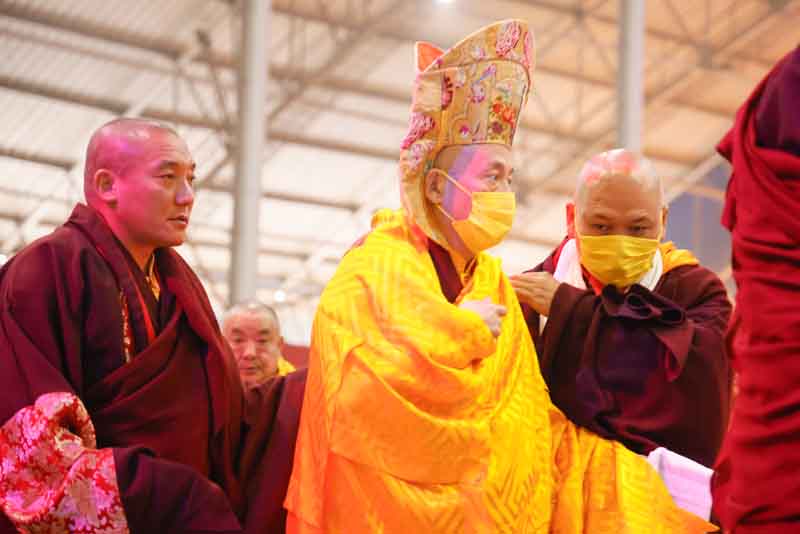
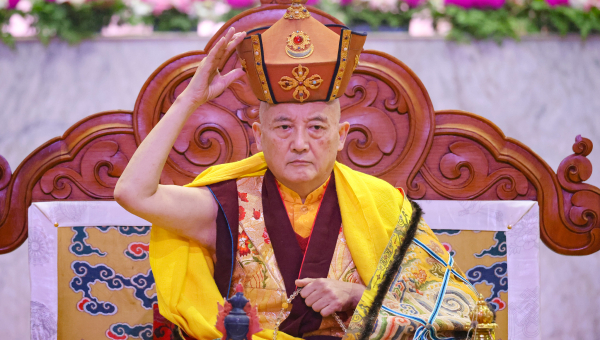
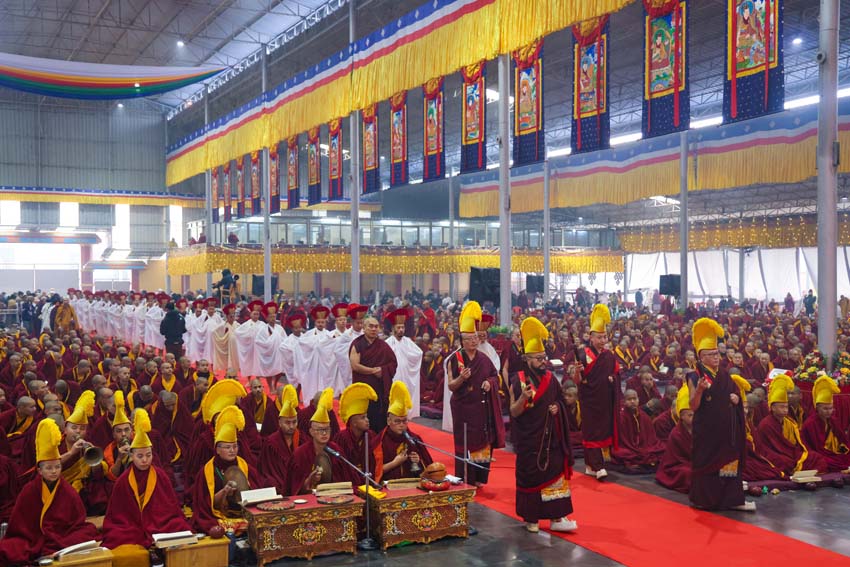
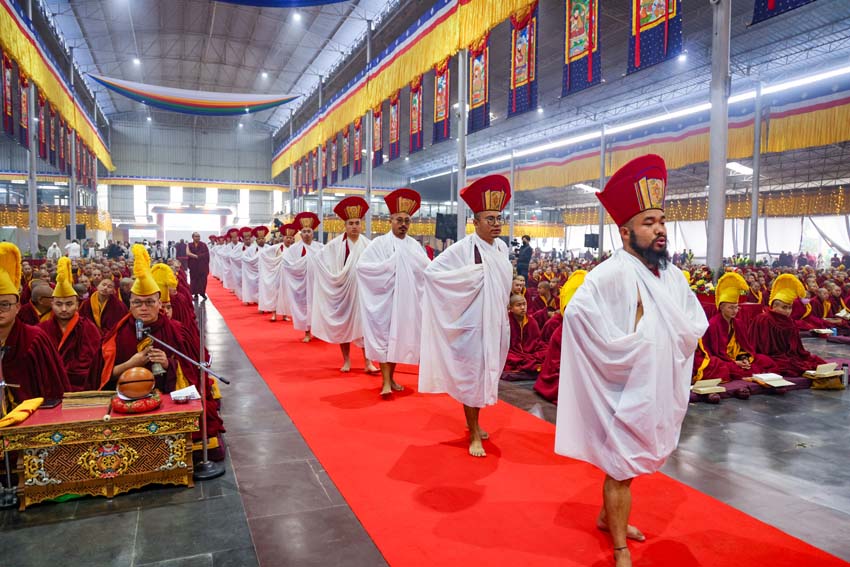
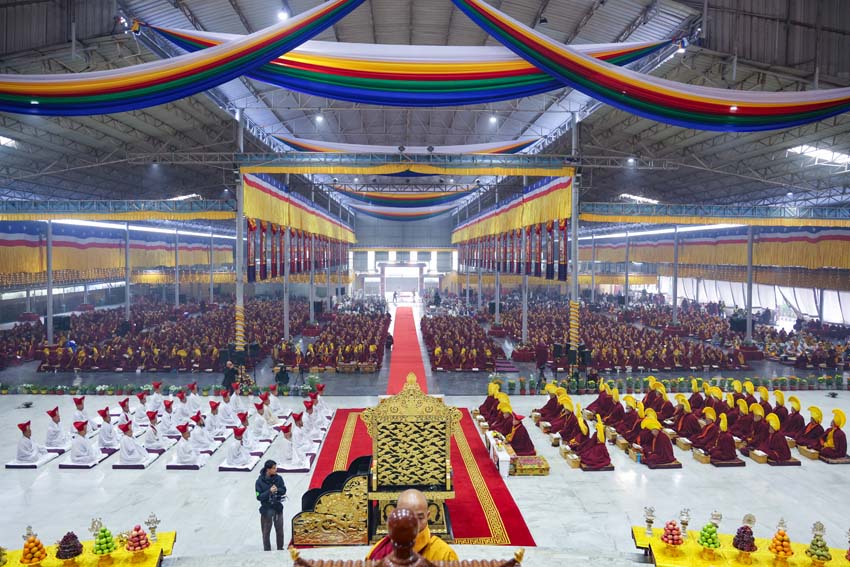
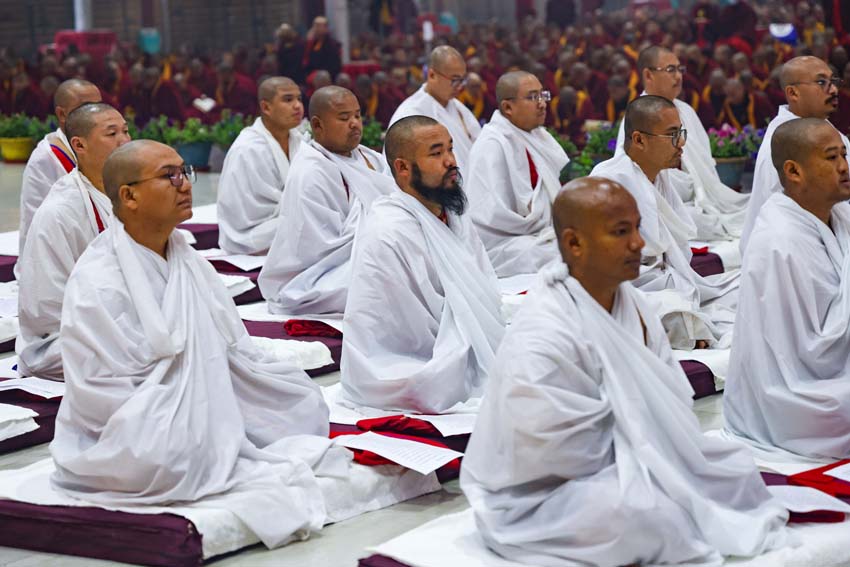
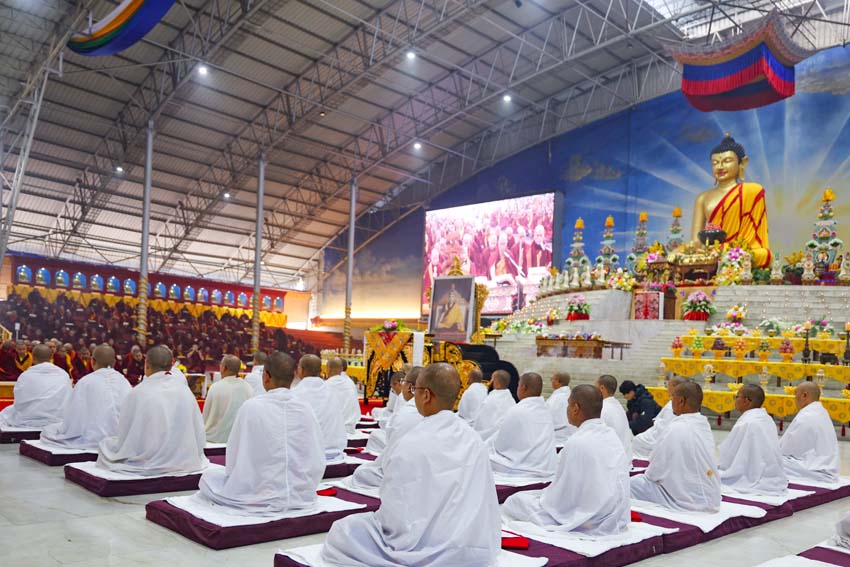
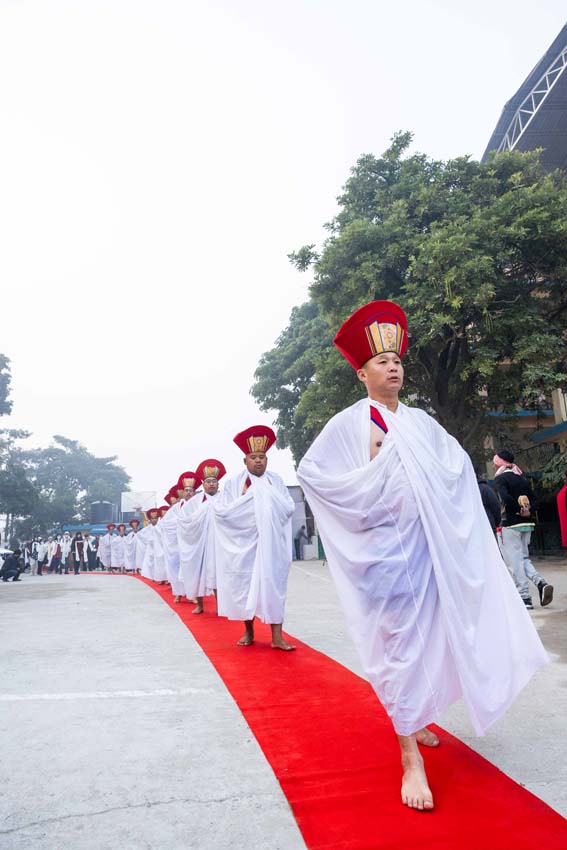
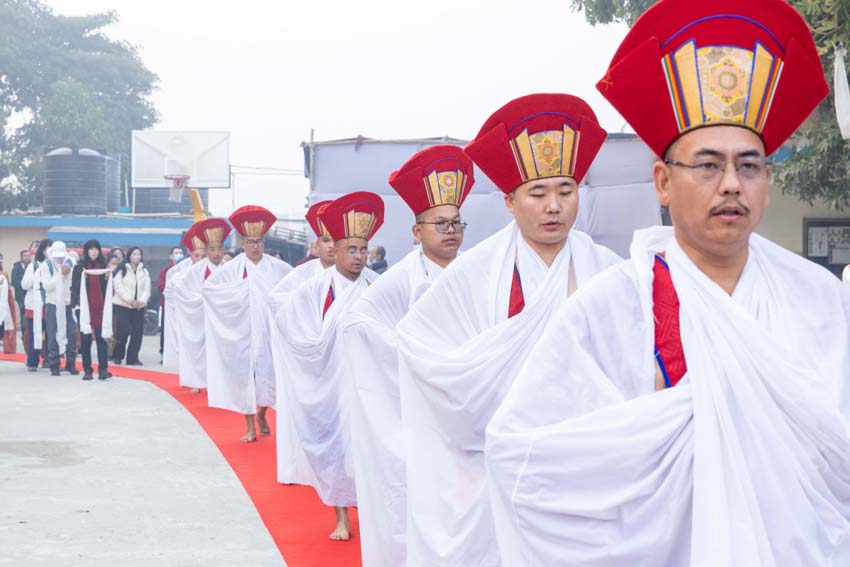
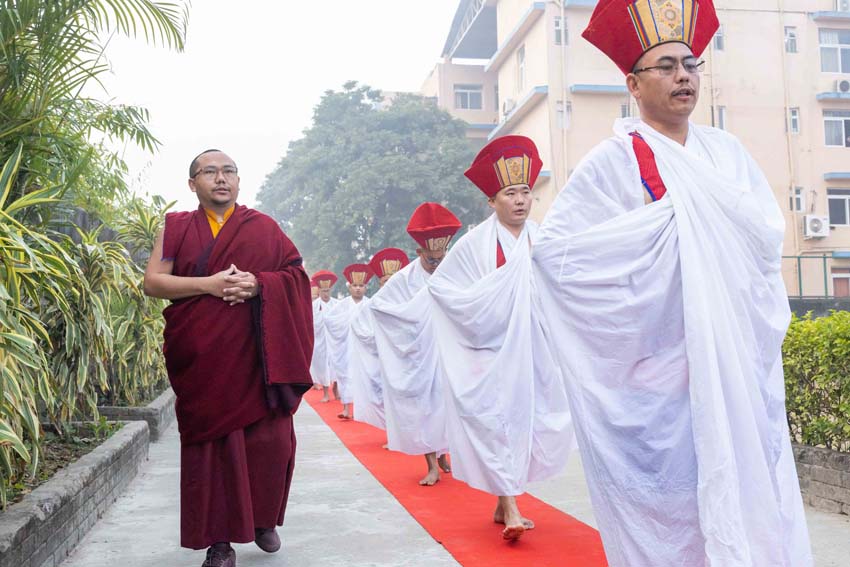
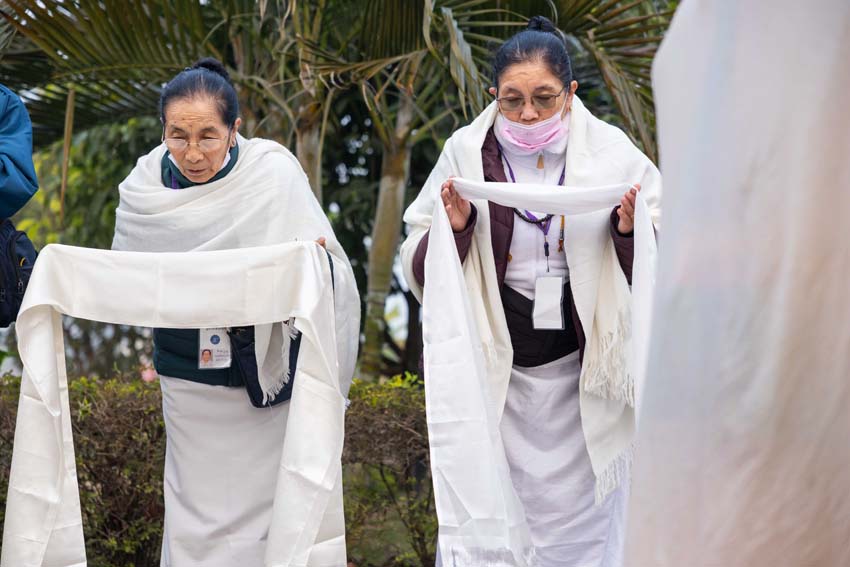
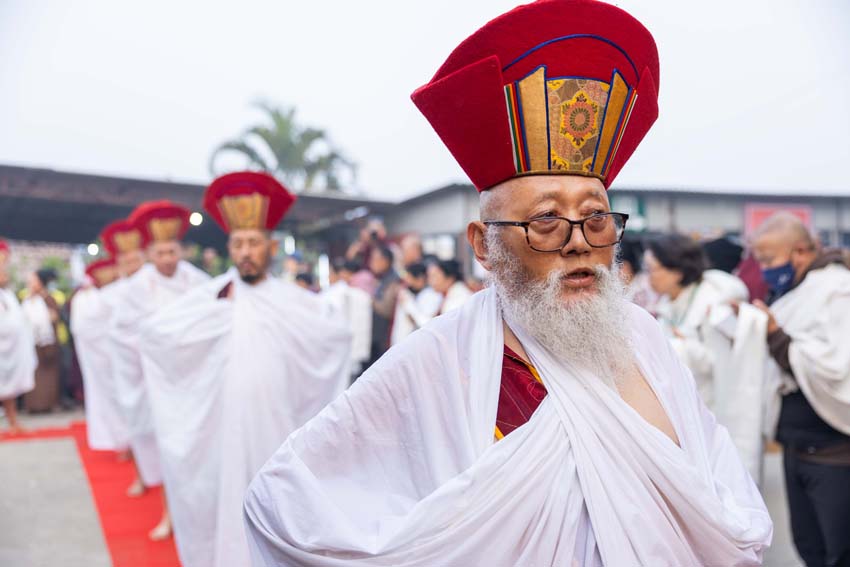
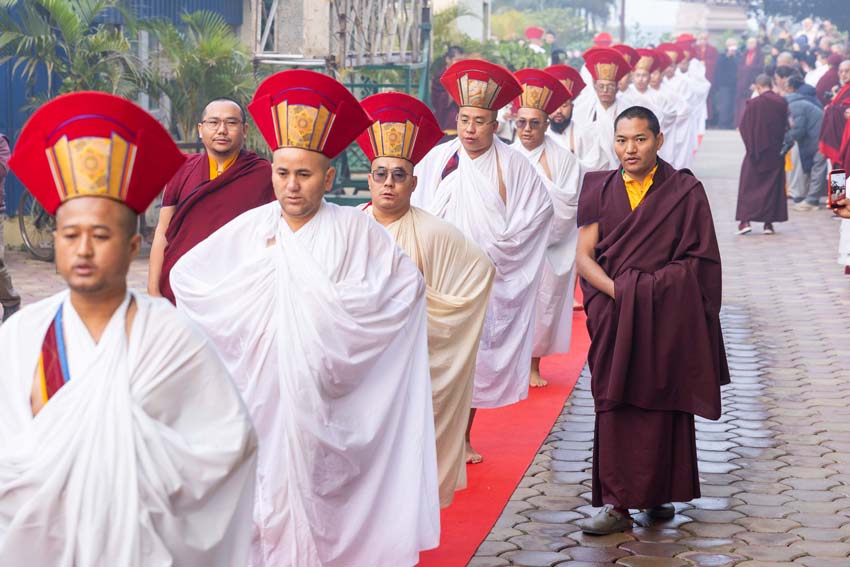
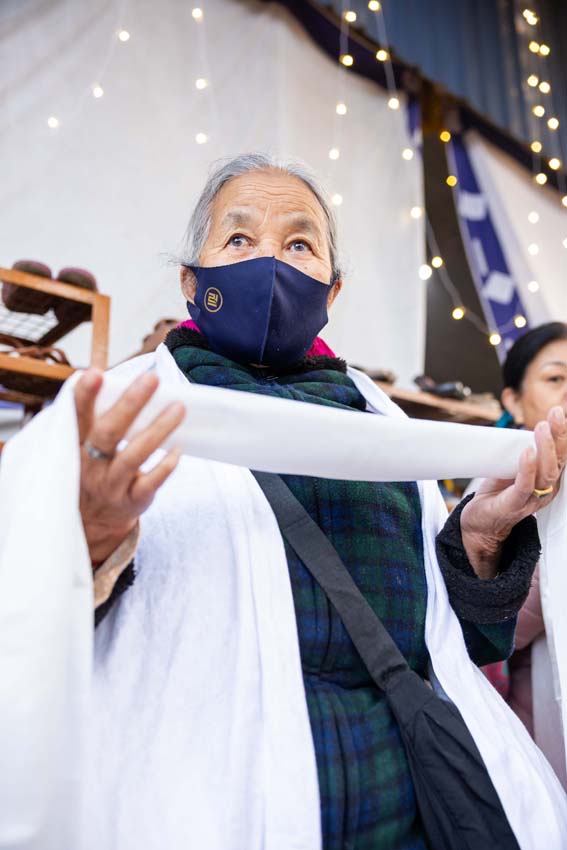
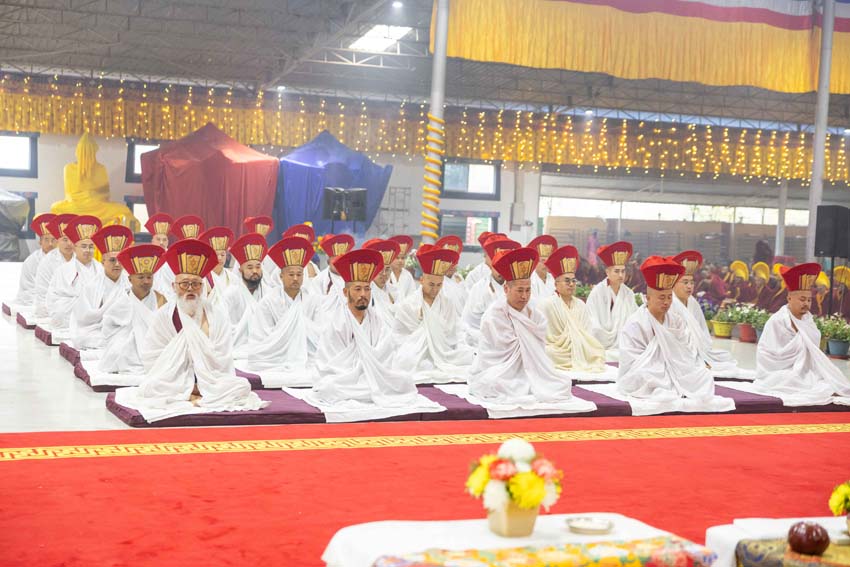
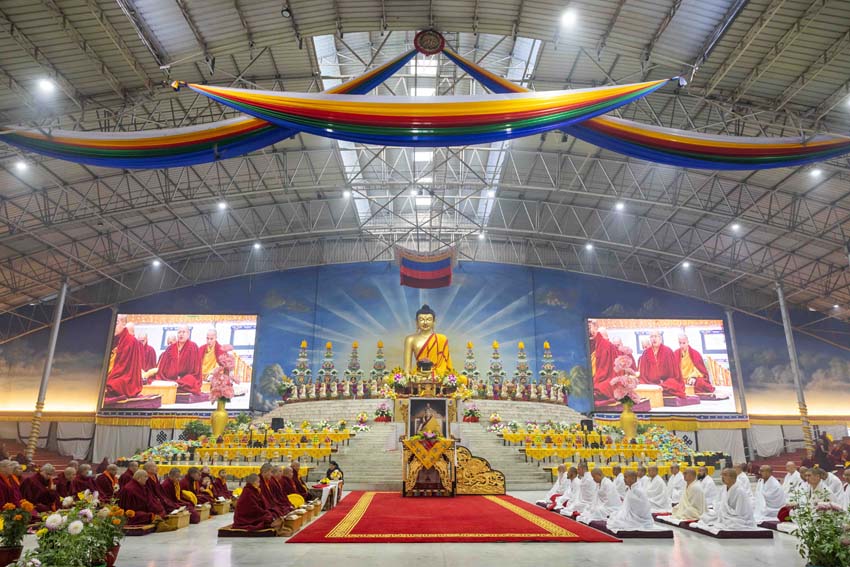
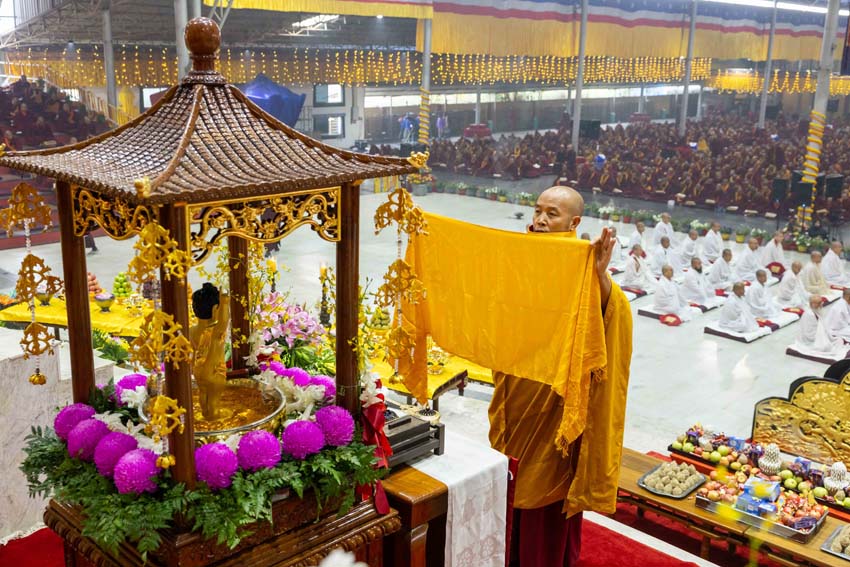
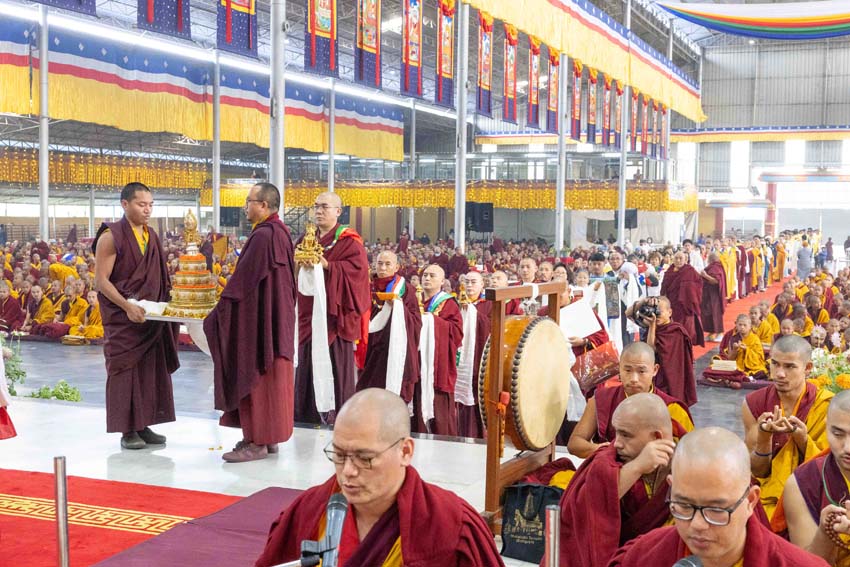
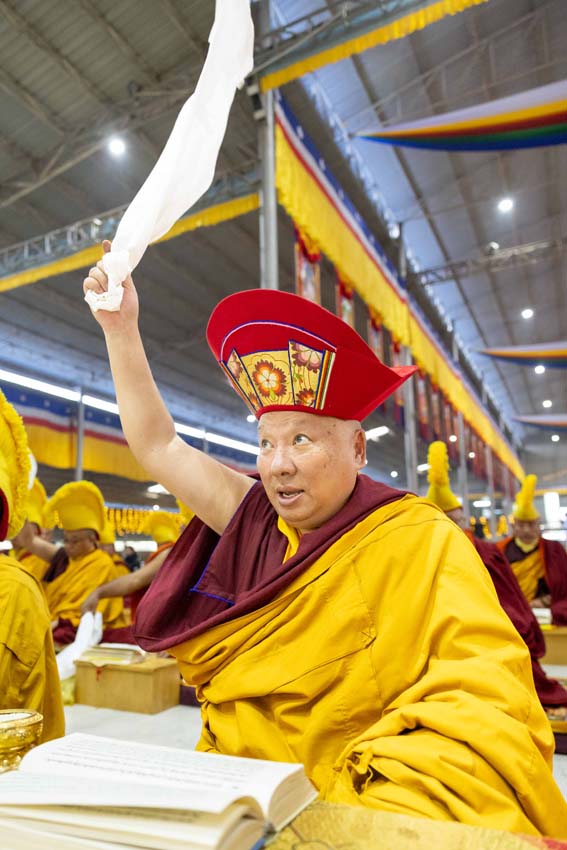
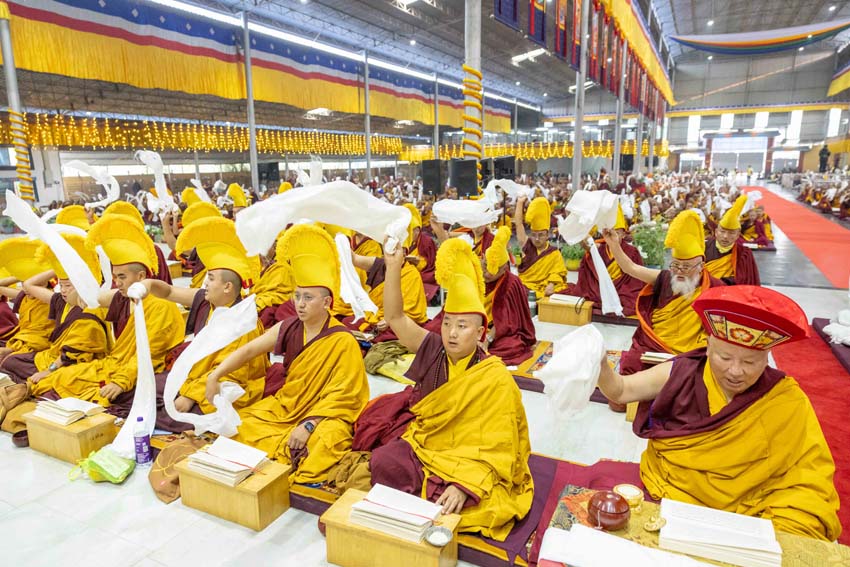
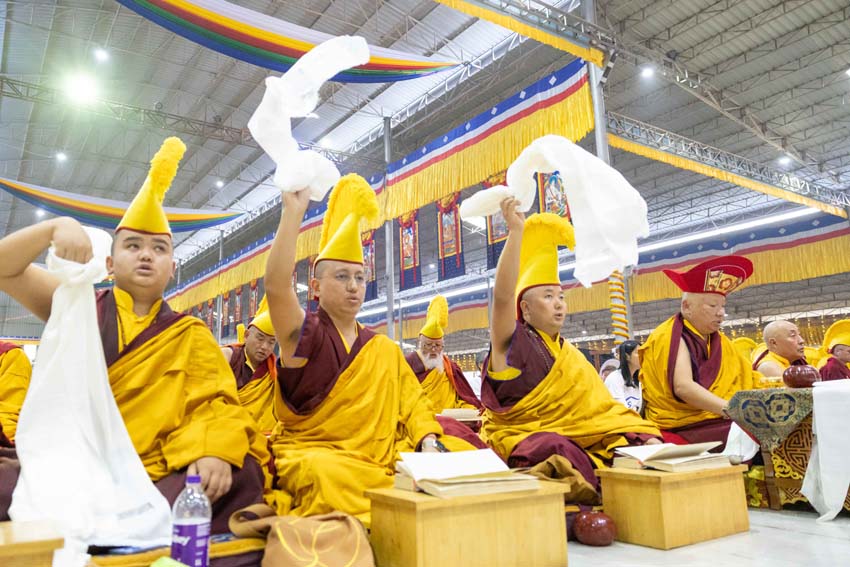
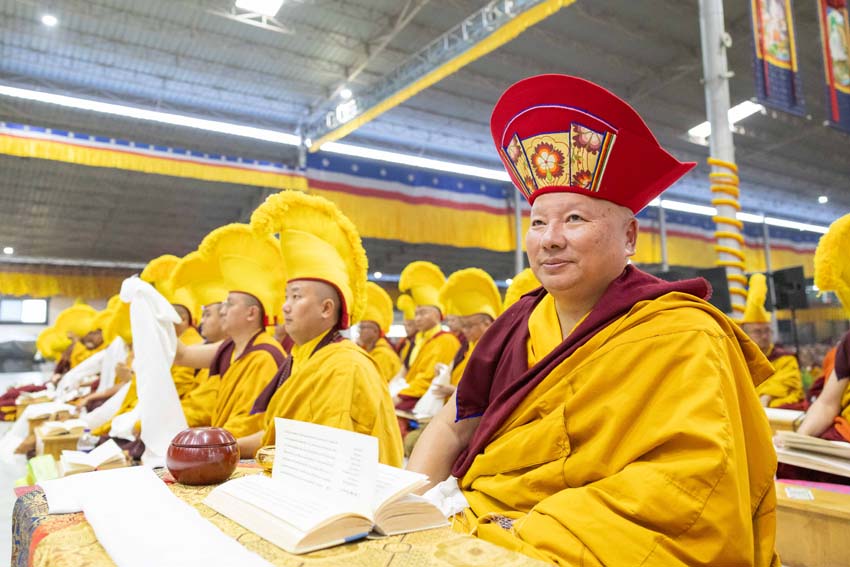
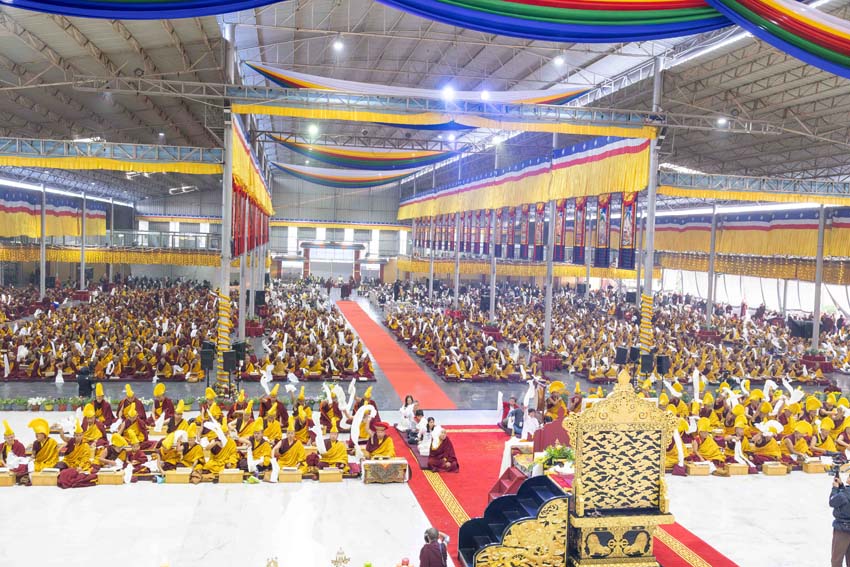
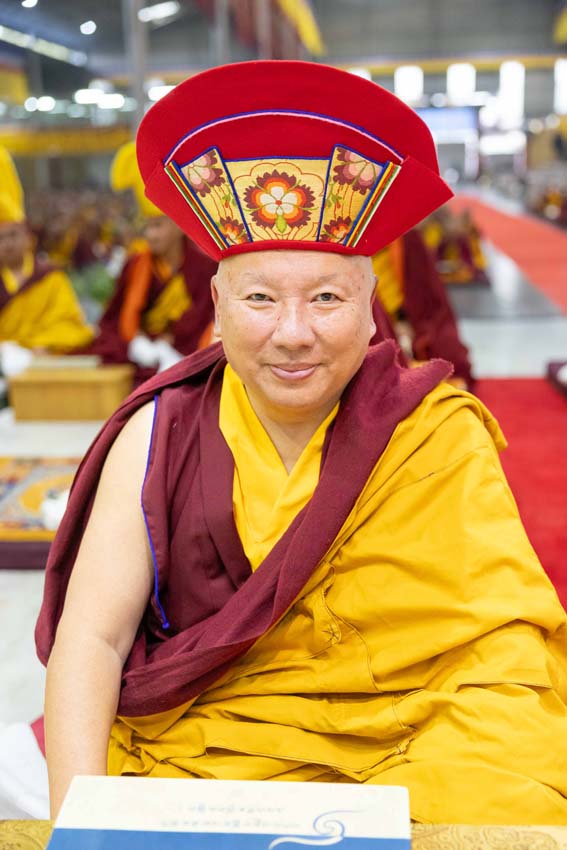
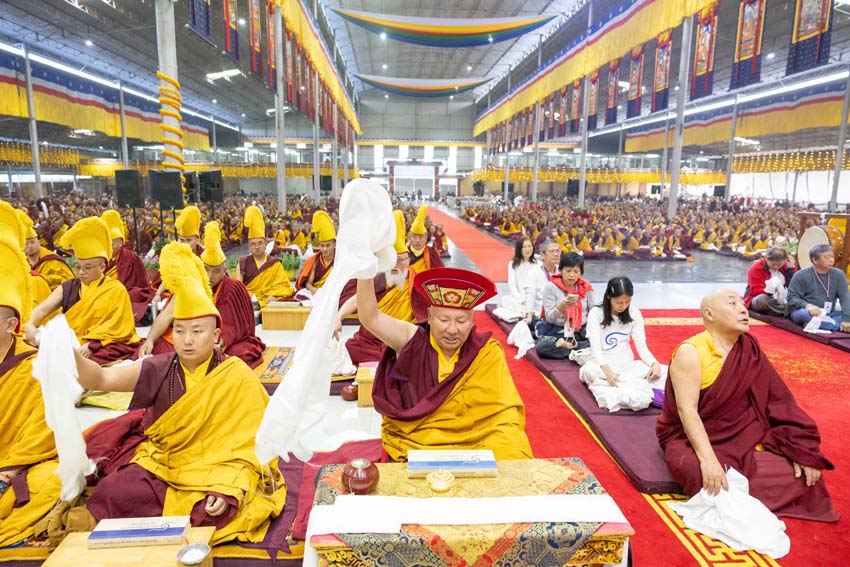
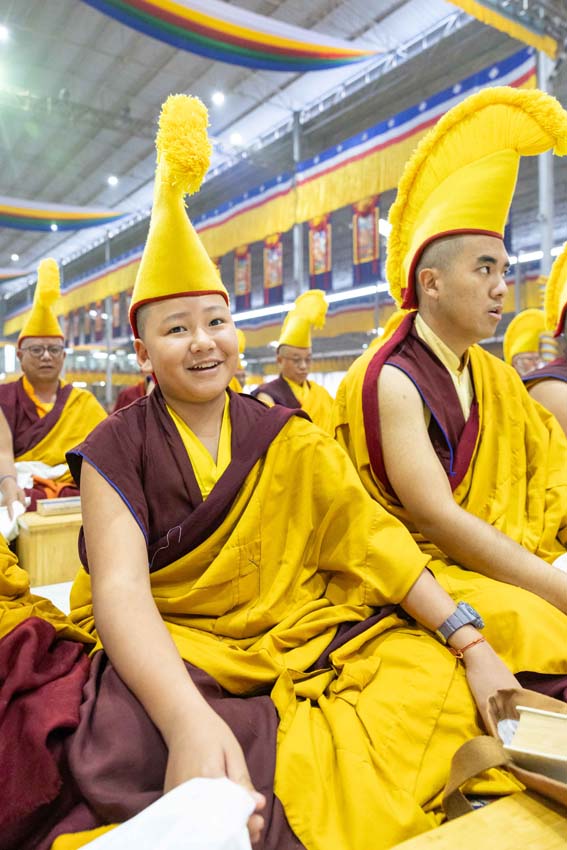
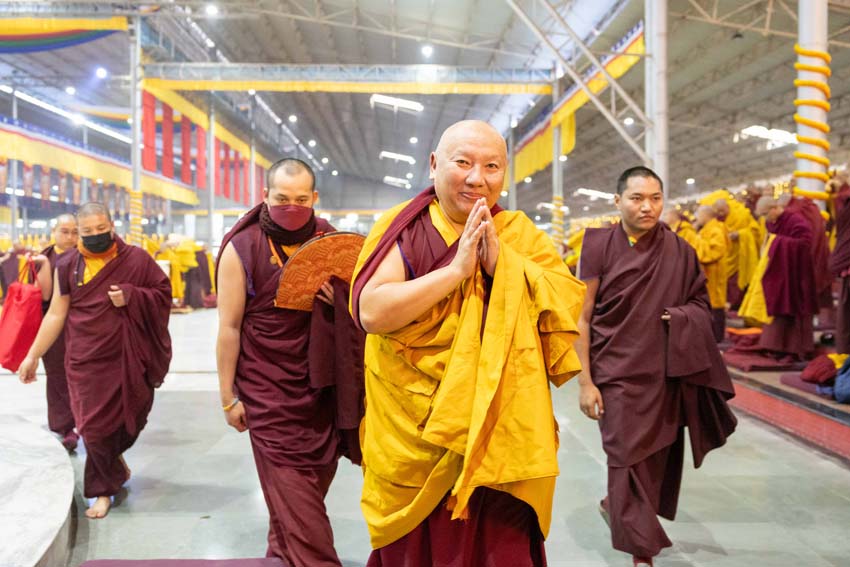
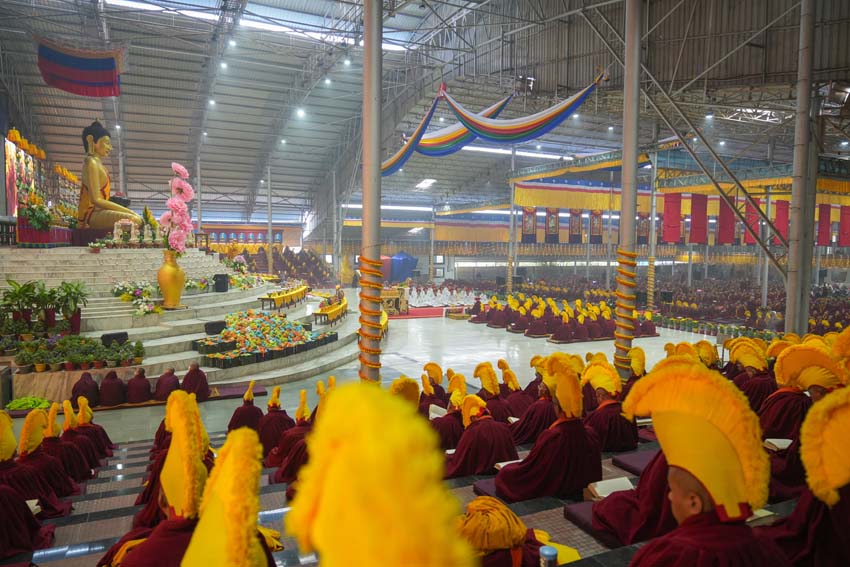
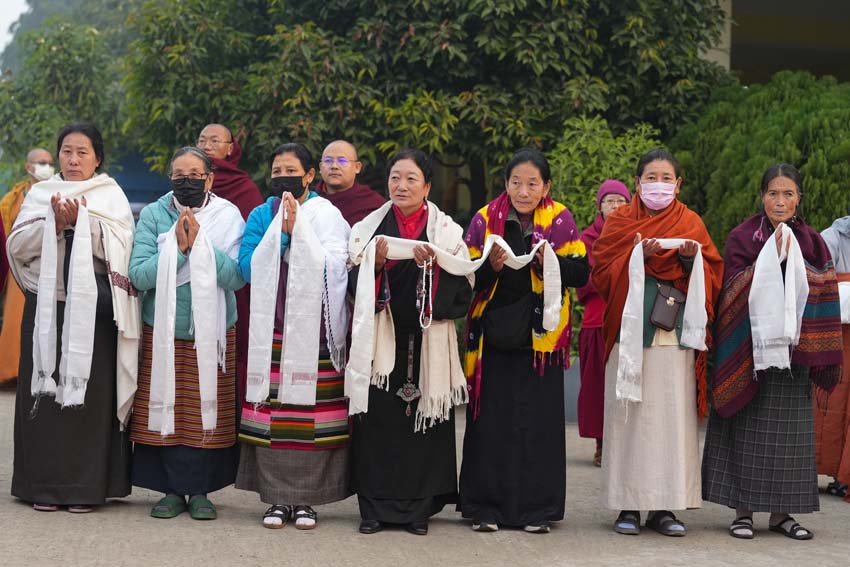
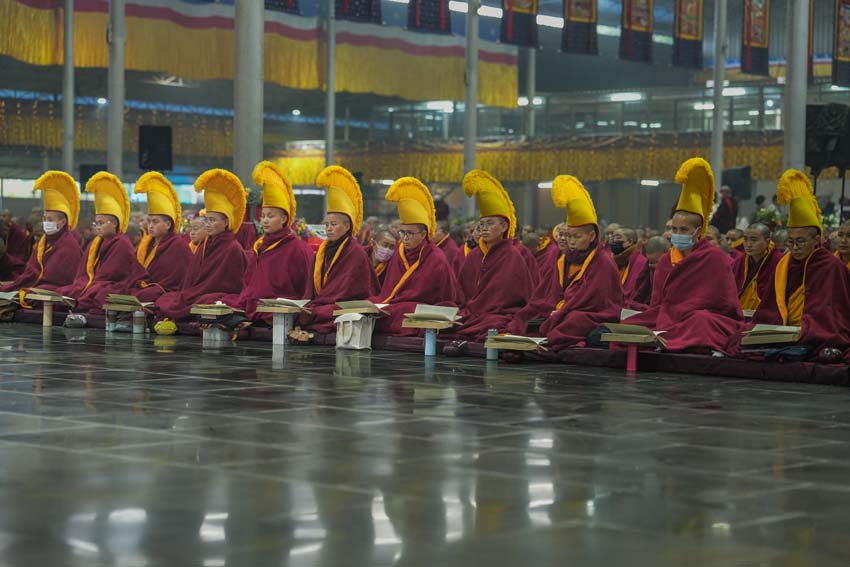
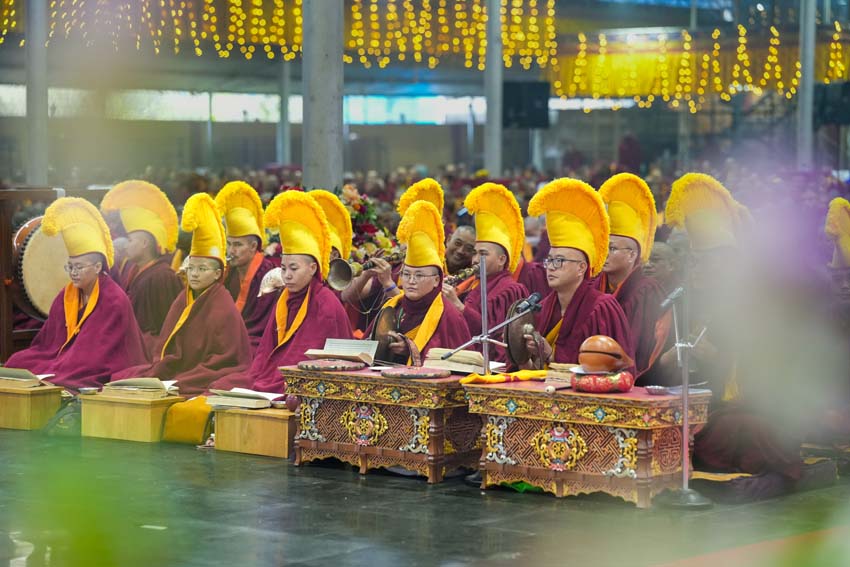
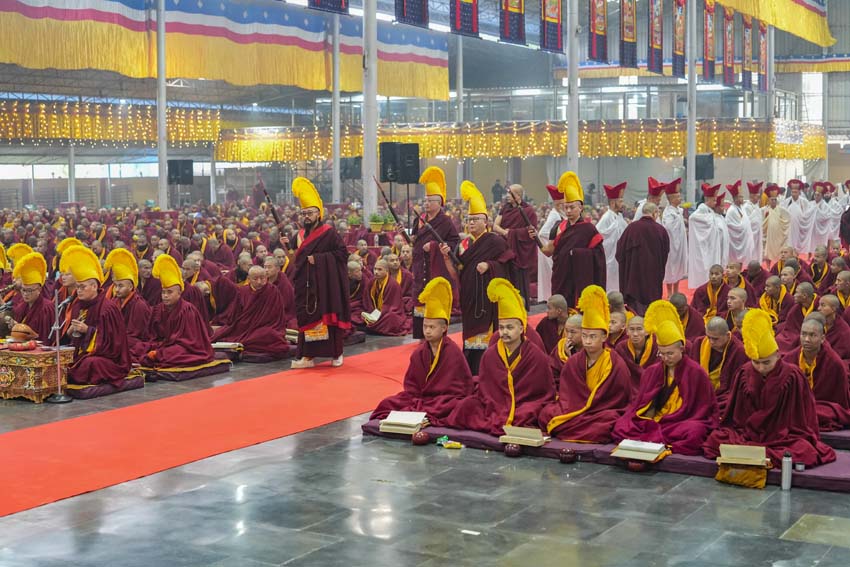
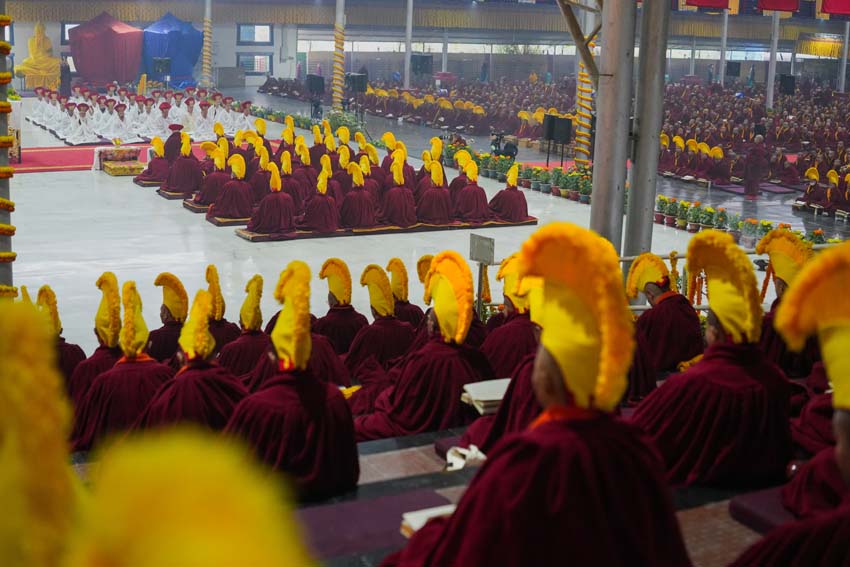
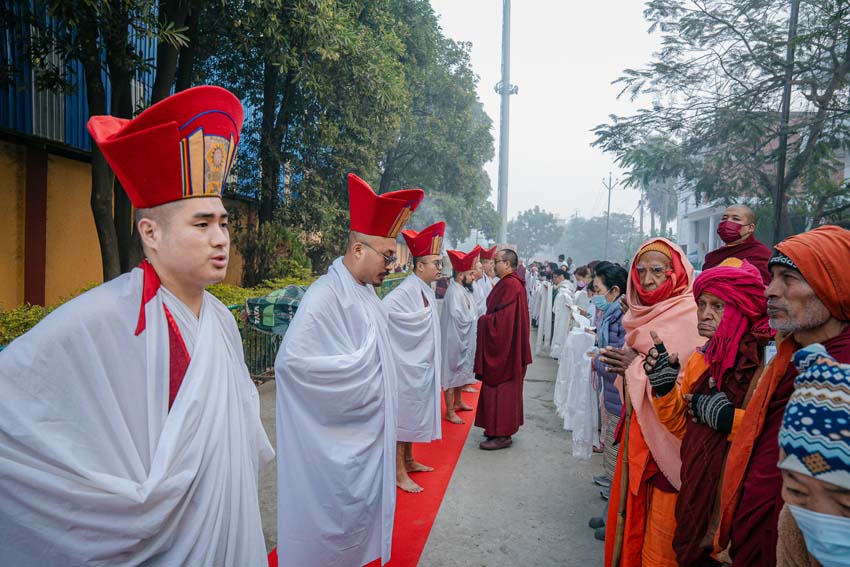
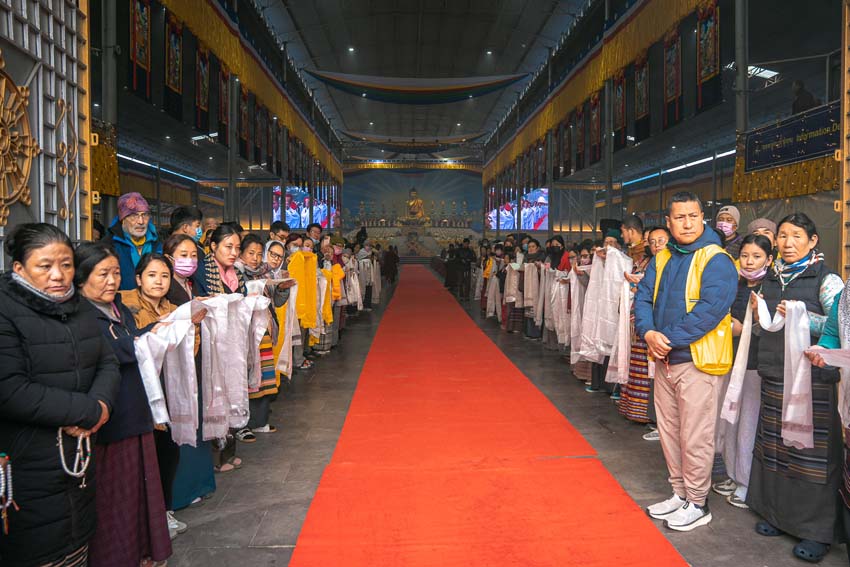
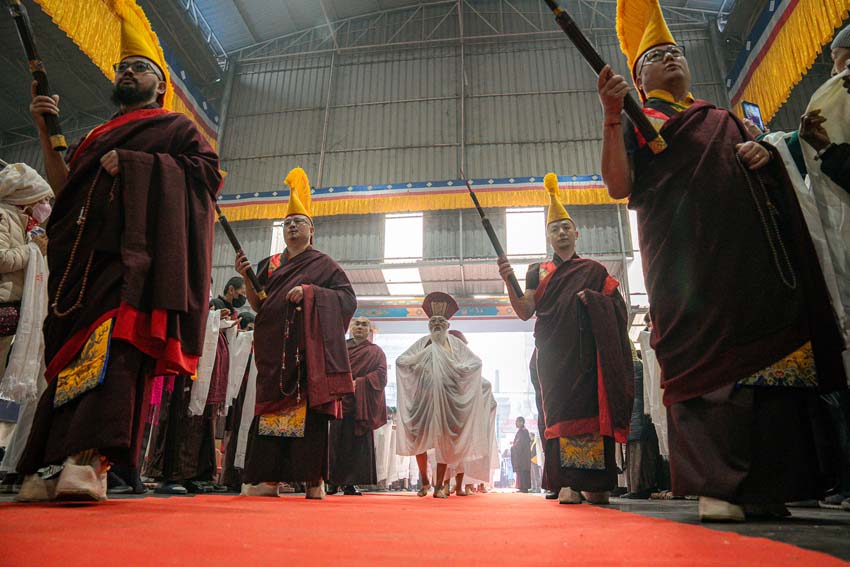
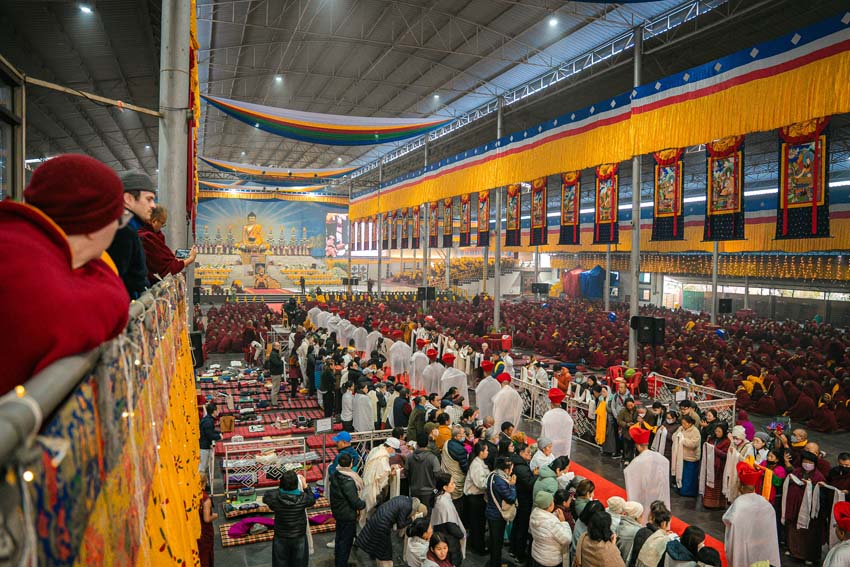
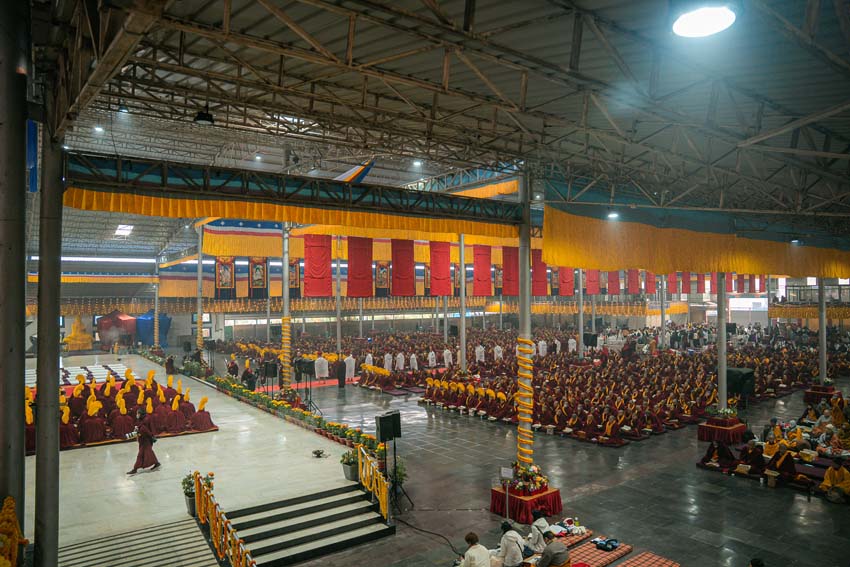
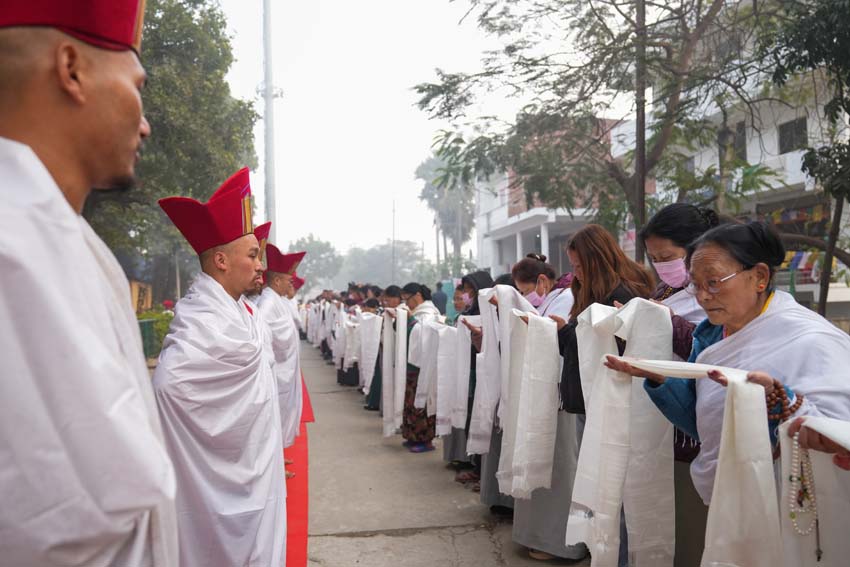
At 9:30 am, Kyabgon Drung Goshir Gyaltsab Rinpoche and the Red Crown in its brocade covered box, were escorted into the Monlam pavillion in an elaborate procession. Chief Minister Prem Singh Tamang left his seat and prostrated to Rinpoche with great devotion. Following a mandala offering from the Sikkimese, led by the Chief Minister and the Minister for Ecclesiastical Affairs, the ritual began. At the conclusion of the ceremony, Rinpoche spoke briefly.

Kyabgon Drung Goshir Gyaltsab Rinpoche’s Speech

Now, because of the aspirations and blessings of His Holiness the Gyalwang Karmapa, the head of our practice lineage of the Karma Kagyu, this 40th Kagyu Monlam has gone very well. And so, the Gyalwang Karmapa has prepared all of the texts, the procedures and the programme for this year's Monlam and we have all completed it as he has instructed us. So, we have the good fortune of completing his wishes. And so, for us to be able to complete this Monlam as His Holiness has instructed is a really incredibly meaningful thing for all of us.

Now, with the Kagyu Monlam, there are many workers. Lama Karma Chodrak, the director, and many other workers. They have a lot of experience, they have good intentions and they all have worked very well. Because of this, just as in the past all of the Kagyu Monlams have been completed very well, this year, the Kagyu Monlam has been completed in an extraordinarily good fashion.

And so, this is the last day of the Kagyu Monlam, we are completing the Kagyu Monlam,

and because of this, it will be able to ripen as a result that will bring incredible benefit to all sentient beings. It will bring incredible benefit to this very world and in particular, it will be especially beneficial for all Buddhist practitioners.

Now, one reason why this Kagyu Monlam has been completed in such a wonderful fashion is that the many representatives of the land of Sikkim, the hidden land that was prophesied by Guru Rinpoche, have been able to join us today.

And in particular, we have the Chief Minister, Prem Singh Tamang, as well as Lama Sonam and several other ministers. They have been able to come and join us on this day, and this is an especially wonderful aspect of today.

Today, on behalf of the Gyalwang Karmapa, the head of all the Kagyu lineages, as well as on behalf of the Kagyu Monlam organisation, I would like to offer a warm welcome to the Chief Minister, Prem Singh Tamang and all the other representatives who are here.

My hope is that because of the aspirations and the blessings of the Gyalwang Karmapa, in the future, this Kagyu Monlam may flourish and thrive even more than before.

My hope is that next year we will all be able to come and gather here joyfully and happily for the next Kagyu Monlam.

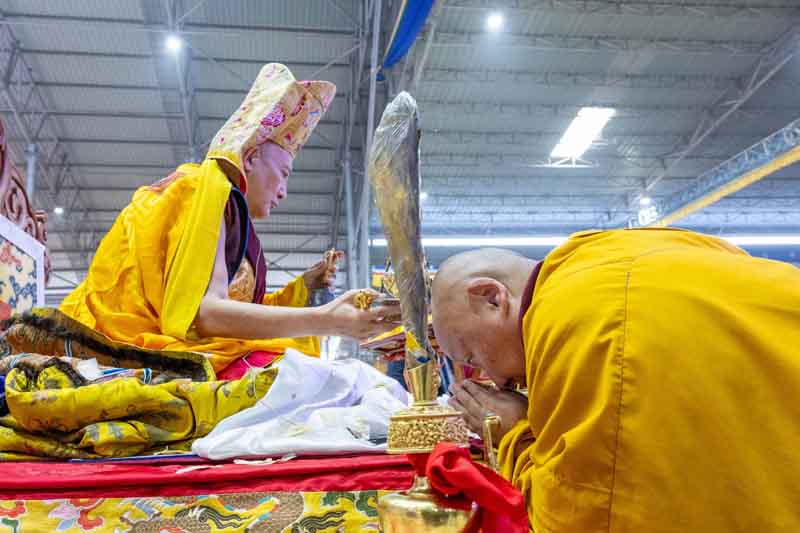
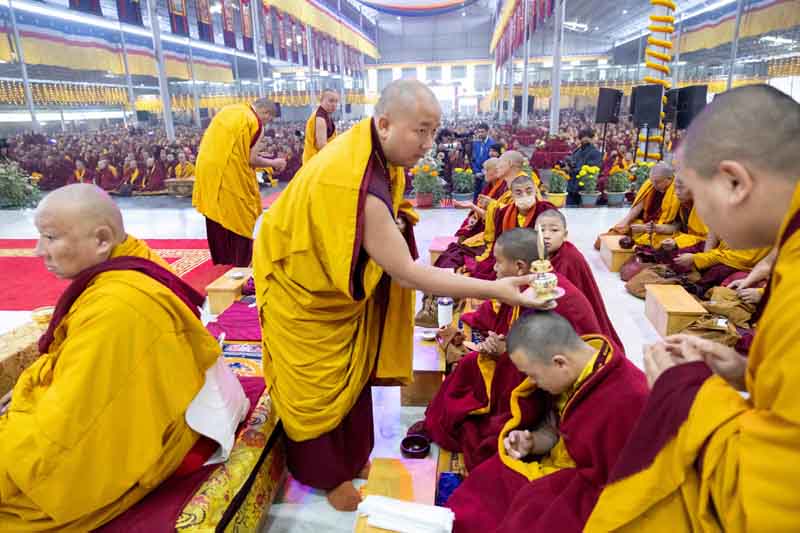
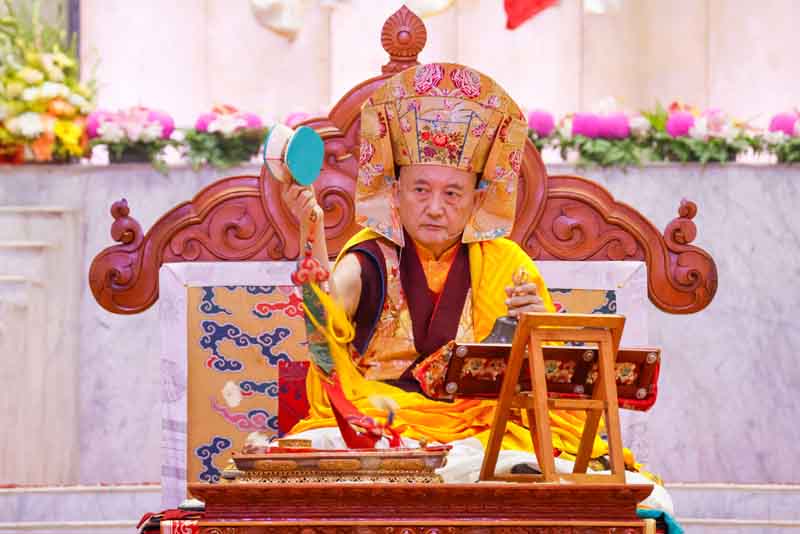
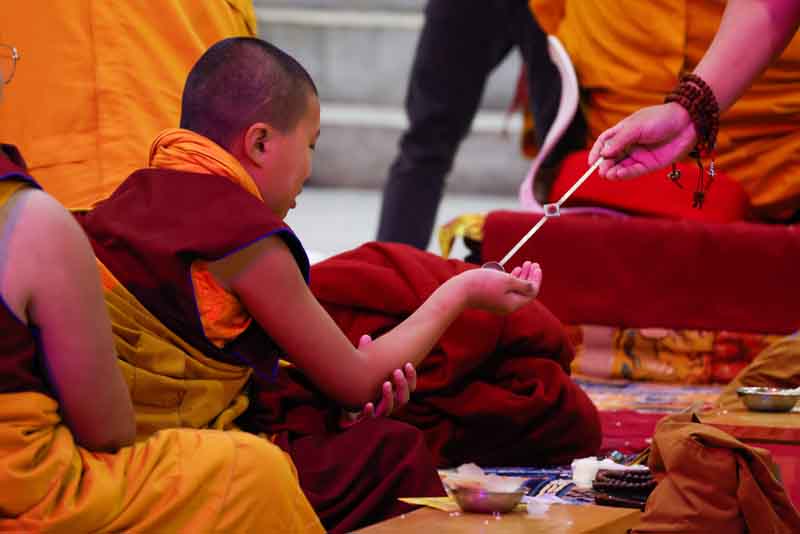
After this short speech, Gyaltsab Rinpoche bestowed the long-life empowerment of Amitayus.

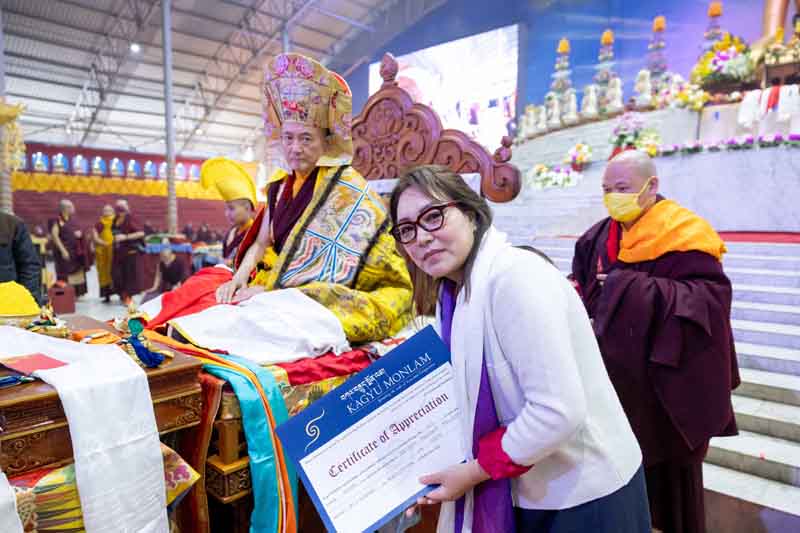
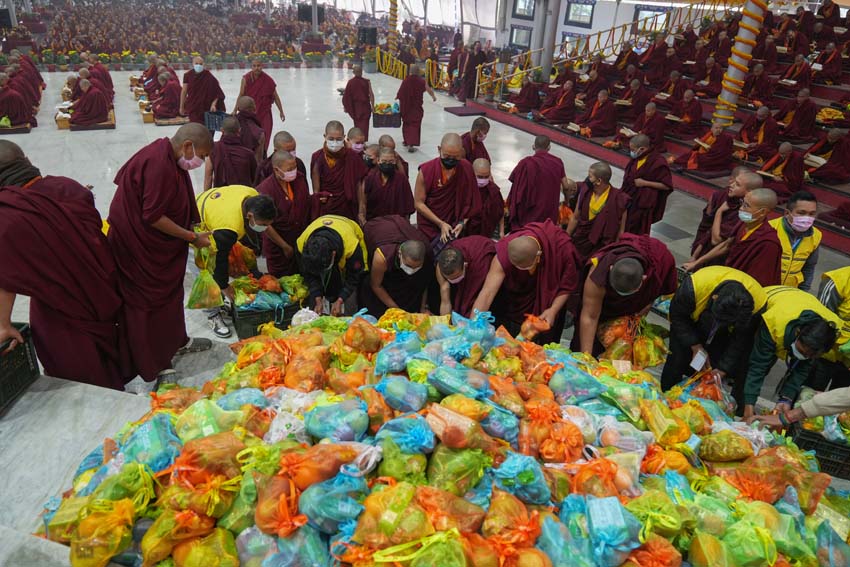
In conclusion, in gratitude for the great kindness demonstrated by Rinpoche, he received an elaborate body-speech-mind mandala offering from the Kagyu Monlam Organisation and sponsors.










An Introduction to the Red Crown Ceremony

An Introduction to the Red Crown Ceremony

Monlam Pavillion

3 January 2026

This is the introduction which Khenpo David Karma Choephel read before the ceremony:

Witnessing His Eminence Goshir Gyaltsab’s Red Crown Ceremony which Liberates upon Sight

Om svasti

Embodiment of the wisdom and compassion of all the victors,

Avalokita at the summit of Mount Potala,

The glorious Karmapa in the Land of Snow,

I prostrate to him whose fame stretches above all like a white parasol.

Vajrapani, the vajra mind of all the victors,

Ananda, the repository of the victor’s teachings,

Regent of the supreme victor, Karmapa,

I prostrate at the feet of the great Goshir Gyaltsab.

On account of their exceptional resolve and aspirations, the buddha and bodhisattvas engage in inconceivable awakened activity. Among these acts that are meant to be seen and heard is the ceremonial donning of vajra crowns. These sacred rituals which plant the seed of liberation upon sight have ripened and liberated countless disciples. This tradition of performing vajra crown ceremonies is particular to the practice lineage of the Karma Kamtsang and is exclusive to the Gyalwang Karmapas and his heart sons.

We find reference to crowns in both the vehicle of characteristics, the sutras, and in the vajra vehicle of the tantras. The sutras recount that before Shakyamuni Buddha appeared in this world, he was residing in the god realm of Tushita where he was known as Lha’i bu Dampa Tok Karpo. When departing the god realm for this world, he took his crown and placed it upon the head of the victor Maitreya, thus empowering him as his regent. It is said that Maitreya currently resides in Tushita performing the first of the twelve deeds of a supreme nirmanakaya—teaching to benefit the gods.

In the secret mantrayana, through the crown empowerment of Ratnasambhava, one is enthroned as a great universal ruler who lords over the three realms and is placed upon the great lion throne of the utter victory of non-abiding nirvana, free from the extremes of both conditioned existence and peace.

The black crown of the glorious Gyalwang Karmapas was presented to him long ago when he took birth as the sage Konpa on the northern side of Mt. Meru. At that time, the buddhas empowered him with a crown fashioned of single strands of hair from 320 million dakinis. Beings whose obscurations are subtle perceive the black crown as ever present above the head of all the incarnations of the Gyalwang Karmapas. But for the benefit child-like beings ensnared in a thicket of coarse obscurations, a physical black crown was fashioned—a symbolic representation of the true crown’s essence—and decorated with various precious gems and a golden blaze.

Each of the Gyalwang Karmapas has heart sons who are actually his emanations. As they are inseparable from him, the Gyalwang Karmapas bestowed upon them vajra crowns and commanded them to accomplish vast benefit for the teachings and beings. Together with his resolve, command of interdependence, and aspirations, the Karmapas enthroned them as Dharma Kings and thus arose the tradition of their vajra crowns.

Goshir Gyaltsab Rinpoche’s red crown originated with a prophecy. The Lotus-born Great Guru Padmasambhava prophesied to the Seventh Gyalwang Karmapa Chodrak Gyatso:

If the agent of the victor’s activity—

The emanation of Karchen Pelgyi Wangchuk

And Dromton Gyalwe Jungney—

Dons the crown that is the command of the guru,

It will create auspicious conditions

For the Buddha’s teachings to flourish.

Subsequently, a red crown with a golden blaze that liberates upon sight was consecrated through the practice of Lama Gongdu. Having been blessed as the essence of vajra speech, Amitabha, it was placed upon the head of the second Gyaltsabpa Tashi Namgyal. Gyalwang Chodrak Gyatso then proclaimed that the mind of the teacher and student had become undifferentiated, and he appointed Gyaltsab Tashi Namgyal as his regent who will turn the wheel of Dharma. He continued, saying that with this Vajra Crown remaining inseparable from [the Gyaltsabpas], it will create auspicious conditions to sustain all the Buddha’s teachings, in general, and in particular, the long-standing tradition that is the essence of the practice lineage. He then recited verses, scattering the flowers of auspiciousness.

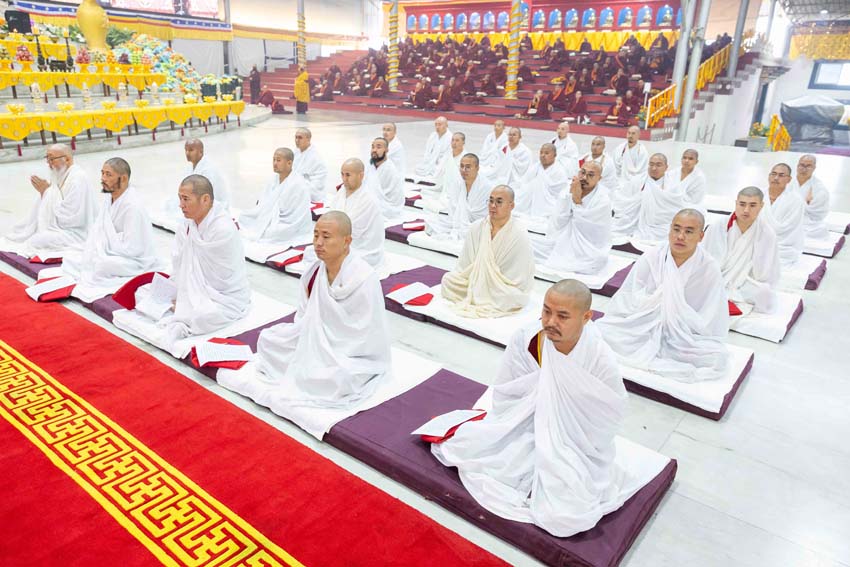
When witnessing the donning of the Vajra Crown, you should have unwavering faith in the support, the Vajra Crown and focus one-pointedly on this exalted object. At that time and at all times, one should supplicate with devotion while meditating that the lama is the embodiment of all refuges and situated above your head, you should sustain the mind’s natural state without altering it; and you should strive to train in loving kindness, compassion and bodhichitta. These are the attitudes to hold during the ceremony and also the benefits of witnessing the ritual.

Those who possess black and red crowns, the Gyalwang Karmapas and their heart sons, are the crown jewels of the teachings and beings. By regarding them as the eyes in your forehead and the hearts in your body, you should rouse the three faiths: clear faith of an utterly lucid mind that is not contaminated by any obscuration of selfish attachment and aversion, the faith that longs to truly manifest the ultimate result, and the faith of conviction welling up from the depths of your being. Giving rise to these, you should sustain the nature of mind itself and train the mind in loving kindness, compassion, and bodhichitta.

The results of making effort in emanating clouds of offerings, making supplications, and forming aspirations when witnessing the vajra crown ceremony are as follows:

Those of supreme fortune will be granted

The qualities of the paths and levels upon beholding it.

For those of lesser fortune who have accumulated many negative actions,

Witnessing the crown ceremony will eradicate misdeeds and obscurations

Accumulated over thousands of kalpas.

The most desirable things of this life will be obtained according to one’s wishes.

By focusing on and supplicating you,

All hopes will be fulfilled accordingly.

Thus, all qualities of meditative experience and realization will arise without difficulty. All negative karma, misdeeds and obscurations will be dispelled. And all your intentions will be accomplished just as you wish.

May the glorious lama’s lotus feet be firm.

May happiness come to all throughout space.

May I and all others gather the accumulations, remove obscurations,

And swiftly be brought to buddhahood.









Day Seven PM: Awards, Mandala Offerings, Dedications and Aspirations

Day Seven PM: Awards, Mandala Offerings, Dedications and Aspirations

Monlam Pavillion

2 January 2026

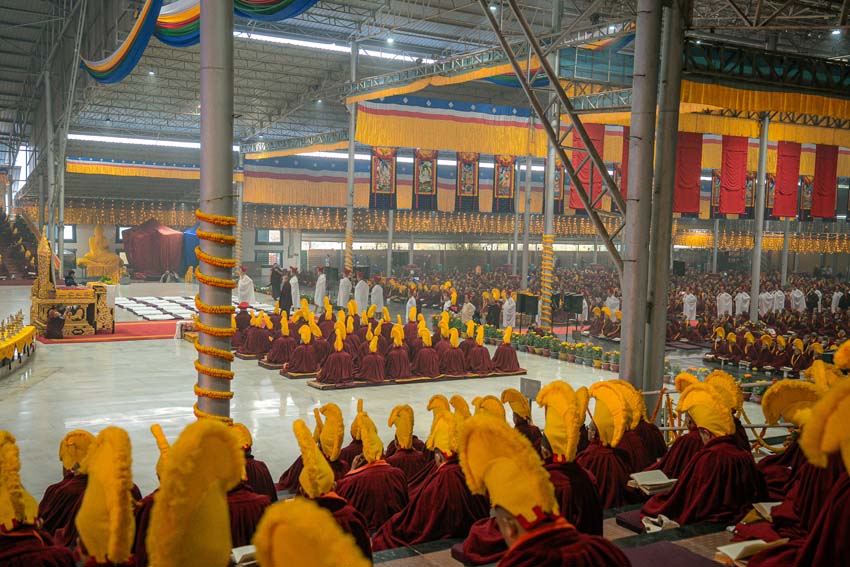
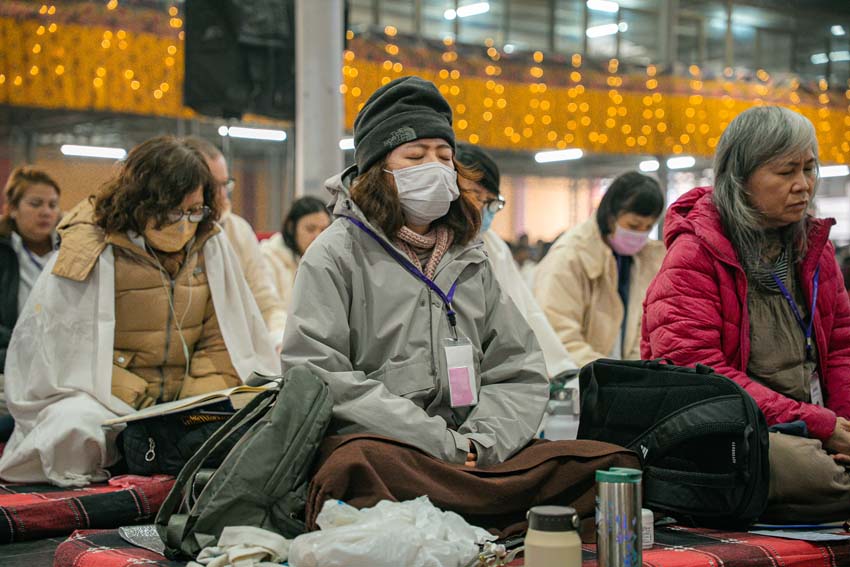
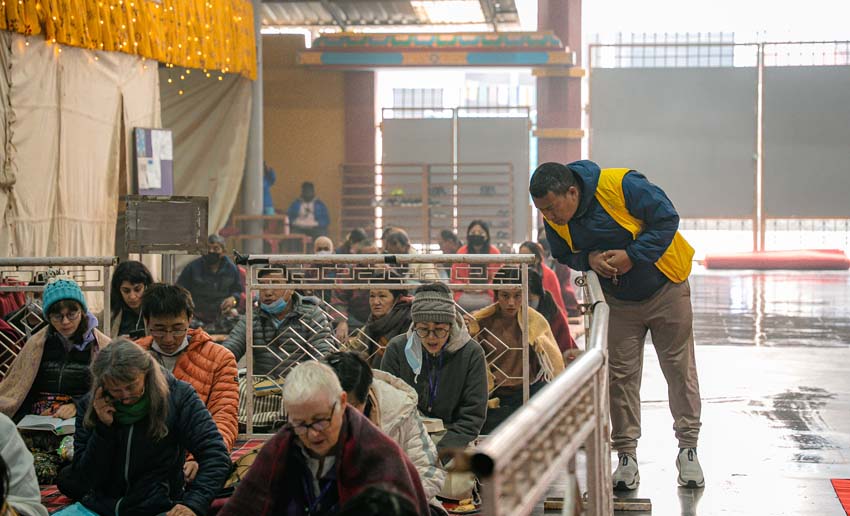
At 2:00 pm in the afternoon, all ordained and lay participants assembled in the Monlam Pavillion and Kyabgon Zurmang Gharwang Rinpoche was escorted to take his seat on the Dharma throne.

The afternoon began with an extensive mandala offering to the 17th Gyalwang Karmapa and Kyabgon Zurmang Gharwang Rinpoche.

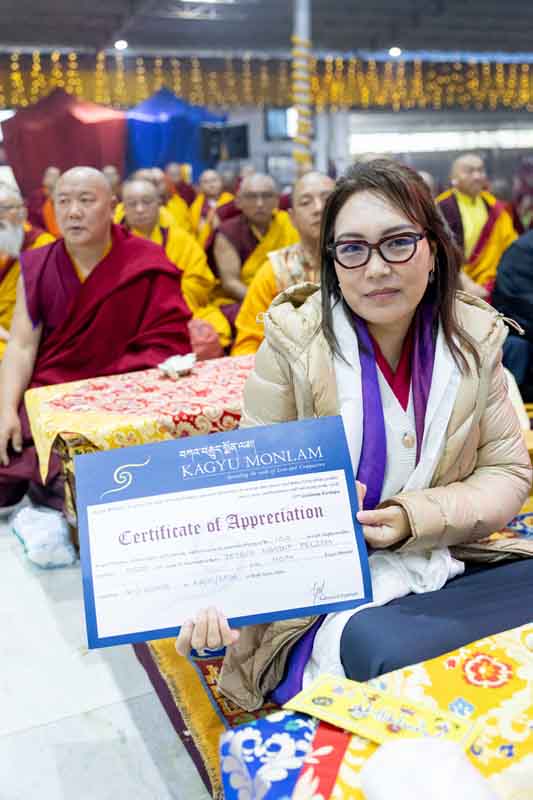
Following this, the ceremony announcing the results and presenting certificates for the Grand Examination of Monastic Forms took place. This test for the monks and nuns began more than ten years ago, initiated by the 17th Gyalwang Karmapa who established rules for the dress and behaviour of all monks and nuns during the Kagyu Monlam Chenmo. There is now an annual tradition, that monastics from the various Kamtsang monasteries undergo an examination of their conduct before the Monlam begins. This year the examinations were conducted on the evenings of the 23rd to 25th by five khenpos. The three categories are novice nuns, novice monks and fully ordained monks. The award goes to their respective nunneries or monasteries and participants receive a certificate.

This year's novice nun examination results: First place—Druk Palmo Chokyi Dingkhang; Second place—Tsun Gon Karma Drubgyud Dargyay Ling; Third place—Palpung Yeshe Rabgyay Ling. The novice monk examination results: First place—Thrangu Tashi Choling; Second place—Tergar Osel Ling; Third place—Palpung Sherab Ling. The fully ordained monk examination results: First place—Karma Lekshe Ling; Second place—Thrangu Tashi Choling; Third place—Sonam Dar Samdrub Dargyay Ling.

The afternoon culminated in dedications and aspirations. The 17th Gyalwang Karmapa joined via video link and recited The Great Aspiration, the Monlam Chenmo composed by the Seventh Karmapa Chodrak Gyatso, and the Dedications for the Living and the Deceased.

Then everyone joined in to recite the final aspirations: Mila’s Aspiration, Aspiration for the Well-Being of Tibet, Lord Marpa’s Song of Auspiciousness, Auspicious Prayers from The Vinaya Topics, and The Auspiciousness of the Great Encampment.

The final prayer was the Trendrupma (The one who taught the truth) which was also composed by the Seventh Karmapa Chodrak Gyatso, with an addition by the Eighth Karmapa Mikyö Dorje, whose words contain the final aspiration which sums up the aims of the Kagyu Monlam Chenmo:

May the world have the good fortune of happiness!

We ask that the world be made happy.

Day Seven AM: The Cotton Clad Procession and Homage to the Gurus

Day Seven AM: The Cotton Clad Procession and Homage to the Gurus

Kagyu Monlam Pavillion

2 January 2026

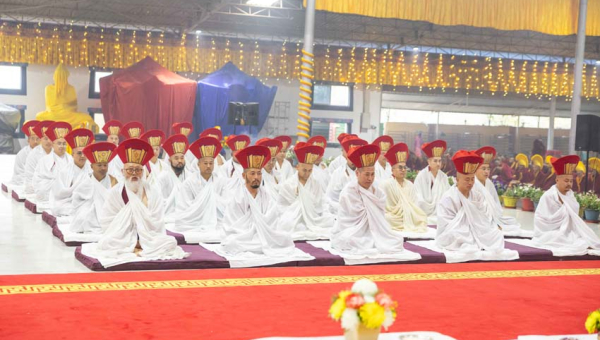
The day began early in Tergar shrine hall at 4.00am when monastic practitioners from various Kamtsang monasteries who had completed the three-year, three-month retreat prepared to demonstrate their accomplishments.

During the Monlam, from 6:00–8:00 pm each evening, they had gathered behind closed curtains in the shrine hall at Tergar Monastery to practise the Six Yogas of Naropa.

In the Monlam Pavillion monks. Nuns and lay practitioners gathered to receive the Mahayana sojong vows from Kyabgon Zurmang Gharwang Rinpoche and then recited the opening prayers of the first session.

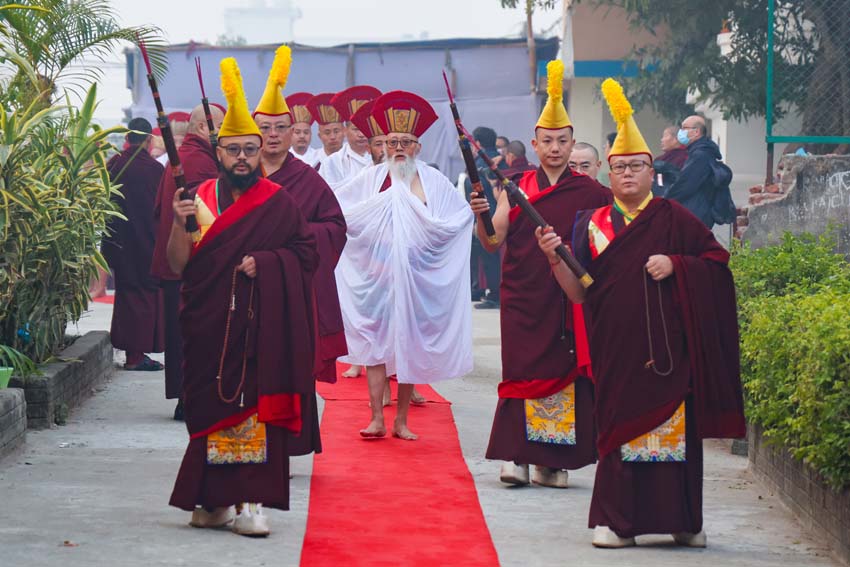
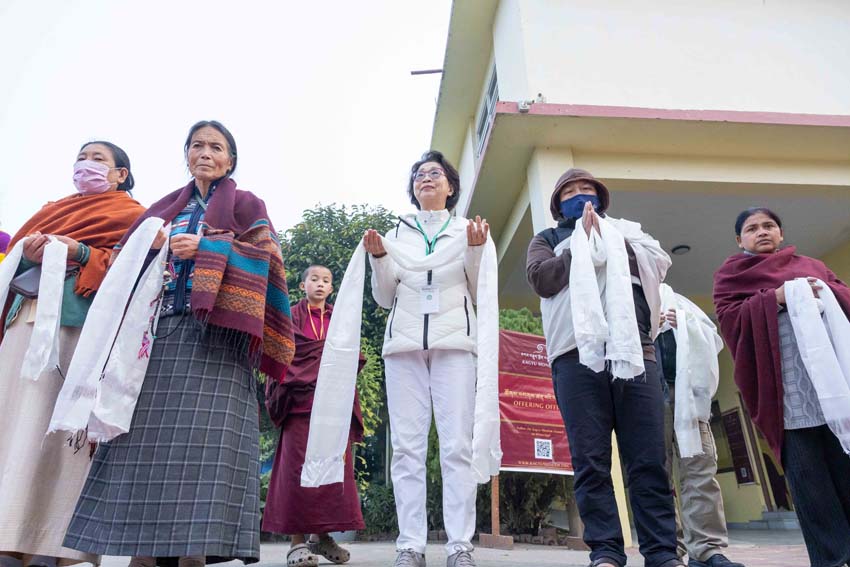
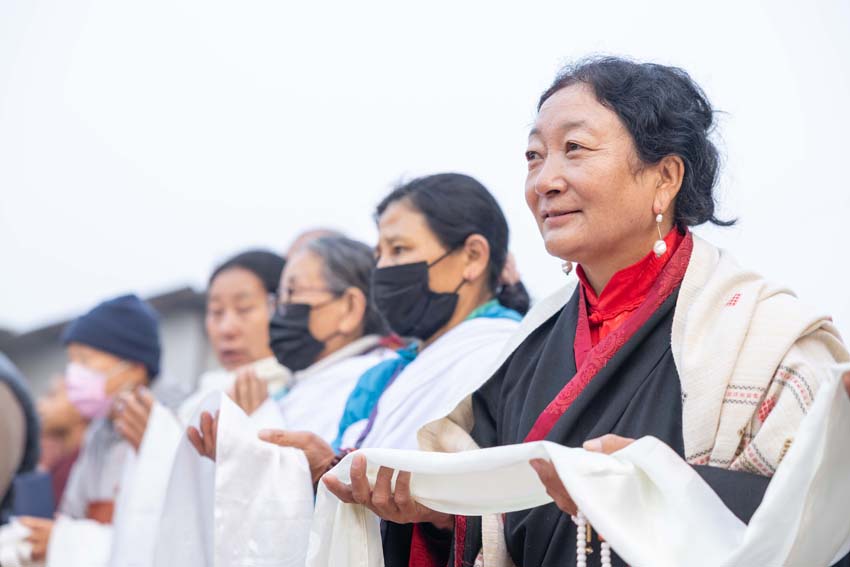
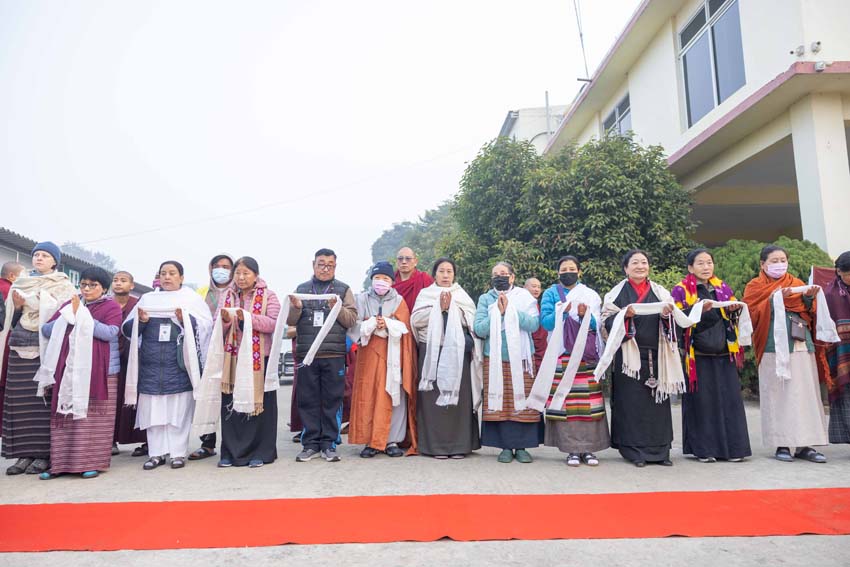
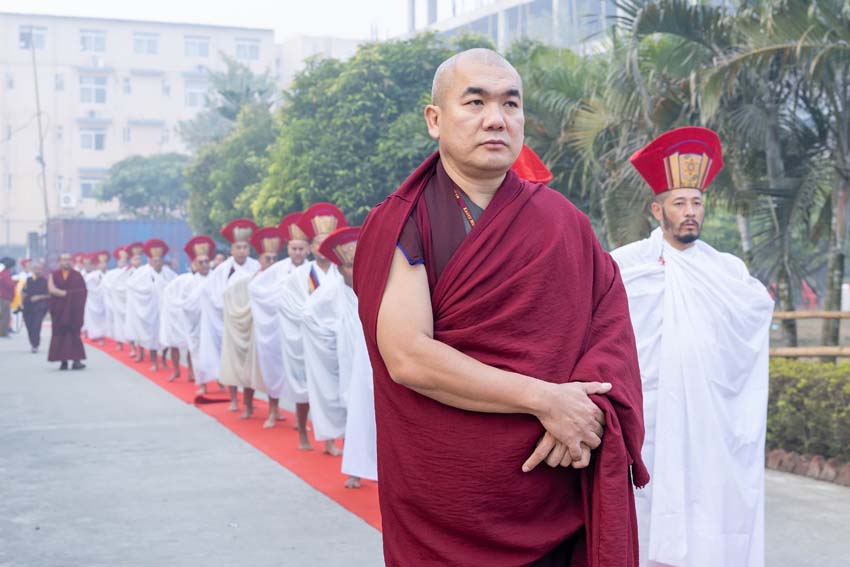
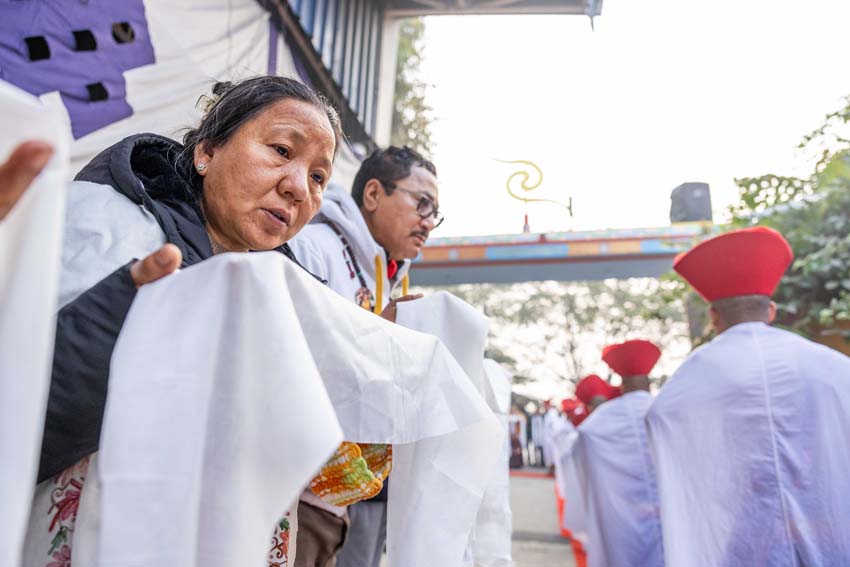
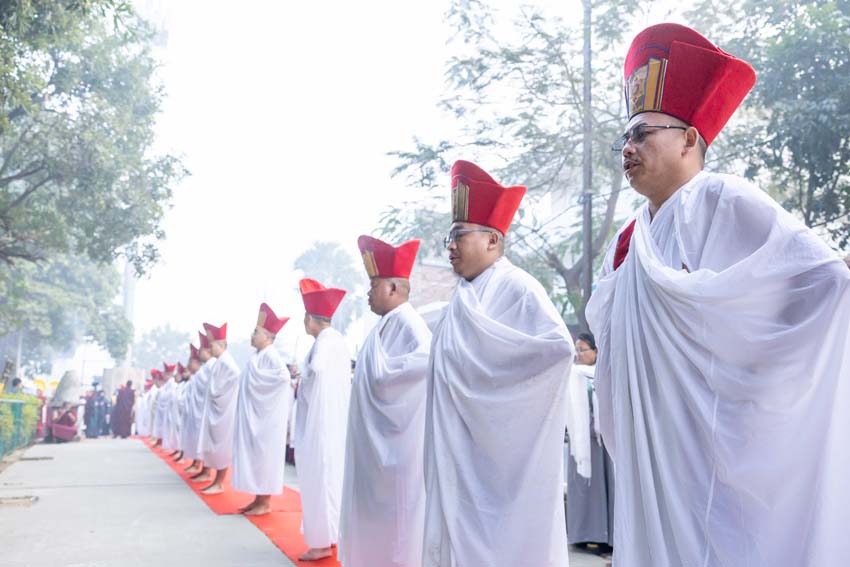
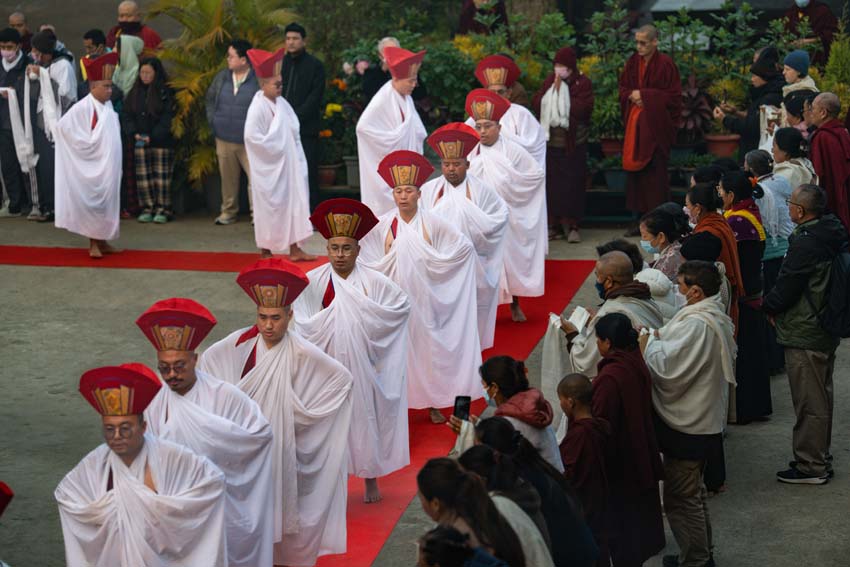
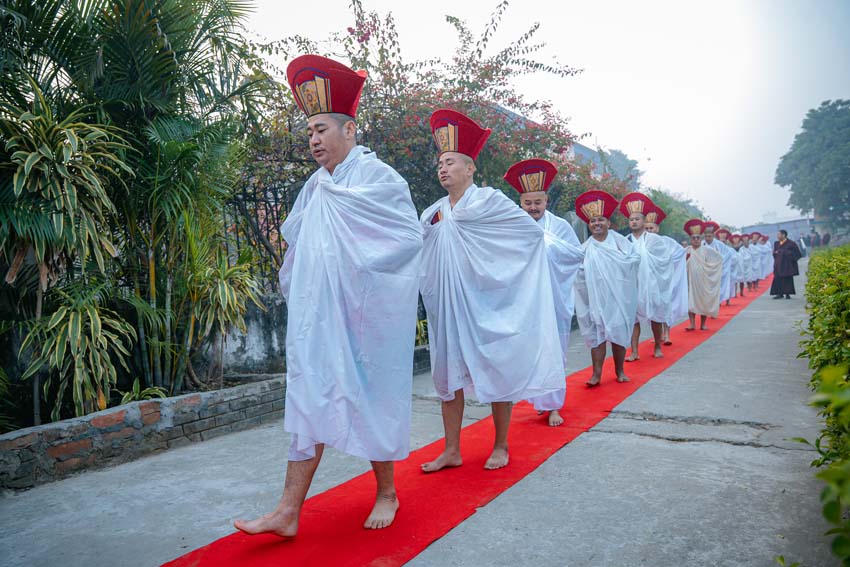
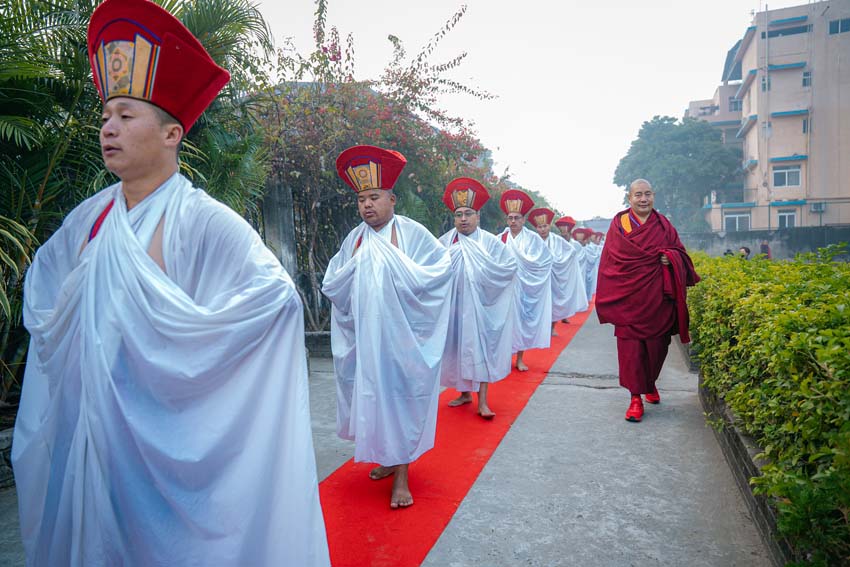
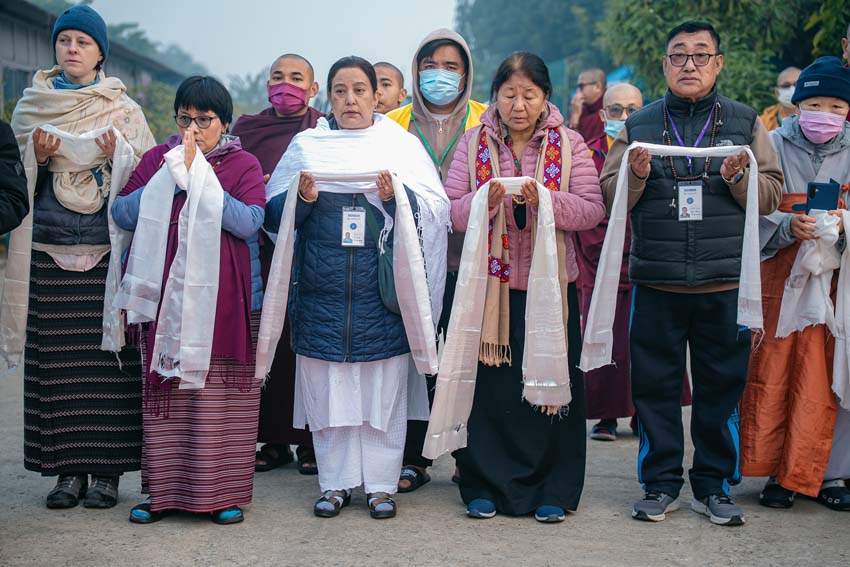
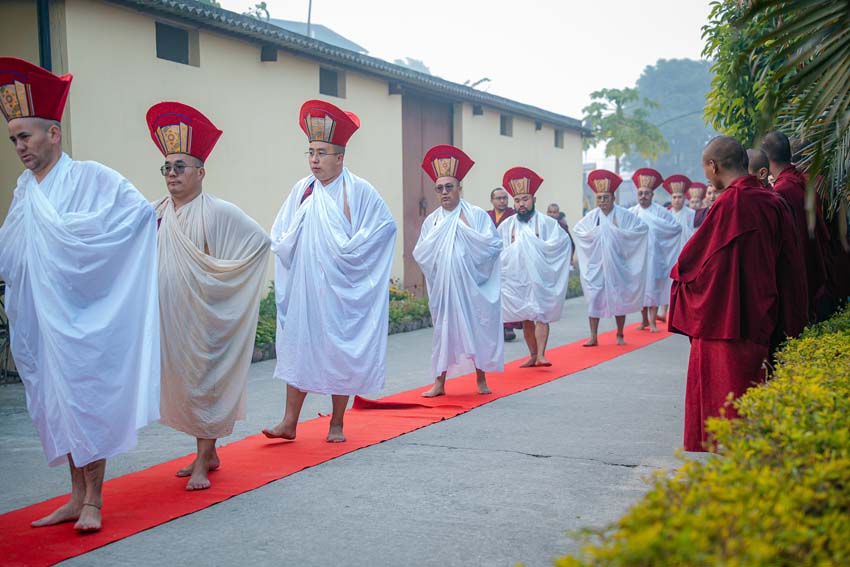
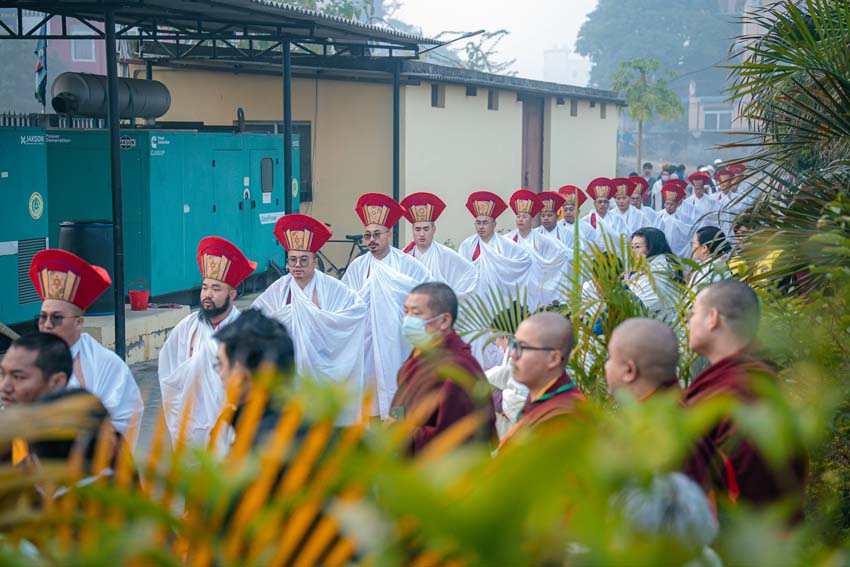
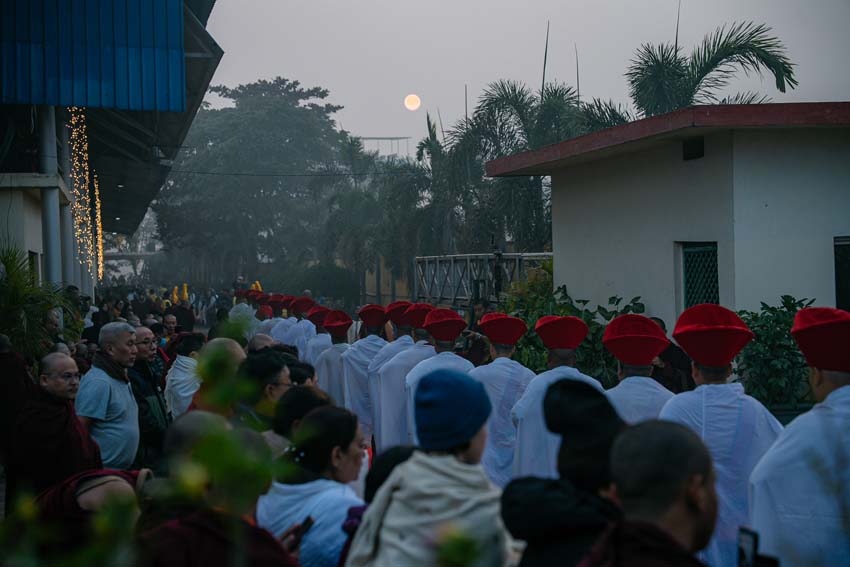
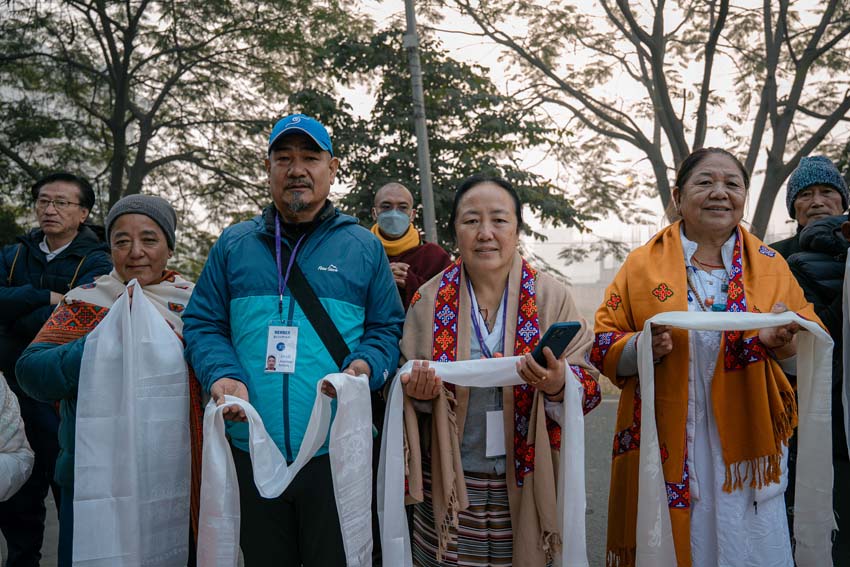
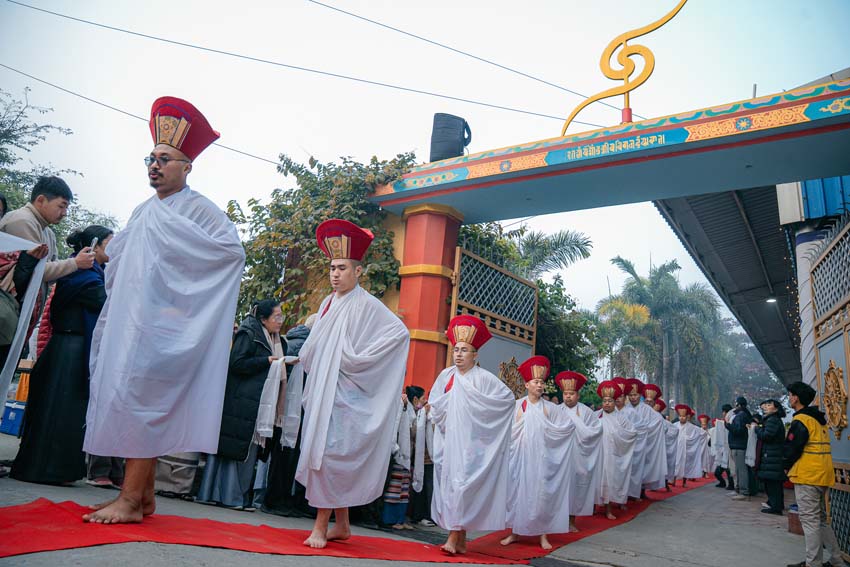
At 6.30am the retreat monks emerged from Tergar shrine hall and wrapped wet sheets around their bodies—the traditional way of proving achievement in tummo is to dry a wet sheet with the body heat generated by the practice. Wearing lower garments, meditation belts, meditation hats and the wet white robes, they proceeded clockwise along a carpeted route from Tergar monastery to the Kagyu Monlam Pavillion, greeted by crowds of devotees who lined the path.

Meanwhile in the pavilion, the congregation began the Offerings to the Gurus, the sutra-based guru puja compiled and composed by His Holiness the 17th Gyalwang Karmapa, which contains the twenty branches.

During the fourth branch of inviting, the retreat practitioners entered the pavillion through the main gate and took their seats on the right side of the stage. During the eleventh branch, the offering section, when making the offering of practice, monastics from the Kamtsang shedras engaged in a demonstration philosophical debate. After the debate concluded, a monk from Tergar shedra summarised what had been said to complete the offering of practice.

The whole assembly then began reciting the guru puja again until the midday break.