The Reasons for
Participating in the Monlam
December
21, 2007, Translated by Ringu Tulku
Rinpoche & Karma Choephel
There
are many of us, representing many different Dharma
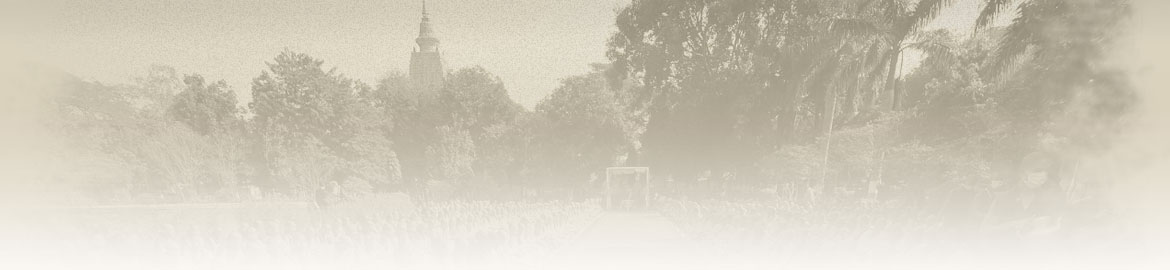
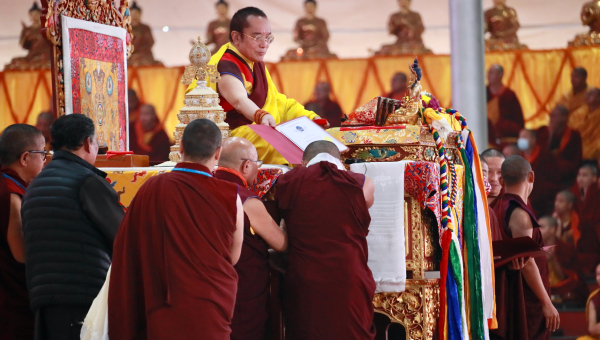
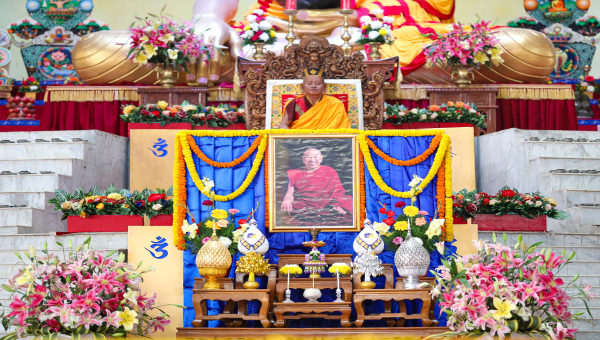
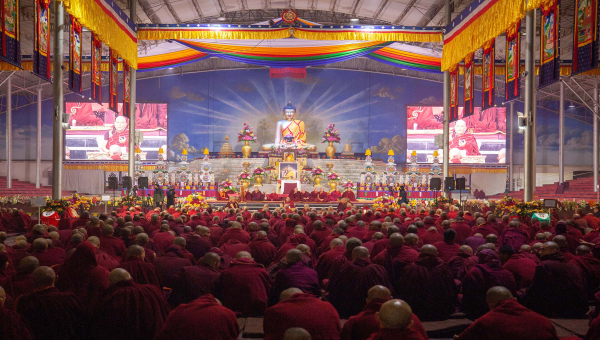
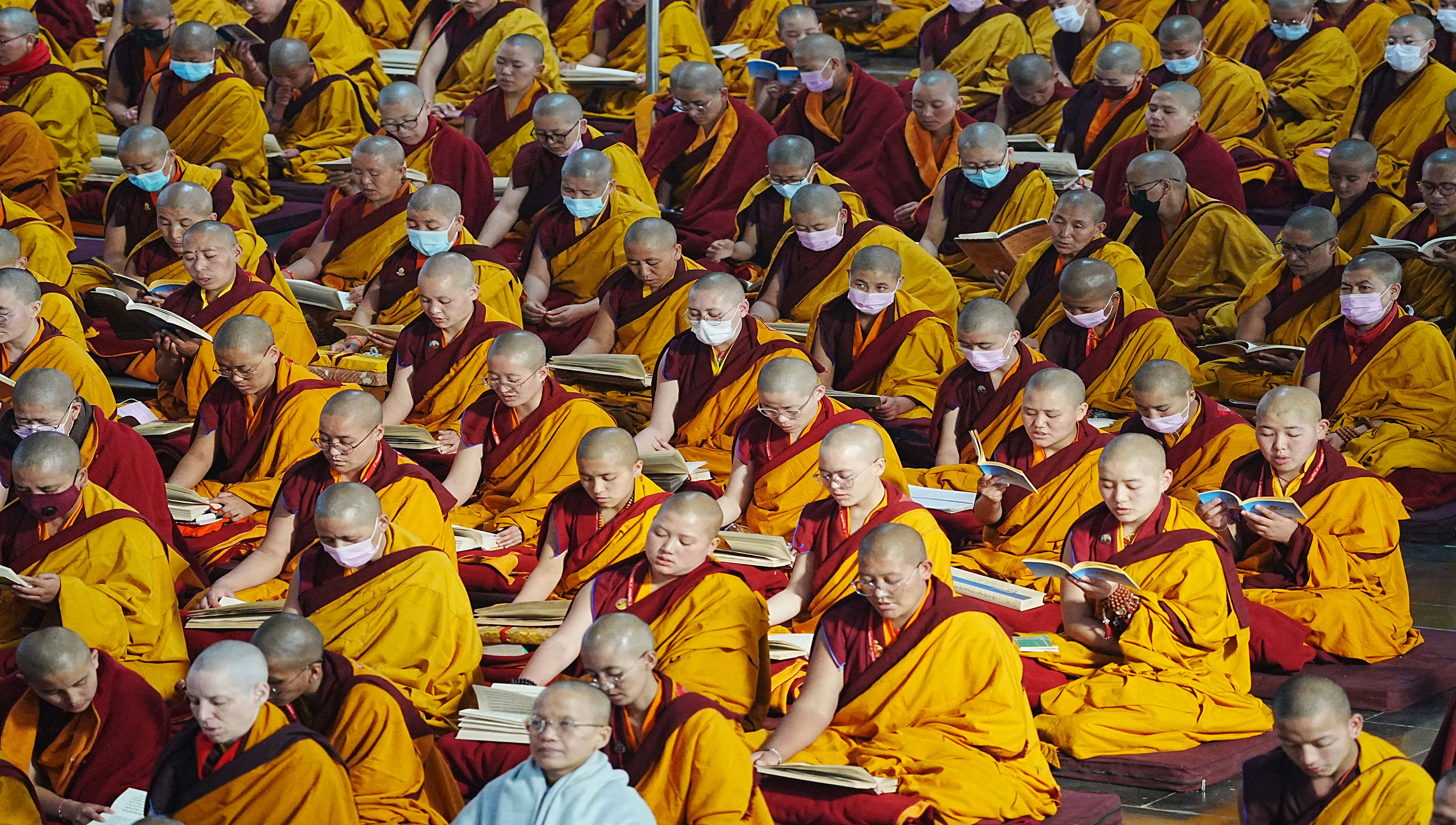
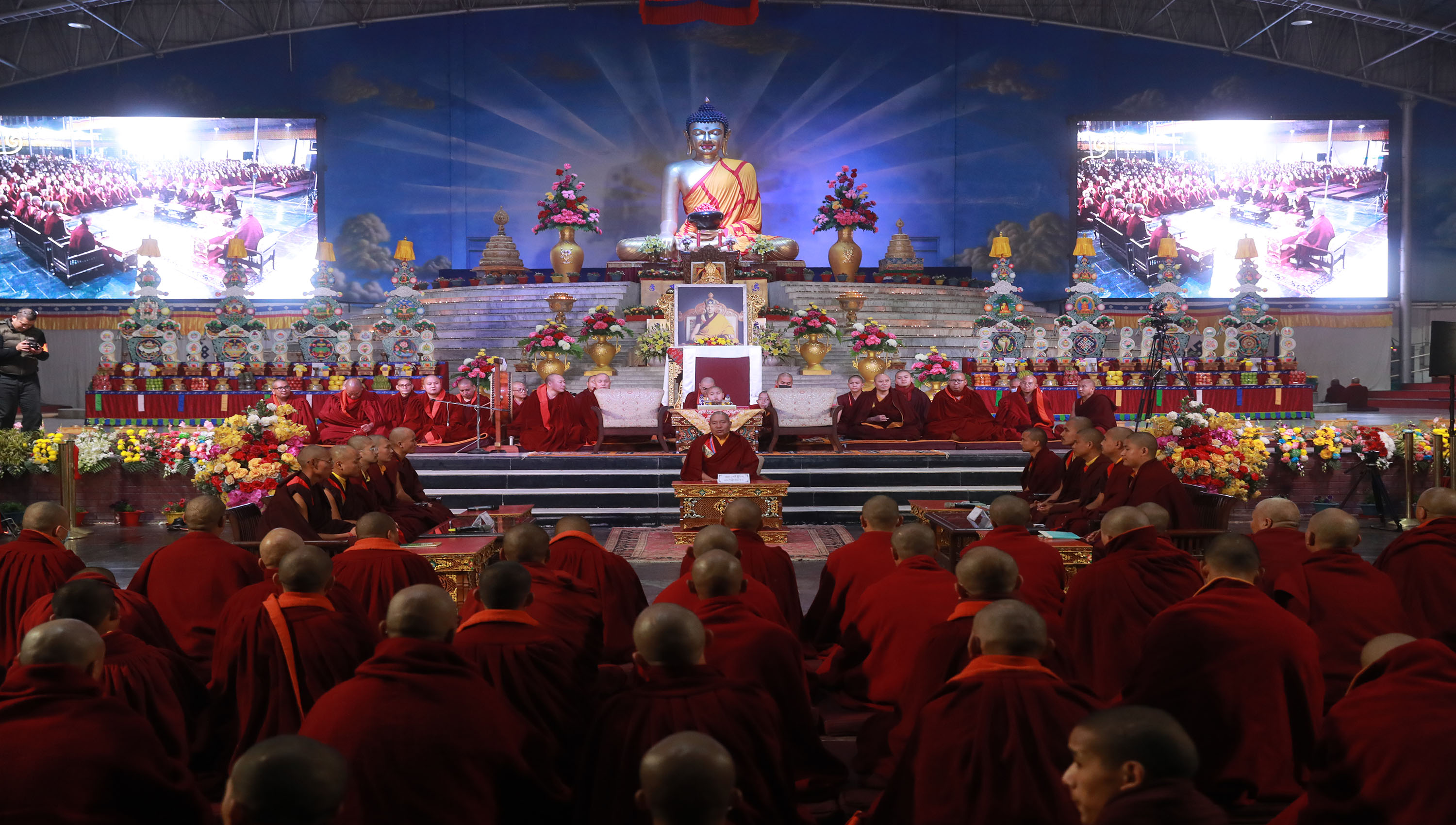
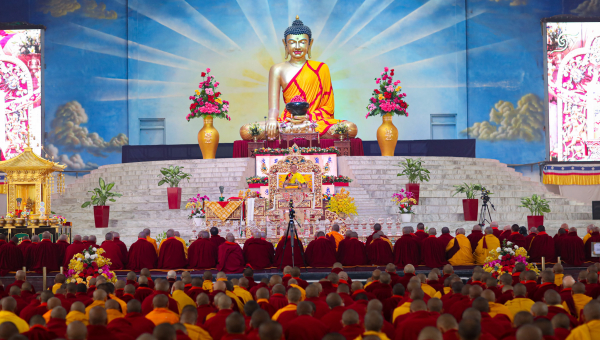
traditions, gathered here for this monlam beneath the
Bodhi Tree. This monlam of the Practice Lineage of
unexcelled Dakpo and Shangpa Kagyu was established by
Kyabje Kalu Rinpoche. Subsequently Kyabje Bokar Rinpoche
took it on out of his compassion, and this is the
twenty-fifth time we have been able to hold the Monlam.
If we talk about it in terms of the Kagyu lineage,
although we may not see a great result from the Monlam,
it has been quite a good achievement. The ultimate
result would be all sentient beings easily attaining the
omniscient state of Buddhahood. You could call this the
activity or the aim of this lineage. If we think in
these terms, holding the Monlam is not something that
reaches the ultimate result. However, I regard it as a
big step toward world peace, harmony, and happiness, so
for us to gather here is great good fortune. It is
difficult to say whether we will have the good fortune
to gather here again. It is rare to have the opportunity
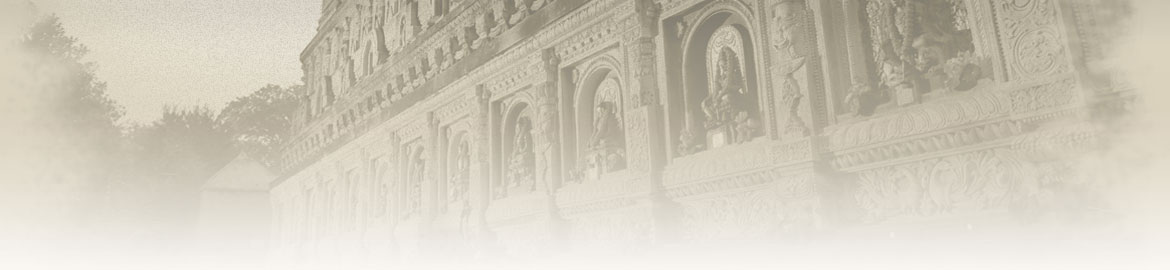
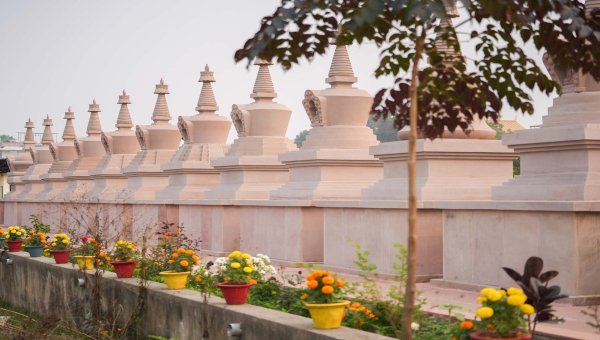
to gather at the stupa in Bodhgaya in the shade of the
Bodhi Tree. In times of good fortune, we need to
understand that they are good fortune, and it is
extremely important that we practice so that whatever
virtue we gather is not mixed with selfish pride and
arrogance.
In particular, we hold this monlam at the end of each
year, and many people come here from many countries to
participate. Over the course of a year, we all do many
misdeeds, and we also do many virtuous acts. So at the
end of the year we gather in this sacred place and with
sincere and heartfelt regret confess whatever misdeeds
we have done. If we feel that we have not performed
enough virtue, we can round it out by doing more. I
think this is a good opportunity for us to wrap up all
of the merit we have gathered and misdeeds we have
purified over the course of one year.
If we do not confess all of the year’s misdeeds promptly
and instead just carelessly ignore them, we will carry
them around year after year after year until we have
accumulated a huge pile of misdeeds. We must not do
that. We have a good opportunity now, so at this time we
should confess all the misdeeds we have done during the
year, whether we have transgressed the precepts of our
vows or committed any other act of wrongdoing. If we
confess these strongly and sincerely from our hearts
here in this sacred place where our Teacher Shakyamuni
awakened to complete and perfect enlightenment, I think
it will be unusually powerful.
Similarly, this is a wonderful place for us to do
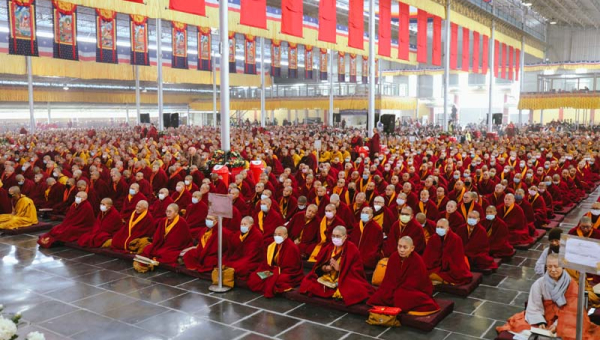
virtuous acts and gather merit. A large number of sangha
members of many different traditions have assembled
here, so if you want to make an offering to the lamas or
the sangha, there are people to offer to. Likewise, many
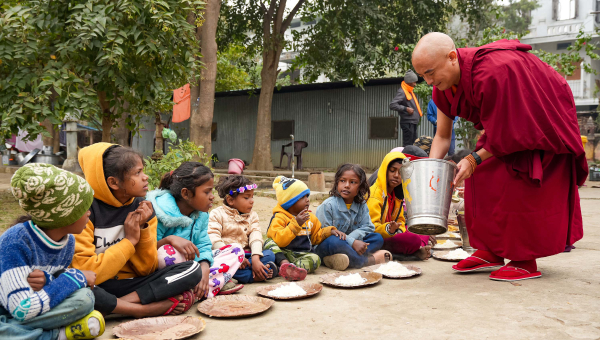
poor beggars from different regions have come here and
are gathered around the outside of the stupa. Thus if
you want to be generous to the downtrodden, there are
people to be generous to. All the different types of
people to whom you can make offerings or be generous
have come together here, which makes this an excellent
place to accumulate merit. All the conditions are right.
It is not absolutely necessary to accumulate merit
through your external actions of body and speech.
However, the more your merit is reflected in the way you
relate to people with your body and speech, the greater
an impression it makes upon your being. I think it is
very beneficial if your virtuous actions are not just
seeds in your mind but become actions of your body and
speech.
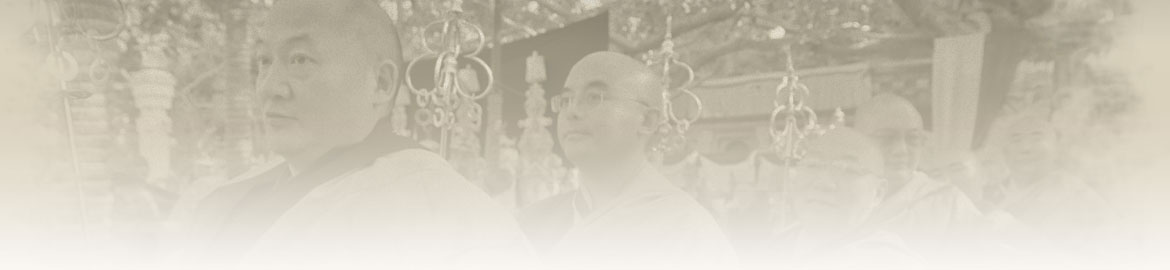
There are many sangha members gathered here. Many of us
here live under monastic discipline. There are probably
also many here who do not live under monastic discipline
but just wear the Buddhist robes. The reason we all have
put on red robes and come together here comes down to
seeing that there are a lot of benefits to wearing the
red robes.
When we gather here, it is not impermissible to think
about food and clothing—we do need to think about them.
However, food and clothing are a minor and temporary
part of this life. For example, if we have one day’s
food, that will fill our stomachs for one day, but it
will not help us in any way the next day. Food and
clothing give us merely fleeting happiness; they cannot
give us the ultimate happiness. If we can bring
ourselves a greater happiness that is one hundred times
stronger than that fleeting happiness, that is even more
beneficial. If we think in terms of benefit, there is a
greater happiness, such as that of our future lives.
Whether we believe in future lives or not, we cannot
definitely say they do not exist. Therefore, we need to
consider our future lives carefully in case they do
exist. Otherwise, if we continue as we have been doing,
we do not know where we will end up in our next life.
This is why we need to start now to continually prepare
ourselves for all our future lives.
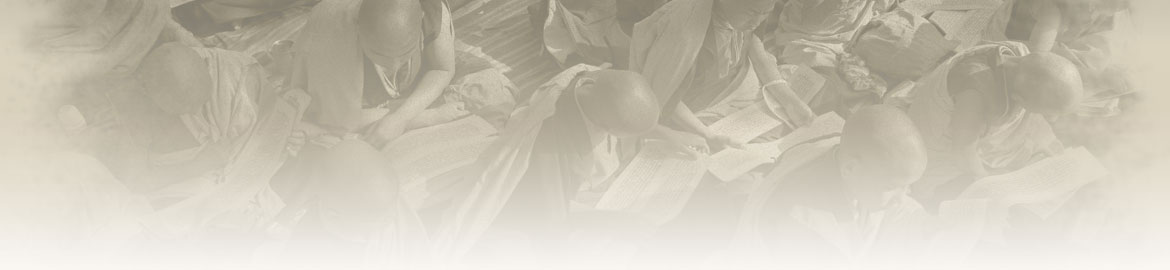
We have gathered in this sacred place and have this
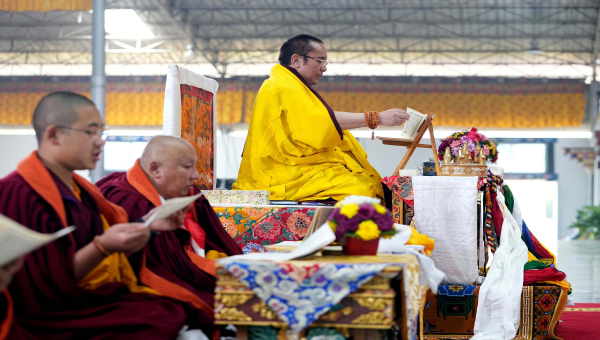
opportunity to hold what we call a monlam. We are
reciting many of the words of the Buddha and prayers
composed by the earlier masters. We should do this in a
frame of mind that is unlike our ordinary mind. As much
as possible, we should have the kindest and best of
motivations. Ordinarily we might feel some anger, pride,
or jealousy. There is not much to do about this;
ordinary individuals are unable to always be good. But
it would be a mistake just to completely give up. We
need to give our virtuous, positive side more chances so
that it will triumph and give our unvirtuous, negative
side fewer chances so that it will be defeated. This is
where we need to concentrate our forces.
We have gathered here to do that. If we are looking for
benefit, there has been benefit. But it is not just
that. We are thinking about bringing benefit to all
sentient beings, helping them, and freeing them. We are
thinking about world peace and happiness. It should not
be necessary to say how wonderful it is for us to
develop bodhichitta like all the buddhas and
bodhisattvas, who developed bodhichitta for the benefit
of all innumerable sentient beings and engaged in vast
actions.
When we sangha members are following monastic discipline
or the discipline of the Kagyu Monlam, it might seem
like there are many things we have to pay attention to.
But the main thing it comes down to is whether we have
really thought about what we are doing. If we have not,
then even the smallest thing to do seems huge. But if we
have really thought it through, even doing hundreds of
things seems insignificant. But here we have many rules
for you to follow, and there are many discipline masters
here. When the discipline master is looking, you sit up
straight; when he looks away, you slouch. When the
discipline master turns to face in another direction, it
is not OK for you to think about something else that you
might need to do. The discipline masters are there to
remind you to do what you are supposed to be doing.
Actually, it would be better if we did not need
discipline masters and our minds were naturally peaceful
and tame. Achieving your own outer and inner happiness
is for your own benefit, and the least we can do is tell
you that. It is not enough just to say it: we need to
explain it regularly. That is why we have explained and
taught it everywhere, although it seems there are some
people who, because of the language barrier, could not
understand.
In any case, no matter how bad off we are, we have
attained a human body. We have heard the sound of the
Dharma and the words “the Three Jewels.” This is the
kind of human body we have attained. From time to time
the Dharma comes to mind. From time to time, bodhichitta
and helping others come to mind. There will be
differences in how clear, vast, profound, or genuine our
focus is, but there are not many beginners who are
immediately complete and perfect. That is not even
necessary. If we were immediately spontaneously perfect,
we would immediately completely realize the path and
attain the omniscient state of a Buddha. That would be
thinking too much of ourselves. We do not need to do
that. What we have to think about is how much we can
purify our thoughts.
I spoke about this the other day. When we are reciting
prayers, our mouths and our minds need to work together.
If we are saying “Buddha” with our mouths but inside
have been taken over by a demon, that is not OK. When we
say the word “Buddha,” inside ourselves we should think
about a Buddha, even if all we can remember is someone
sitting there with an ushnisha on his head and all the
other marks and signs of a Buddha. There would be
nothing wrong with that.
When we say “Dharma,” we can think of it in many ways.
It is like when we talk about love and compassion, for
example. When we were children, we did not know anything
about love and compassion being the wish that others be
happy and free from suffering—we were just kids. But our
parents would say that love and compassion are
important, and so we got the idea they somehow are
important. If someone laughed, we would think, “Oh,
that’s love and compassion.” Or if we were given a
present, we would think, “That person is really loving
and compassionate.” People sometimes feel that way. If
at the very least you can think about it like this, that
is fine. It’s better than nothing at all.
Words such as “Buddha,” “Dharma,” and “mother sentient
beings throughout space” are the most impressive and
eloquent of words, the finest of fine words composed by
the lamas and great masters of the past. It is easy to
recite such words with our mouths. But if our thoughts
inside get worse and worse and we are sitting there
wallowing in negativity, that is completely
contradictory. We would not be holding the Kagyu Monlam;
we would be holding the Negativity Monlam. We would not
be gathering merit—we would be sitting here gathering
negativity. There is no point in doing that. Have higher
expectations of yourself. Trust yourself more. Do not
deceive yourself. Even if you are unable to actually
help other sentient beings, I think it would be good if
at the very least you were not fooling them. It is
important for you all to keep this in mind.
Each person has his or her own window onto the world of
appearances. When we peer through the window, we each
see the world in our own way. We see our own picture or
movie. Therefore we should practice in a way that is in
tune with these appearances and investigates them. Since
appearances are impermanent, we should meditate on
impermanence. Since appearances are deluded, we should
meditate on how they are illusory. In relative
appearances we need to be able to evaluate whether we
should do something or not, so we need to know what to
take up and what to give up. For this reason, please
study and contemplate correctly. Then follow through on
it. That is very important.
Mornings, we take the Mahayana sojong vows. In the past,
this was something for the bhikshus and bhikshunis to
do, but many others have also joined in. It probably
would be good for you all to know, now that you have
taken the Mahayana sojong vows, what precepts you need
to follow from now until sunrise tomorrow. Do not think
that it is just a matter of not eating supper! If you
think that it is only about not eating supper and that
there are no other precepts, that is be a problem. The
precepts you repeat after me are not something you
merely ought to hold. If you take the vows, you must
follow the precepts. It is important to follow them. I
think it would be good if I explained the precepts
later. It is not good for you not to know what precepts
to hold. If in the next few days I have the chance to
tell you what actions you should refrain from and what
actions you should do, I will explain them.
It is because of the support of donations in behalf of
the living and the deceased that we are able to hold
this Kagyu Monlam. Support for the Monlam does not fall
from the sky or grow from the ground. Donations for the
living and the deceased are a major source of support.
We need to think about these donations. This is not just
for monks and nuns—the householders need to think about
them, too. We are all eating Kagyu Monlam bread and
drinking Kagyu Monlam tea. What we are enjoying are
things given by living people whose eyes are still open
and whose bodies are made of flesh and blood. We really
have to keep this in mind. Sometimes it is hard for all
of us as individuals to save even ten or twenty rupees.
But a lot of money is spent for the Monlam without a
second thought. This is not to make the Monlam planners
famous or popular. There are two important reasons to
have the Monlam.
One reason to have the Monlam is that by gathering here
in the sacred place of Bodhgaya, where our Teacher
attained complete and perfect awakening, we can remember
our Teacher’s deeds. A single hunter can kill many
animals in one day, and some areas or mountains have
almost no animals left. Fishermen go out in
technologically advanced fishing boats and can put out
their nets and catch many tens of thousands of fish at a
time. In many areas, the fish are being wiped out. It is
similar with butchers. In olden times, the best of
butchers could kill perhaps a hundred animals in one
day. Nowadays, because of technology, they can kill
hundreds of beings in just a few minutes. The earth’s
inherent nature is such that it could be sustained for a
very long time, but the negative actions and karma of
sentient beings are so powerful that there is a danger
that life on earth will not be sustainable for much
longer. If the earth is destroyed, there will be no
Dharma, no earth, or anything at all left. We need to
consider this carefully.
Some people say, “Everything is impermanent; everything
changes. All that is left from earlier times are just
the ruins.” They say this, that, and so many other
things that their voices make quite a racket. They
probably think they have realized impermanence. But this
is not quite right. Changes of times and changes in the
world are not the same. Times may change, and there may
be little left of earlier times other than their ruins,
but we can still tell stories about earlier times. We
still tell their history, saying this happened or that
happened. But if the world itself is destroyed, who will
tell our story? Who will tell world history? Who will
know what happened in the past? If the world is
destroyed, we will lose the chance that our stories
might be told. Even our names will be gone.
These days there is a lot of discussion about global
warming. Some people seem to be unable to hear it; some
people are able to hear it and are paying attention. But
whether we know it or not, if we just look at the
physical situation, the world is getting warmer. In
Tibet, the primordial glaciers are melting, and there is
not much of them left any more. We always talk about the
snow mountains of Tibet, but these days there are just
dark rocks; there is no longer any snow to be seen. When
these are all gone, there will be a great danger for the
humans and all the creatures who live on the shores of
the world’s oceans. How many people died in the tsunami
a few years ago? It is not impossible that an even
stronger and more terrible one might happen in the
future. When that happens, it will not help to say,
“What did we do?” We have already had warnings this
would happen. We are all the same in wanting to be happy
and free of suffering. Knowing that such a danger is
coming but nevertheless turning our backs on it is
wrong. It is carelessness and a lack of mindfulness and
awareness. Our selfish pride and attention to our own
wants is like poisonous food. If we can develop our
altruistic thoughts, then I think that participating in
the Kagyu Monlam will have been meaningful.