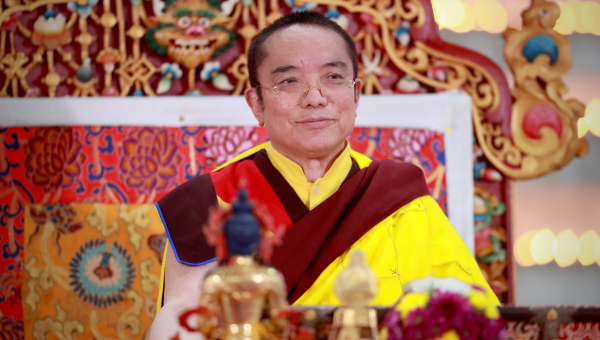
An interview with the Gyalwang Karmapa
The Gyalwang Karmapa kindly gave the following interview at
Tergar Monastery on 13th December.
Q
: Your Holiness, please could you explain the meaning of the word monlam?
GK : From the perspective of mind, the meaning of monlam can be explained
in several ways. From the perspective of the individual it means having the
profound wish to bring happiness and well-being to others and simultaneously
enhance our own root of virtue, dedicating that merit for the benefit of all
sentient beings. That type of dream is monlam.
Q : What is its importance?
GK : Generally speaking, all major developments in human culture have
come about as the result of hope and a clear vision. From the Buddhist point of
view, our ultimate goal is to attain parinirvana; in this process, the role of
aspiration is fundamental and threefold. At the beginning it is like the seed,
in the middle it is like water and manure, and at the end it is the fruit.
Without an aspiration the seed of Buddhahood will not germinate.
Q : Are there any special features of this year’s Monlam?
GK : Because we are celebrating the 25th anniversary of Kagyu Monlam this
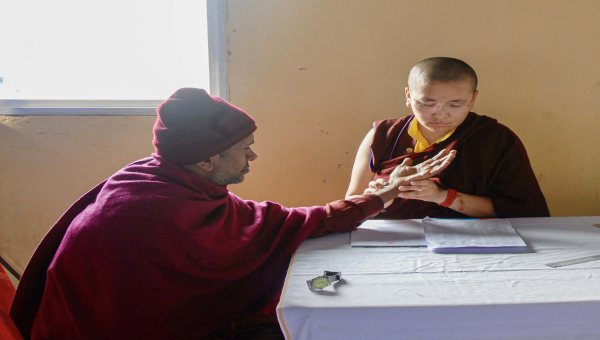
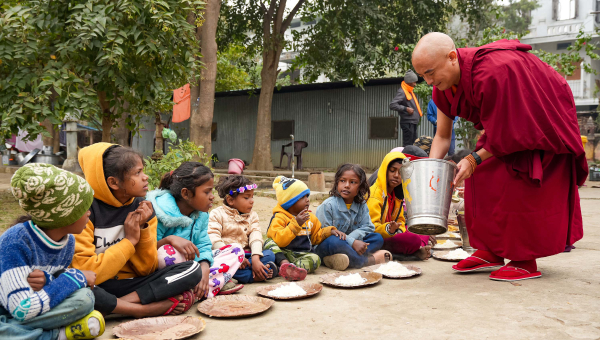
year, we are offering free medical treatment to help local people. In addition,
because the Kagyu Monlam has become an international event, which aims to bring
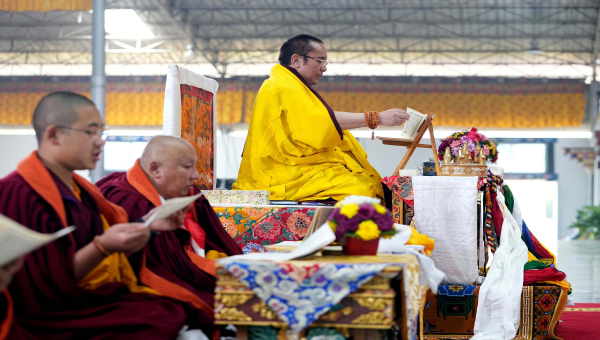
the peoples of the world together, this year the Monlam, recitation texts are
available in five languages: Tibetan, Hindi, English, Chinese and Korean. I
consider these two the most important special features.
Q : Sanskrit prayers are being used for the first time this Monlam.
Please could you expand on this?
GK : Our Tibetan dharma is based on the Sanskrit canon. So, in times
past, Tibetan Buddhist scholars considered Sanskrit to be very important; they
studied the language and also studied Buddhist scriptures in the original
Sanskrit. But, from the time of the Fifth Dalai Lama, about three hundred and
fifty years ago, the ties between India and Tibet were broken. Afterwards, it
became difficult to maintain the standard of our knowledge of Sanskrit and so
things such as pure pronunciation were lost. However, now that we are in India,
Tibetans have begun to study and research texts in Sanskrit once more, and are
involved in discussion with Indian Sanskrit scholars too. This development is
very important for the Indo-Tibetan relationship and, I feel, it is essential
that it be maintained. Thus, we are reciting prayers in Sanskrit so that the
relationship may continue forever. Furthermore, by reciting in Sanskrit, we can
transcend time, generating a feeling of closeness with the Buddhism of the time
of Lord Buddha. It is my aspiration that we can achieve this.
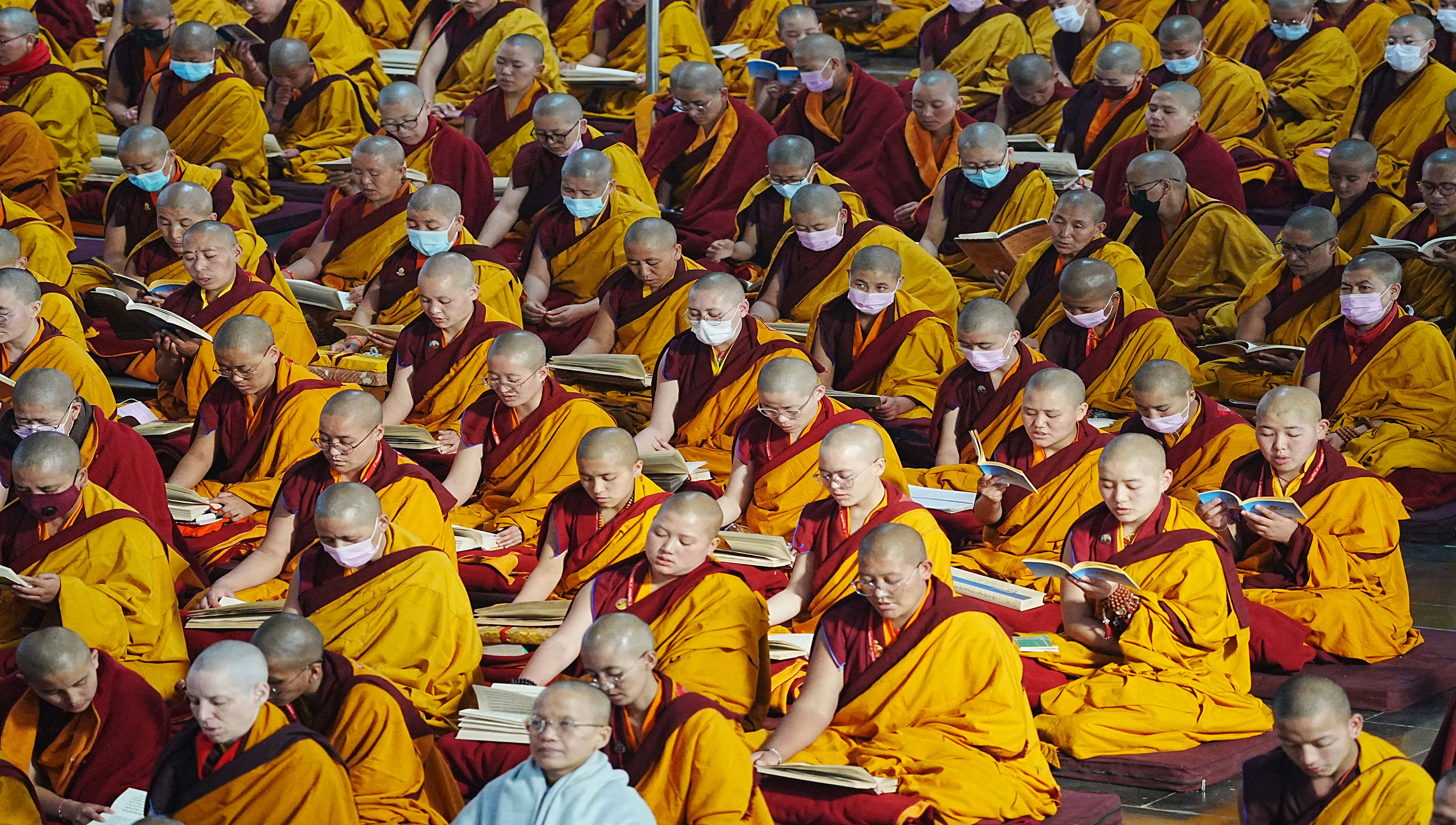
Q : This year monks and nuns have received special training in codes of
conduct. What was the purpose?
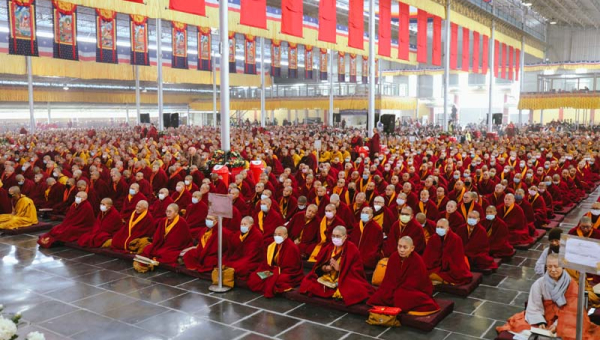
GK : In the twenty-first century there are many external distractions, so
we need a way to remain stable. If we are carried away by these distractions we
will lose our self-restraint. In order to instill proper conduct and to bring
well-being and peace of mind, we have this Monlam. Using ancient methods from
the Vinaya, we are training the sangha members because they are the principal
participants in the Monlam.
This code of conduct, based on ancient Buddhist traditions, is not intended to
serve the interests of one religious tradition alone, but to bring stability and
happiness to society at large. Recently, the misconduct of some members of the
sangha, both inside and outside Tibet, has become a threat to the security and
well-being of society. Thus, we have done this as a service to humanity.
Q : How does the Kagyu Monlam help the well-being of sentient beings and
world peace?
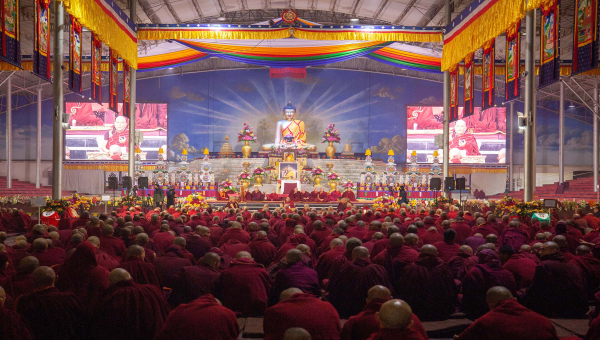
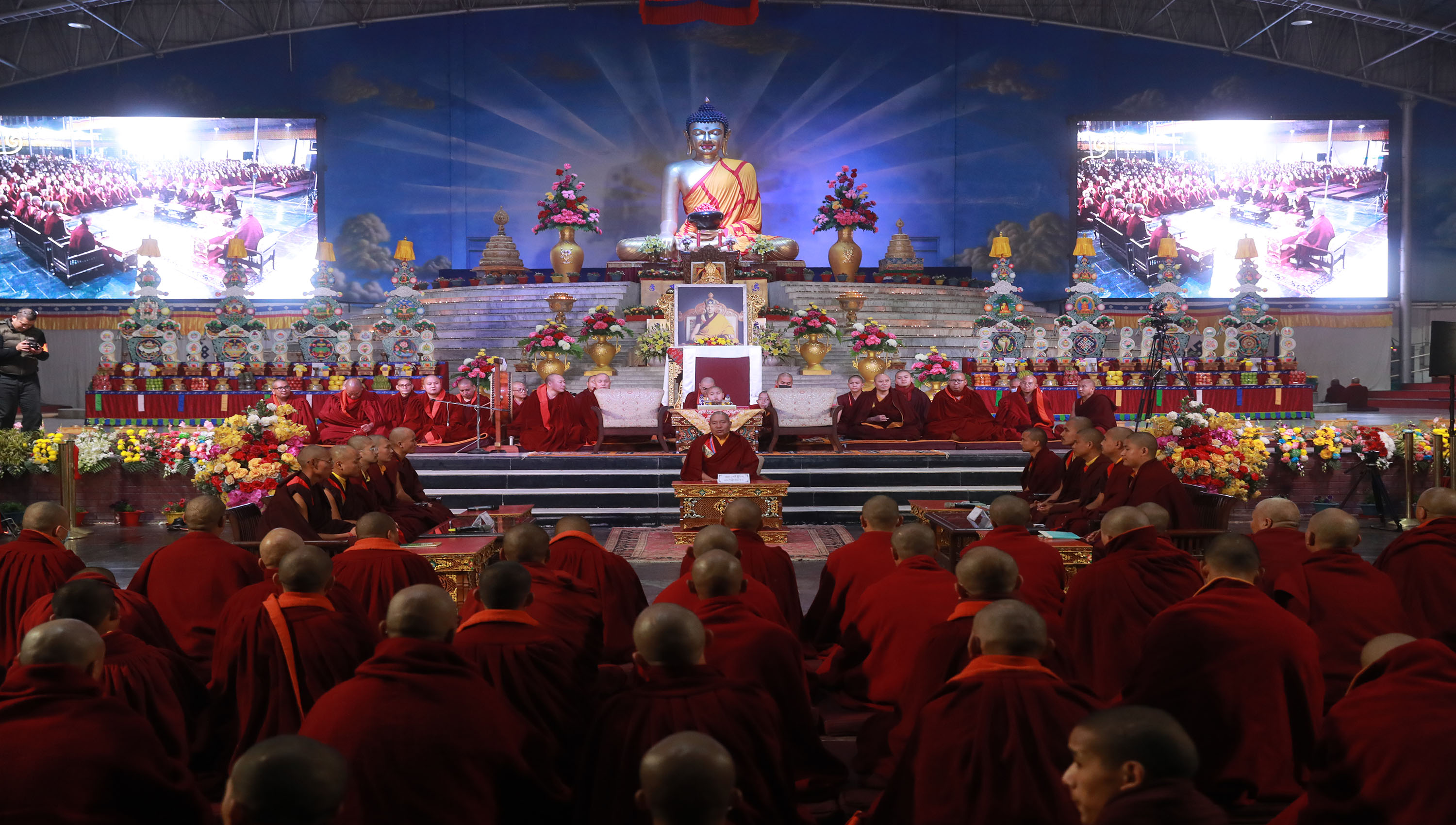
GK : Over the years, Kagyu Monlam has become a great assembly of people,
and as such, it is very powerful. If we can win people over by our example,
then, gradually, through this assembly, we will benefit the whole of human
society. For example, if we can change one bad person into a good person, we
will have been successful in reducing the number of bad people in the world by
one, and thus will have helped world peace.
There is no way that Kagyu Monlam on its own has the power to bring peace to all
sentient beings, but we can use the Monlam as a way of broadcasting the message
that the world is something that all sentient beings have the right to enjoy, a
message of loving kindness, compassion and peace to the whole world.
Q : The Akshobhya Ritual plays an important part in this year’s Monlam.
Is there any reason why this was chosen?
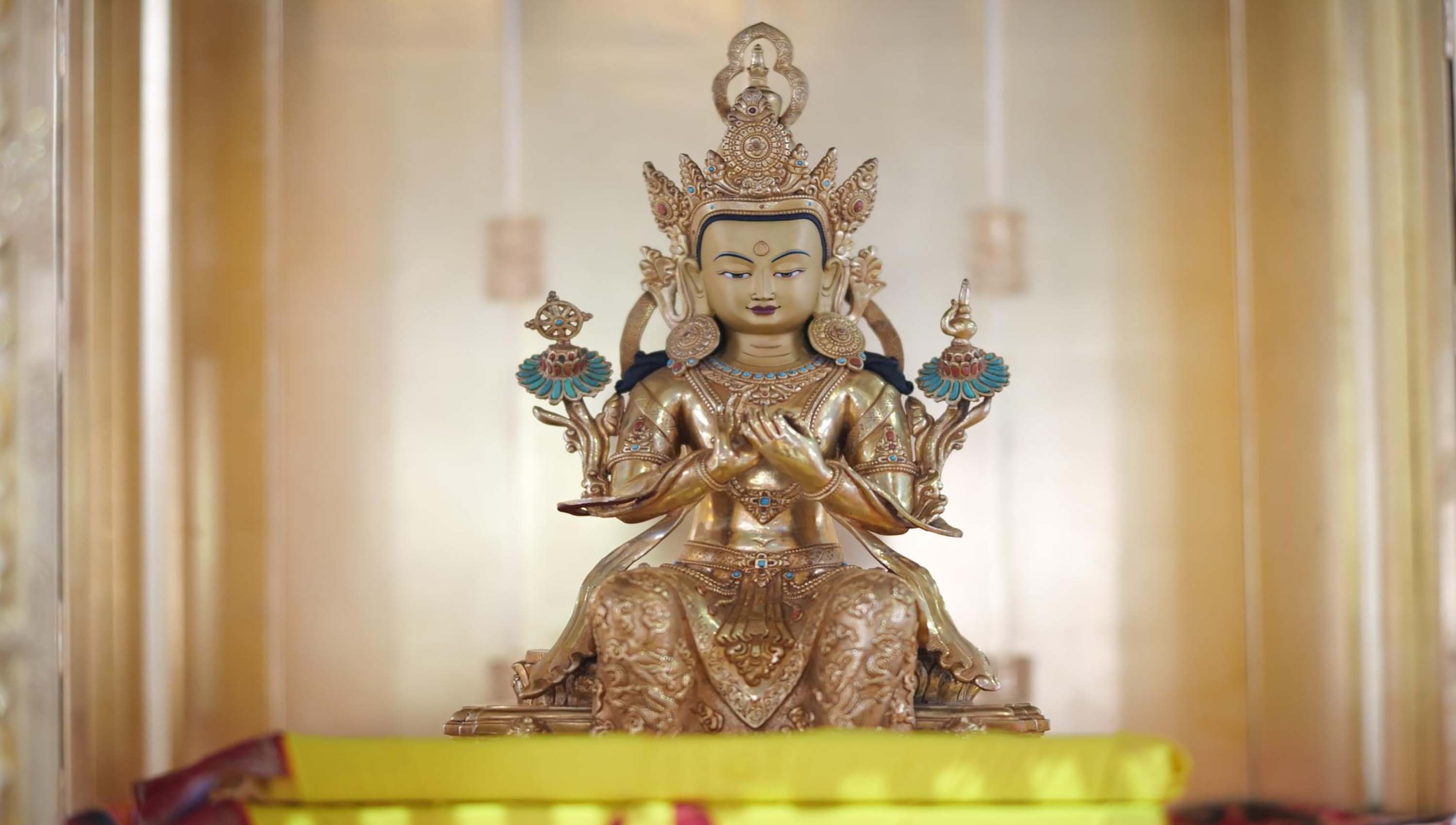
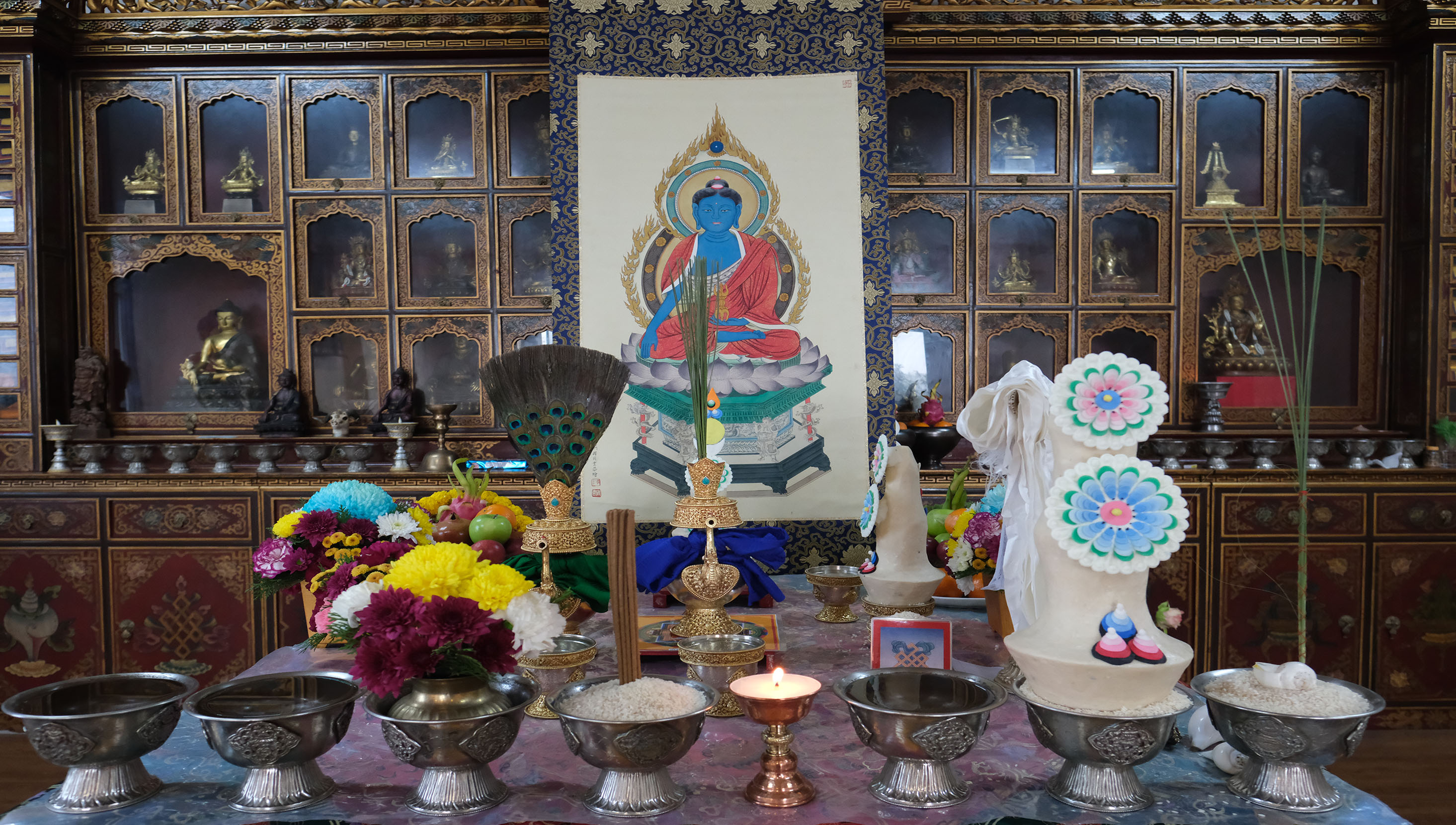
GK : When looking at the reason for the Akshobhya Ritual, we need to
consider three different karmas.
First, from time immemorial, there have been hunters and fishermen but nowadays
they operate on such a vast scale that a whole species can be almost wiped out
in a day. Although the world has the favourable conditions necessary to last for
a long time, because of the extensive use of advanced technology, our power to
accumulate karma has multiplied so much that we are now in the process of
destroying the world itself.
The second karma to consider is the antidote. In order to counteract this
powerful karma we need a stronger counter-measure. There are many methods, both
known and unknown. However, the Lord Buddha taught that the Akshobhya Ritual is
the most powerful for purifying strong karma; therefore Lord Akshobhya is the
power and the activity.
The third karma is this. For a powerful karma there must be a powerful antidote.
But, like a piece of wood and an axe, there has to be a link, a connecting
factor; simply having the two together has no effect. There has to be someone to
make the necessary karmic connection between the two. Because so many people at
the Kagyu Monlam have made vast aspirations, there is great power. Primarily the
participants are from Khamtsang Kagyu and have a very strong connection with the
Karmapa, and Karmapa is a being who has been blessed by Vajra Akshobhya and
therefore is a member of Akshobyha’s family. It is possible that one particular
Buddha such as Lord Shakyamuni might be unable to tame a given individual, but
there is no individual who cannot be tamed by one of the Buddhas. The Karmapa is
the embodiment of the activity of all the Buddhas, is he not? So that is the
reason for having this ritual; it is my aspiration that everyone will receive
the threefold siddhis of Akshobyha: power, compassion and blessing.